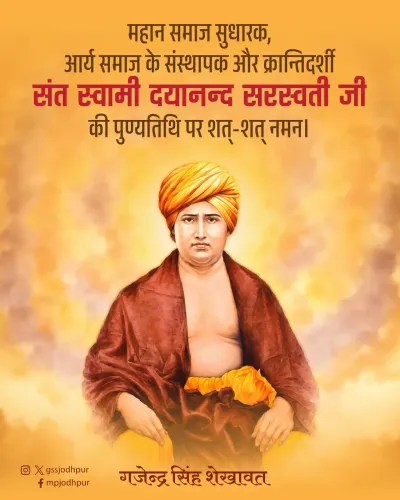
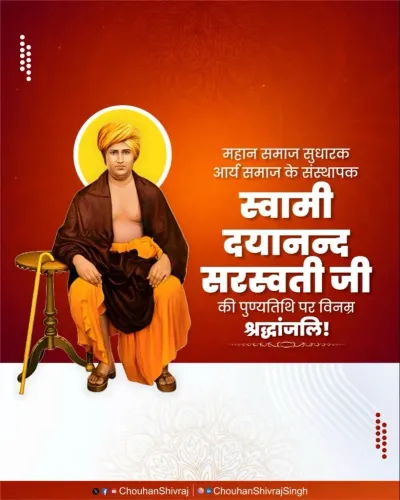
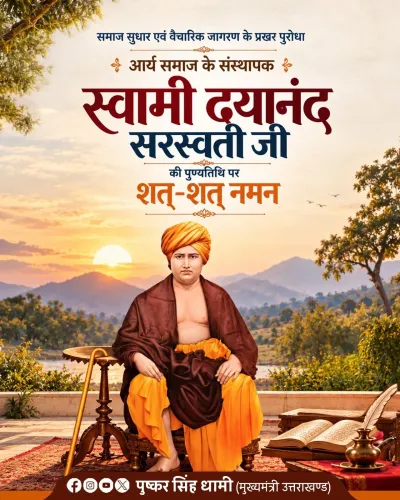
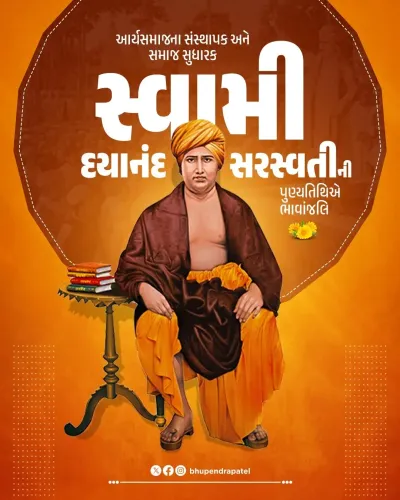
Amit Shah pays tribute to Swami Dayanand Saraswati on death anniversary
Synopsis
Union Home Minister Amit Shah on 30 October 2026 honoured Swami Dayanand Saraswati on his death anniversary, praising the Arya Samaj founder's call to return to Vedic values, his fight against social evils, and his role in awakening India's nationalist consciousness.
Key Takeaways
Union Home Minister Amit Shah paid tribute to Swami Dayanand Saraswati on his death anniversary on 30 October 2026 .
Shah credited Dayanand's call — 'Return to the Vedas' — with awakening cultural self-respect and the spirit of swarajya (self-rule) in Indian society.
Arya Samaj was founded by Swami Dayanand Saraswati in 1875 to promote Vedic monotheism, women's education, and eradication of social evils.
Shah highlighted Dayanand's campaigns against caste discrimination, idol worship, and superstition as central to his legacy.
The tribute reflects a broader BJP tradition of publicly honouring 19th-century reformers and linking their work to modern Indian nationhood.
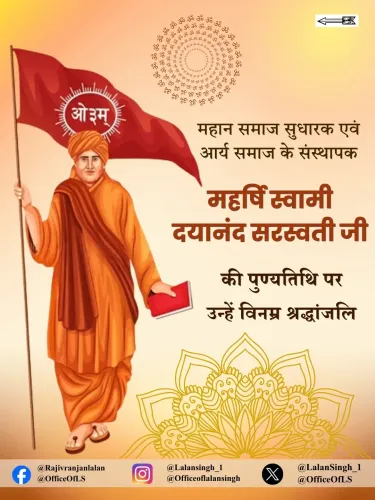
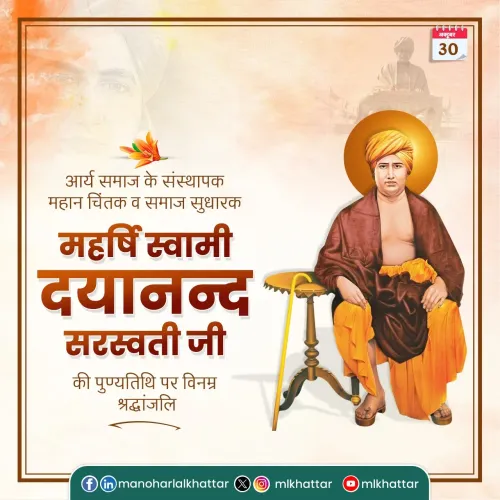
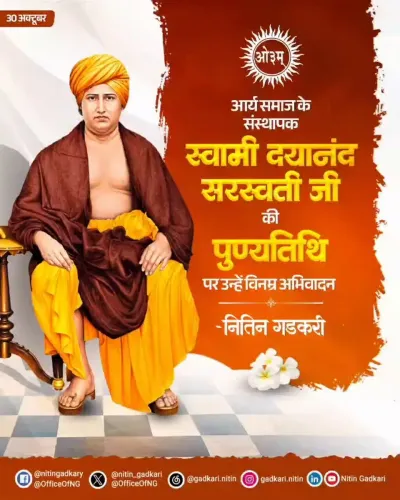
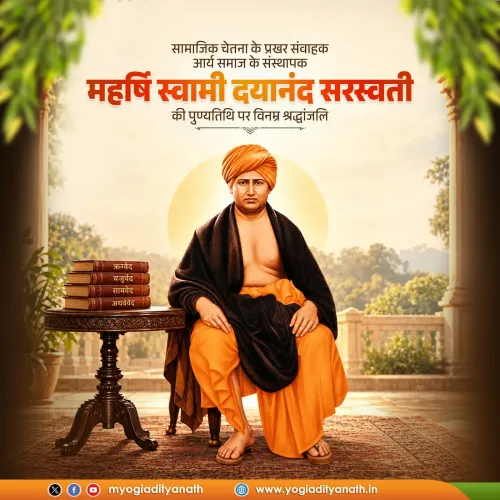
A reformer who took on caste hierarchy, idol worship, and colonial-era social decay with nothing but Vedic scripture and sheer conviction — Union Home Minister Amit Shah on Friday, 30 October 2026, paid tribute to Swami Dayanand Saraswati on his death anniversary, honouring the 19th-century philosopher as a 'nationalist thinker, great social reformer and visionary.'
Shah's post, written in Hindi, invoked Swami Dayanand's defining call — 'Vedon ki aur lauTo' ('Return to the Vedas') — crediting him with awakening a sense of cultural self-respect, national pride, and the consciousness of swarajya (self-rule) in Indian society. 'Swami Dayanand ji founded the Arya Samaj and fought against social evils and superstitions, paving the way for women's education, social harmony, and a society rooted in Vedic values,' Shah wrote.
The reformer who rewired 19th-century India
Swami Dayanand Saraswati founded the Arya Samaj in 1875, building it into one of the most consequential Hindu reform movements India has ever seen. His platform was radical for its era: monotheism drawn from Vedic texts, a direct assault on caste discrimination, rejection of idol worship, and an insistence that women deserved the same access to education as men. In a society where religious orthodoxy was deeply entrenched, his voice was a rupture.
The Arya Samaj became a vehicle not just for spiritual reform but for nationalist sentiment — its emphasis on swabhiman (self-respect) and indigenous identity feeding directly into the broader independence movement that would follow in the 20th century. Shah's tribute explicitly named this thread, linking Dayanand's work to the awakening of India's swarajya consciousness.
BJP tributes and the cultural-nationalist continuum
BJP leaders have consistently marked the death anniversaries of 19th-century reformers with public statements that weave together themes of cultural revival and national pride. For Shah — himself a senior ideologue of the party — honouring Dayanand Saraswati sits within a well-established political and cultural grammar: one that positions the Hindu reform tradition as a precursor to modern Indian nationhood.
Shah closed his tribute with a forward-looking note: 'Swami ji's entire life, thoughts, and ideals — rooted in truth, knowledge, service to the nation, and social upliftment — will continue to inspire the nation for eternity.'
Point of View
Shah signals that Dayanand's legacy is not merely historical but ideologically alive in contemporary politics. The Arya Samaj, while institutionally independent, shares significant ideological overlap with the RSS-BJP ecosystem's emphasis on Vedic civilisation and social reform. Tributes like this serve a dual function: they honour genuine reformers while also cementing a narrative of cultural continuity from Dayanand to the present ruling dispensation.
NationPress
30 Oct 2026
Frequently Asked Questions
Who was Swami Dayanand Saraswati?
Swami Dayanand Saraswati was a 19th-century Hindu philosopher, nationalist thinker, and social reformer who founded the Arya Samaj in 1875. He advocated a return to Vedic principles, opposed caste discrimination and idol worship, and championed women's education.
When did Amit Shah pay tribute to Swami Dayanand Saraswati?
Union Home Minister Amit Shah paid tribute to Swami Dayanand Saraswati on his death anniversary on Friday, 30 October 2026, via a post on X.
What is the Arya Samaj and who founded it?
The Arya Samaj is a Hindu reform movement founded by Swami Dayanand Saraswati in 1875. It promotes monotheism based on Vedic texts, women's education, and the eradication of social evils such as caste discrimination and superstition.
What did Amit Shah say about Swami Dayanand Saraswati's legacy?
Shah credited Swami Dayanand with awakening cultural self-respect and the spirit of self-rule in Indian society through his call to 'Return to the Vedas,' and praised his lifelong dedication to truth, knowledge, national service, and social upliftment.
Why is Swami Dayanand Saraswati important to India's independence movement?
Swami Dayanand's emphasis on self-respect, indigenous identity, and the concept of swarajya (self-rule) through the Arya Samaj directly inspired nationalist sentiment that fed into India's broader independence movement in the 20th century.