CM Bhajan Lal Shares Amit Shah's Drug-Free India Pledge by 2029
Synopsis
Rajasthan CM Bhajan Lal Sharma amplified Union Home Minister Amit Shah's pledge to eradicate India's drug problem by 31 December 2029, framing it as a joint centre-state battle under the Home Ministry's narcotics enforcement framework.
Key Takeaways
Amit Shah has pledged to make India free from drugs by 31 December 2029 — a fixed, public deadline.
The campaign is framed as a joint centre-state operation , not a unilateral central drive.
Rajasthan CM Bhajan Lal Sharma shared the statement on 21 October 2026 , signalling state alignment with Centre's anti-drug push.
Rajasthan is a frontline state on narcotics trafficking routes, making Centre-state coordination especially critical there.
Enforcement operates under the NDPS Act , with the NCB coordinating with state police forces.
Youth in border states are identified as the primary affected population in this campaign.
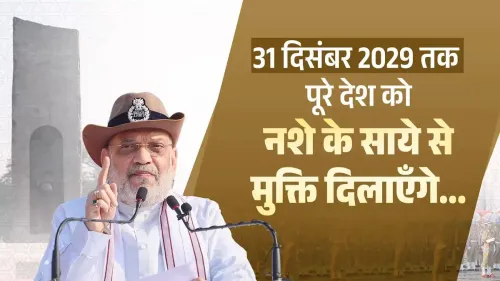
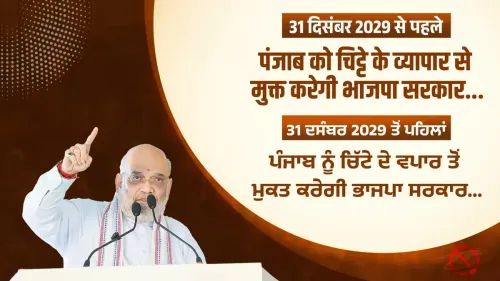
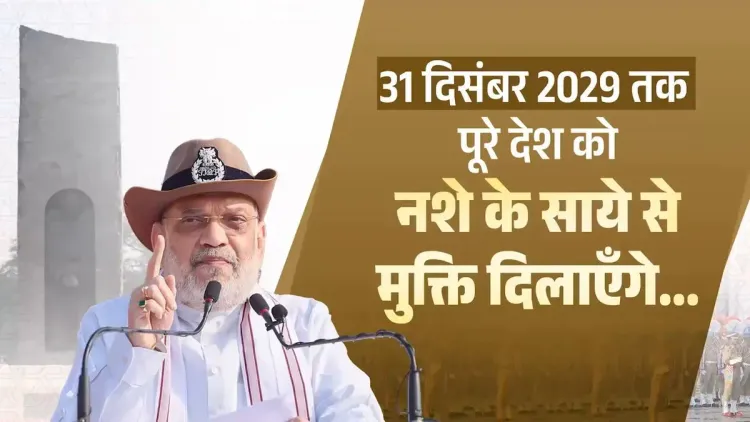
A deadline has been put on India's war against drugs. Rajasthan Chief Minister Bhajan Lal Sharma on Wednesday, 21 October 2026 shared a pointed declaration by Union Home and Cooperation Minister Amit Shah — that a united, joint campaign will free the country from the drug menace by 31 December 2029, a timeline of roughly three-and-a-half years.
Quoting Amit Shah directly, CM Sharma posted: 'साढ़े तीन साल में हम ड्रग के खिलाफ संयुक्त लड़ाई लड़कर 31 दिसंबर, 2029 तक देश को ड्रग की समस्या से मुक्ति दिलाएंगे।' — 'In three-and-a-half years, by waging a joint battle against drugs, we will free the country from the drug problem by 31 December 2029.'
Amit Shah's 2029 Deadline and What 'Joint Battle' Means
The framing matters. Shah's use of the word 'joint' — sanyukt ladai — signals a centre-state architecture: not a unilateral Central Bureau sweep, but a coordinated campaign enlisting state police forces, the Narcotics Control Bureau (NCB), and border agencies under a unified operational logic. The Union Home Ministry has spent recent years directing multi-state operations against trafficking networks under the Narcotic Drugs and Psychotropic Substances (NDPS) Act, and Shahás statements have consistently framed drug eradication as a non-negotiable national priority.
Setting a specific calendar deadline — rather than the usual open-ended 'we are committed' language — is itself a political and administrative signal. It invites accountability, and it puts state governments on notice that results will be measured against a fixed horizon.
Why Rajasthan's CM Is Amplifying This Message
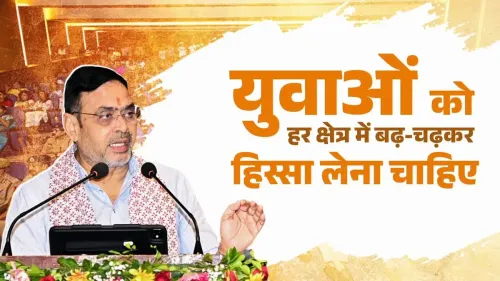
Rajasthan sits at the intersection of the Golden Crescent trafficking route, making it one of India's most exposed border states for narcotics inflow. For CM Bhajan Lal Sharma, sharing this pledge is not merely an act of political solidarity with the Centre — it is a direct signal to the state's own police machinery and to communities dealing with addiction that Jaipur is aligned with Delhi's escalating enforcement posture.
State-level action plans and periodic seizure data exchanged between Rajasthan and the NCB will be among the early markers of whether this ambition translates into measurable ground-level change. The youth of Rajasthan — disproportionately targeted by trafficking networks — remain the most consequential stakeholder in whether this deadline holds meaning.
The clock started today. Thirty-eight months to deliver on one of India's most stubborn public-health and security crises — and a Home Minister who has just put his name on a date.
Point of View
Amit Shah is shifting the political grammar from aspiration to accountability — a move that raises the stakes for both the Centre and state governments heading into a post-2024 governance cycle. Rajasthan CM Bhajan Lal Sharma's amplification of the message is strategically sound: it ties Jaipur's law-enforcement credentials to Delhi's larger narrative. The 'joint battle' framing is equally significant — it distributes both credit and responsibility across the federal architecture, insulating the Centre from sole ownership of failure while keeping states operationally engaged. Whether the 2029 deadline drives genuine institutional change or becomes a political rallying call will depend entirely on the granularity of the action plans that follow.
NationPress
21 Oct 2026
Frequently Asked Questions
What is Amit Shah's deadline to make India drug-free?
Union Home Minister Amit Shah has declared that India will be made free from drugs by 31 December 2029 , framing it as a joint battle fought over the next three-and-a-half years.
What did Rajasthan CM Bhajan Lal Sharma post about drugs?
Rajasthan CM Bhajan Lal Sharma shared Amit Shah's statement on 21 October 2026 , quoting the Home Minister's pledge to eliminate the drug problem through a coordinated centre-state campaign by 2029.
Which law governs India's anti-drug operations?
India's narcotics enforcement operates primarily under the Narcotic Drugs and Psychotropic Substances (NDPS) Act , with the Narcotics Control Bureau (NCB) coordinating multi-state operations alongside state police forces.
Why is Rajasthan important in India's anti-drug campaign?
Rajasthan is a border state exposed to trafficking routes linked to the Golden Crescent region, making it a critical node in India's narcotics supply chain disruption efforts.
What does 'joint battle against drugs' mean in Amit Shah's statement?
The phrase signals a coordinated centre-state approach involving the Home Ministry , the NCB , and state police forces working together — rather than a standalone central enforcement drive.