Shekhawat shares Jaipur's Diwali view from Nahargarh Fort
Synopsis
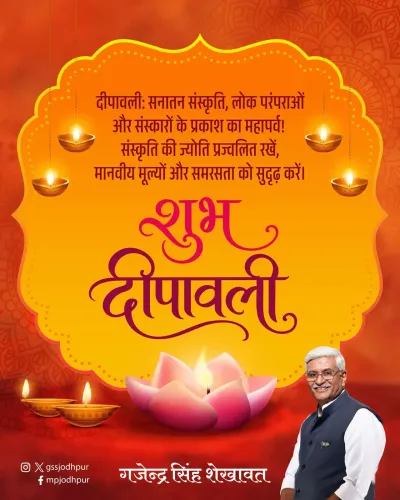
Union Culture and Tourism Minister Gajendra Singh Shekhawat posted a video of Jaipur's Diwali celebrations filmed from the historic Nahargarh Fort, calling it 'the light of Sanatan' and spotlighting Rajasthan's heritage circuit during the festival season.
Key Takeaways
Gajendra Singh Shekhawat , Union Culture and Tourism Minister, shared a Diwali video of Jaipur from Nahargarh Fort on 9 November 2026 .
Nahargarh Fort was built by Maharaja Sawai Jai Singh II in the early 18th century and offers a panoramic view of the Pink City.
The minister described the scene as 'सनातन की रोशनी' — 'the light of Sanatan' — framing the festival in terms of India's ancient cultural continuum.
The post aligns with the Ministry of Culture and Tourism 's broader strategy of promoting Rajasthan's fort-and-palace heritage circuit.
Diwali is a major driver of domestic tourism to Rajasthan's walled cities and heritage sites each festive season.
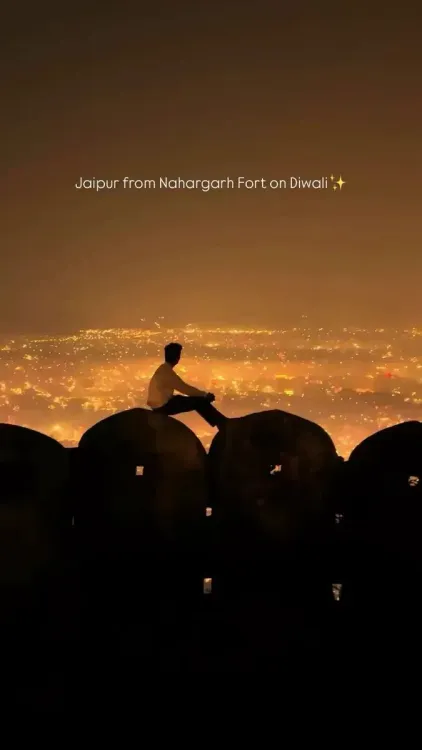
From the ramparts of a 300-year-old hill fort, Union Culture and Tourism Minister Gajendra Singh Shekhawat shared a sweeping video of Jaipur lit up for Diwali on Monday, 9 November 2026 — framing the Pink City's festive glow as a living expression of Sanatan tradition.
Posting from his official X handle, Shekhawat wrote: 'देखिए, नाहरगढ़ किला से जयपुर की दिवाली का मनमोहक दृश्य...' — 'See the enchanting view of Jaipur's Diwali from Nahargarh Fort' — adding, 'This is the light of Sanatan.' The clip, shot from the fort's vantage point high above the city, captures the sprawl of Jaipur shimmering with diyas and fireworks.
Nahargarh's panorama — a 300-year-old canvas for modern celebration
Nahargarh Fort, built by Maharaja Sawai Jai Singh II in the early 18th century, sits on the Aravalli ridge north-west of Jaipur and commands one of the most dramatic panoramas of the city. It is part of the triangle of forts — alongside Amer and Jaigarh — that forms Rajasthan's most visited heritage tourism circuit. During Diwali, the city's dense residential and commercial fabric below the ridge transforms into a sea of light, making the fort a natural grandstand for the festival.
Culture Ministry's heritage-and-festival push in Rajasthan
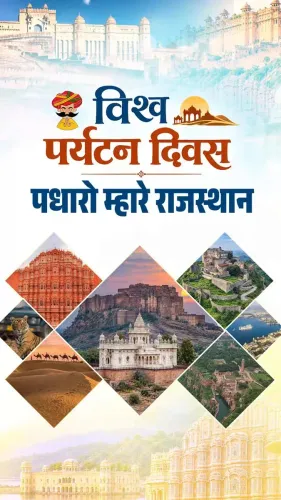
The post is consistent with a broader communication pattern from the Ministry of Culture and Tourism, which has actively used social media to spotlight India's forts and palaces as living cultural venues rather than static monuments. Rajasthan's heritage circuit — from Jaipur to Jodhpur, Shekhawat's own Lok Sabha constituency — sits at the centre of that strategy. Diwali, marking the victory of light over darkness, is among the most photographed festivals in Rajasthan and a significant driver of domestic tourism to the state's walled cities and fort complexes each October-November.
The minister's invocation of 'सनातन की रोशनी' ('the light of Sanatan') frames the festival within the cultural vocabulary the BJP has increasingly used to highlight India's ancient Hindu civilisational continuum — a framing that doubles as both a cultural statement and a soft-power tourism pitch for heritage Rajasthan.
As millions across India mark the festival of lights this week, the image of Jaipur blazing beneath a Mughal-era battlement is a reminder that India's oldest stones still hold its brightest celebrations.
Point of View
Such moments of festival visibility serve double duty: reinforcing the government's civilisational-heritage narrative while generating organic reach for India's most tourism-rich state. The consistent use of forts and monuments as social-media canvases signals that the ministry sees heritage sites not just as conservation priorities but as active stages for cultural diplomacy. Watch for whether such posts are followed by concrete heritage development or tourism-infrastructure announcements for Rajasthan ahead of the winter peak season.
NationPress
9 Nov 2026
Frequently Asked Questions
Where is Nahargarh Fort located?
Nahargarh Fort is located on the Aravalli ridge north-west of Jaipur , Rajasthan. Built by Maharaja Sawai Jai Singh II in the early 18th century, it offers a panoramic view of the entire Pink City below.
Why did Gajendra Singh Shekhawat post about Jaipur's Diwali?
As Union Culture and Tourism Minister , Shekhawat regularly shares content highlighting India's heritage sites and festivals. The post promotes Rajasthan's cultural tourism while framing Diwali as an expression of Sanatan tradition.
What does 'Sanatan ki Roshni' mean?
'सनातन की रोशनी' translates to 'the light of Sanatan' — a reference to the ancient Hindu civilisational tradition. In the context of the post, it frames Diwali's festival lights as a manifestation of that enduring heritage.
Is Nahargarh Fort open to visitors during Diwali?
Nahargarh Fort is maintained as a heritage site and is generally open to tourists. During festive seasons like Diwali, it draws visitors who come specifically for its dramatic panoramic views of Jaipur illuminated below.
What is Rajasthan's role in India's cultural tourism circuit?
Rajasthan — with forts at Jaipur, Jodhpur, Jaisalmer , and Udaipur — is one of India's most visited heritage destinations. The Ministry of Culture and Tourism has actively promoted its fort-and-palace circuit as a centrepiece of domestic and international tourism.