India-EU FTA, IMEC and investment pact reviewed at 7th Strategic Partnership meet
Synopsis
India and the EU held their seventh Strategic Partnership Review Meeting in New Delhi, locking in progress on a landmark FTA projected to cover two billion people and a quarter of global GDP — with PM Modi reportedly set to formally sign the pact in Brussels in December. IMEC, AI, semiconductors and ship recycling also made the agenda, signalling just how wide the partnership has grown.
Key Takeaways
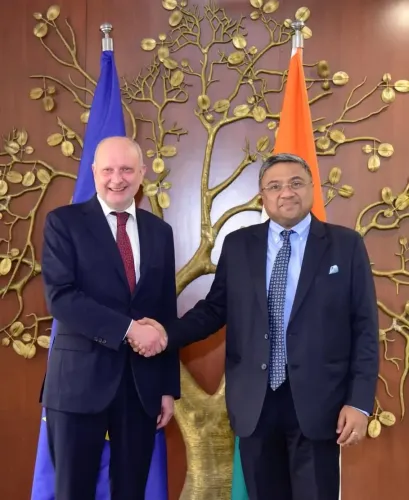
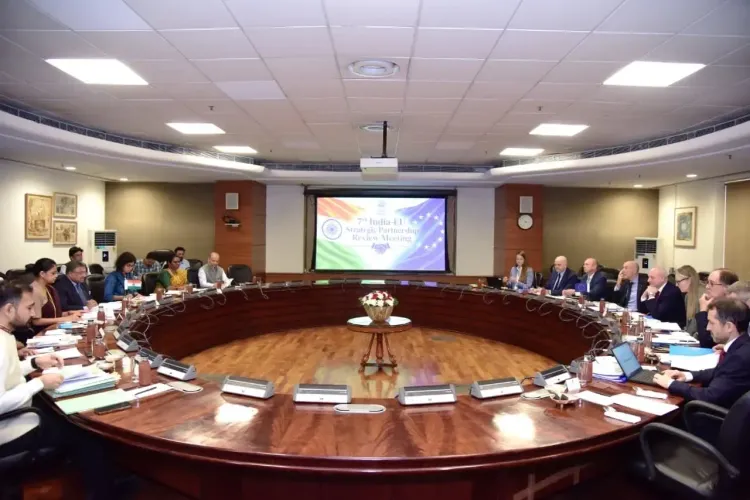
India and the EU held the 7th SPRM in New Delhi on 9 November 2026 , co-chaired by Sibi George (MEA) and Matti Maasikas (EEAS).
Both sides reviewed progress on the India-EU FTA and agreed to advance the Investment Protection Agreement and Agreement on Geographical Indications .
PM Modi is reportedly set to visit Brussels in December to formally sign the FTA — a deal covering over two billion people and roughly a quarter of global GDP .
Cooperation agreed on AI , quantum technologies , advanced semiconductors , DPI , and Horizon Europe association.
Both sides backed the India-Middle East-Europe Economic Corridor (IMEC) and Global Gateway connectivity projects.
The next SPRM will be held in Brussels in 2027 .
India and the European Union (EU) on Monday, 9 November 2026 held their seventh India-EU Strategic Partnership Review Meeting (SPRM) in New Delhi, reviewing progress on the India-EU Free Trade Agreement (FTA) and agreeing to advance talks on the Investment Protection Agreement and the Agreement on Geographical Indications, according to a joint press release. The meeting underscored the deepening trade and technology partnership between two of the world's largest economies.
Key Agenda and Agreements
The SPRM was co-chaired by Sibi George, Secretary (West) at India's Ministry of External Affairs (MEA), and Matti Maasikas, Deputy Secretary General for Geoeconomics and Interinstitutional Issues of the European External Action Service. Both sides reviewed implementation of the Joint Comprehensive Strategic Agenda adopted at the 16th India-EU Summit held in New Delhi on 27 January 2026. 'Both sides welcomed the very positive momentum in the India-EU relations,' the joint statement noted.
Trade, Technology and Supply Chains
Discussions ranged across a broad set of strategic priorities. Both sides agreed to strengthen supply chains and economic security through the Trade and Technology Council (TTC) and the Blue Valleys initiative. On critical and emerging technologies, the two sides discussed cooperation on artificial intelligence (AI), quantum technologies, digital public infrastructure (DPI), advanced semiconductors, clean tech, and biotechnology. They also expressed satisfaction over deepening research collaboration, including India's potential association with Horizon Europe.
Notably, the two sides agreed to pursue cooperation to include Indian ship recycling yards that comply with EU Regulation on Ship Recycling in its list of approved ship recycling facilities — a nod to India's growing role in global maritime trade infrastructure.
IMEC and Connectivity Push
Connectivity emerged as a headline theme. Both sides underscored the importance of strengthening the Global Gateway initiative and the India-Middle East-Europe Economic Corridor (IMEC), along with trilateral projects spanning clean energy, climate resilience, green mobility, and digitalisation. This comes amid sustained geopolitical interest in IMEC as a strategic counterweight to China's Belt and Road Initiative, though neither side referenced that framing explicitly.
People-to-People Ties and What Comes Next
Both delegations reviewed steps to enhance people-to-people contacts, covering talent mobility, education, and skills development. Progress on the European Legal Gateway Office was also discussed. The next SPRM is scheduled to take place in Brussels at a mutually convenient date in 2027.
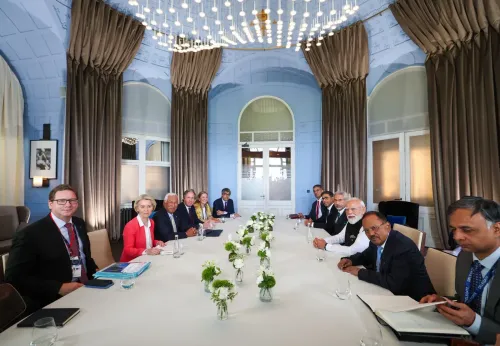
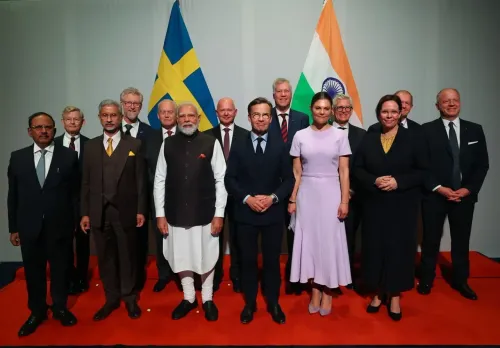
The meeting builds on significant recent momentum: last month, European Council President Antonio Costa indicated that Prime Minister Narendra Modi would visit Brussels in December to formally sign the India-EU FTA. The pact, whose negotiations were concluded earlier this year, is projected to create a combined market of over two billion people, accounting for roughly a quarter of the global economy. The formal signing, if confirmed, would mark a historic milestone in India-EU economic relations.
Point of View
India-EU trade is on the cusp of its most consequential upgrade in two decades. Yet the breadth of the agenda — from IMEC to AI to ship recycling — risks diffusing focus from the harder implementation work ahead. The investment protection agreement and GI pact remain unfinished; both have historically been flashpoints in EU trade negotiations. And IMEC, while diplomatically resonant, has seen limited on-ground progress since its 2023 G20 announcement. The real test of this partnership will be whether institutional momentum translates into ratified agreements and funded corridors — not just well-worded joint press releases.
NationPress
9 Nov 2026
Frequently Asked Questions
What was discussed at the 7th India-EU Strategic Partnership Review Meeting?
The 7th SPRM, held in New Delhi on 9 November 2026, covered the India-EU Free Trade Agreement, Investment Protection Agreement, Agreement on Geographical Indications, IMEC connectivity, AI and semiconductor cooperation, and people-to-people ties. Both sides reaffirmed commitment to deepening the India-EU Strategic Partnership.
When will India and the EU sign the Free Trade Agreement?
European Council President Antonio Costa reportedly indicated last month that PM Modi will visit Brussels in December to formally sign the India-EU FTA. Negotiations on the pact were concluded earlier in 2026.
What is the economic significance of the India-EU FTA?
The India-EU FTA is projected to create a combined market covering more than two billion people and accounting for approximately a quarter of global GDP. It is considered one of the most consequential bilateral trade deals of the decade.
What is IMEC and why was it on the agenda?
The India-Middle East-Europe Economic Corridor (IMEC) is a multi-country connectivity project linking India to Europe via the Middle East, covering clean energy, green mobility, and digitalisation. Both India and the EU reaffirmed support for it at the SPRM as a key pillar of their connectivity partnership.
What technology cooperation areas did India and the EU agree on?
Both sides agreed to cooperate on artificial intelligence, quantum technologies, advanced semiconductors, digital public infrastructure, clean tech, and biotechnology. India's potential association with the EU's Horizon Europe research programme was also welcomed.