Shekhawat Greets Nation's Daughters on Daughters Day
Synopsis
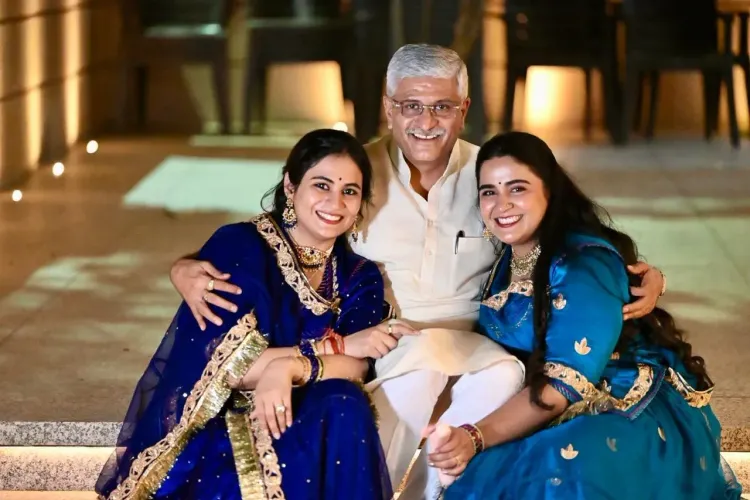
Union Culture and Tourism Minister Gajendra Singh Shekhawat marked Daughters Day on 27 September 2026 by honouring India's daughters as the identity of its culture and pride, noting their achievements across every field in the new India.
Key Takeaways
Daughters Day 2026 falls on Sunday, 27 September — the fourth Sunday of September.
Union Minister Gajendra Singh Shekhawat posted warm wishes in Hindi, calling daughters 'the identity of our culture and the symbol of our pride.' The Minister highlighted that daughters in the 'new India' are succeeding across every field and 'writing a new story' for the country.
As Culture and Tourism Minister , Shekhawat's message explicitly links Indian tradition's reverence for daughters with contemporary national achievement.
The post reflects a broader pattern of Culture Ministry communications that pair heritage with present-day aspiration on social observances.
On Daughters Day, Sunday, 27 September 2026, Union Culture and Tourism Minister Gajendra Singh Shekhawat extended warm wishes to girls and women across India, honouring them as symbols of the country's culture and national pride.
Posting in Hindi on X, the Minister wrote: 'बेटियाँ हमारी संस्कृति की पहचान और हमारे गौरव का प्रतीक हैं' — 'Daughters are the identity of our culture and the symbol of our pride.' He invoked Indian tradition's long-held reverence for daughters, then pivoted to the present, noting that in the new India, daughters are 'writing a new story of the country with their success in every field.'
Pride Rooted in Tradition, Pointed at the Present
Shekhawat, who holds the Culture portfolio in addition to Tourism, frames such observances as moments to connect India's living heritage with contemporary achievement. The message pairs the classical — daughters as bearers of cultural identity — with the modern: girls excelling across professions, sports, sciences, and public life. It is a register his ministry deploys deliberately, bridging ancient reverence and present-day aspiration.
As a senior BJP leader and Lok Sabha MP from Jodhpur, Rajasthan, Shekhawat's voice carries both the weight of government office and the resonance of a state where landmark campaigns for girl children have historically found strong political expression. Daughters Day, observed on the fourth Sunday of September, has grown steadily in public visibility in recent years as government ministries, civil society, and families use it to reaffirm commitment to gender equality and girl-child welfare.
A Culture Ministry Voice on a Social Occasion
Ministers holding the Culture portfolio routinely mark festivals and social observances with messages that tie Indian traditions to national identity. What gives this one a degree of institutional weight is its source: the minister specifically tasked with stewarding India's cultural narrative is the one asserting that daughters are central to that narrative — not peripheral to it. The phrasing 'हमारी शान हैं और हमारा अभिमान भी' — 'they are our honour and our pride too' — carries that deliberate doubling, an emphatic rather than a perfunctory salutation.
As India continues to debate gender parity in education, opportunity, and safety, a Cabinet minister's choice of language on a day dedicated to daughters is, at minimum, a signal of where the political and cultural conversation is being steered.
Point of View
Custodian of India's official cultural narrative, who is asserting that daughters are central — not ornamental — to that narrative. Paired with the BJP government's sustained political investment in girl-child welfare messaging, such posts function as low-cost but high-visibility signals of ideological continuity. The framing of daughters as agents of a 'new India story' is a deliberate bridge between cultural conservatism and modernising aspiration — a tension the ruling party navigates carefully. Watch whether the Culture Ministry follows such seasonal messaging with substantive policy action on gender equity in heritage and tourism sectors.
NationPress
28 Sept 2026
Frequently Asked Questions
When is Daughters Day 2026 in India?
Daughters Day 2026 in India falls on Sunday, 27 September 2026 — it is observed on the fourth Sunday of September each year.
What did Gajendra Singh Shekhawat say on Daughters Day 2026?
Gajendra Singh Shekhawat said daughters are 'the identity of our culture and the symbol of our pride,' adding that in the new India they are succeeding across every field and writing a new story for the country.
Who is Gajendra Singh Shekhawat?
Gajendra Singh Shekhawat is the Union Minister of Culture and Tourism , a senior BJP leader, and a Lok Sabha MP from Jodhpur, Rajasthan .
Why do Indian ministers post on Daughters Day?
Daughters Day is an increasingly prominent social observance in India, and ministers — particularly those holding portfolios related to culture and social welfare — use it to reaffirm commitments to girl-child welfare and gender equality, tying national tradition to contemporary progress.
What is the significance of the Culture Minister speaking on Daughters Day?
The Culture Ministry is tasked with shaping India's official cultural narrative; when its minister explicitly places daughters at the centre of that narrative, it carries institutional weight beyond a routine seasonal greeting.