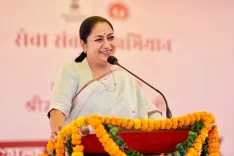
Shekhawat flags India's rise as global concert economy hub
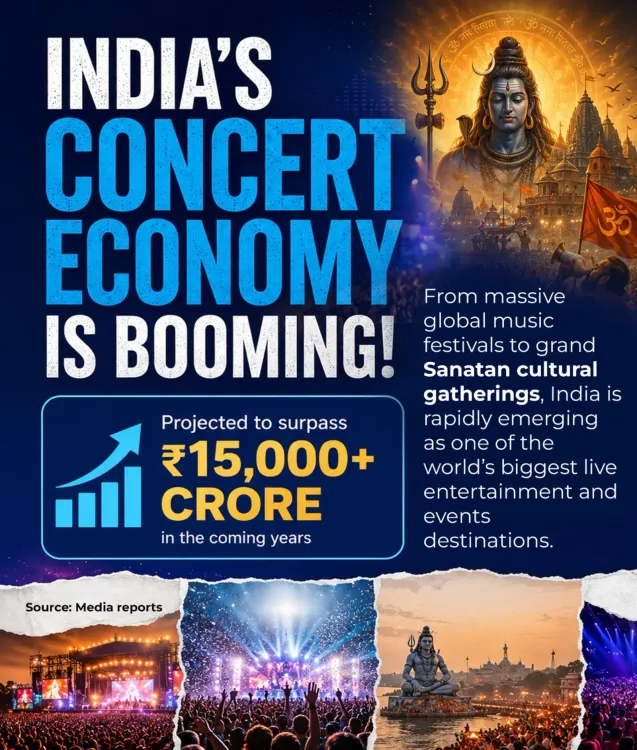
Synopsis
Union Culture and Tourism Minister Gajendra Singh Shekhawat has declared India is undergoing an 'unprecedented revolution' in live entertainment, positioning the country as a global destination where modern music festivals and traditional cultural gatherings converge into a powerful concert economy.
Key Takeaways
Gajendra Singh Shekhawat , Union Minister of Culture and Tourism, called India's live entertainment growth an 'unprecedented revolution' on 30 May 2026 .
The minister highlighted India's strategy of merging modern music festivals with deeply rooted cultural gatherings as its global differentiator.
The Ministry of Culture and Ministry of Tourism have pursued festival tourism as a tool to monetise India's intangible cultural heritage since at least 2021 .
Stakeholders including event organisers, performing artists, and hospitality businesses stand to benefit from a more formalised live events sector.
New guidelines for large-scale cultural and music events under the Ministry of Tourism are being watched as a potential next policy step.
India's large, young consumer base is drawing growing interest from international touring acts and global festival promoters.
Union Culture and Tourism Minister Gajendra Singh Shekhawat on Saturday, 30 May 2026, highlighted India's rapid emergence as a premier global destination for live entertainment, pointing to a convergence of modern music festivals and large-scale traditional cultural gatherings as the driving force behind a transformed concert economy.
Context
In his post on X, Shekhawat wrote: 'We are witnessing an unprecedented revolution in the live entertainment space. It is no longer just about standard music gigs.' He described India as 'rapidly emerging as a premier global destination by flawlessly merging modern music festivals with grand, deeply rooted cultural gatherings.' The minister's remarks signal a deliberate policy framing of India's live events sector as both a cultural asset and an economic engine.
The observation comes as the domestic live entertainment market has expanded significantly, with metropolitan cities and heritage destinations alike hosting large-format events that draw domestic and international audiences. The blending of classical traditions with contemporary performance formats has become a distinguishing feature of India's festival circuit.
Policy Backdrop
The Ministry of Culture and the Ministry of Tourism have, under successive administrations, pursued a strategy of monetising India's intangible cultural heritage through festival tourism and the broader meetings, incentives, conferences and exhibitions (MICE) sector. The Azadi Ka Amrit Mahotsav initiative of 2021-2022 provided an early template, featuring hundreds of government-supported cultural festivals that blended traditional and contemporary formats across the country.
Post-2020 policy frameworks have increasingly emphasised experiential tourism as a vehicle for attracting high-spending international visitors. This approach directly supports the government's broader goal of expanding the creative economy's contribution to GDP and employment generation in the performing arts and allied sectors.
Stakeholders and Impact
The shift Shekhawat describes has tangible implications for a wide range of actors: event organisers, venue operators, performing artists, hospitality businesses, and state tourism boards all stand to benefit from a more formalised and internationally competitive festival economy. For artists — classical, folk, and contemporary alike — the convergence of formats opens new revenue streams and wider audiences.
International touring acts and global festival promoters have shown growing interest in India as a market, drawn by a large, young, and increasingly affluent consumer base. The minister's framing positions the government as an active enabler of this trend rather than a passive observer.
What's Next
Policy watchers are tracking the possible rollout of new guidelines for large-scale music and cultural events under the Ministry of Tourism, as well as the potential inclusion of festival infrastructure investment in upcoming state tourism budgets. A clearer regulatory and promotional framework could accelerate the formalisation of what remains a partly unorganised live events sector.
If the government follows through with enabling policy — including streamlined permissions, infrastructure support, and international co-promotion — India could consolidate its position as a genuine rival to established global festival destinations, turning cultural soft power into measurable economic output.
Point of View
' he is staking a reputational claim for the BJP-led government in a sector that resonates strongly with urban, younger voters. The convergence of culture and tourism portfolios in a single ministry gives Shekhawat unusual leverage to push cross-sectoral policy, and this post suggests he intends to use it. Watched alongside likely forthcoming event-sector guidelines, the statement reads as groundwork for a more structured government role in India's fast-growing creative economy.
NationPress
24 Sept 2026
Frequently Asked Questions
What did Gajendra Singh Shekhawat say about India's concert economy?
Shekhawat said India is witnessing an 'unprecedented revolution' in live entertainment and is rapidly emerging as a premier global destination by merging modern music festivals with grand, traditional cultural gatherings.
What is India's concert economy?
India's concert economy refers to the commercial ecosystem around live entertainment events — including music concerts, cultural festivals, and large-format performances — which has grown significantly as consumer spending on experiences has risen.
How is the Indian government supporting live entertainment and festival tourism?
The Ministry of Culture and Ministry of Tourism have backed festival tourism through initiatives like Azadi Ka Amrit Mahotsav and are expected to issue new guidelines for large-scale music and cultural events to formalise and grow the sector.
Why is India becoming a global music festival destination?
India's combination of a large young population, rich intangible cultural heritage, and government policy support for experiential tourism has made it attractive to both domestic audiences and international touring acts and promoters.
What is the role of the Ministry of Culture in India's live events sector?
The Ministry of Culture, headed by Shekhawat, is responsible for promoting arts, preserving heritage, and integrating cultural events with tourism — making it a key enabler of the festival economy's growth.