Shekhawat Inspects Yuge Yugeen Bharat Museum Progress
Synopsis
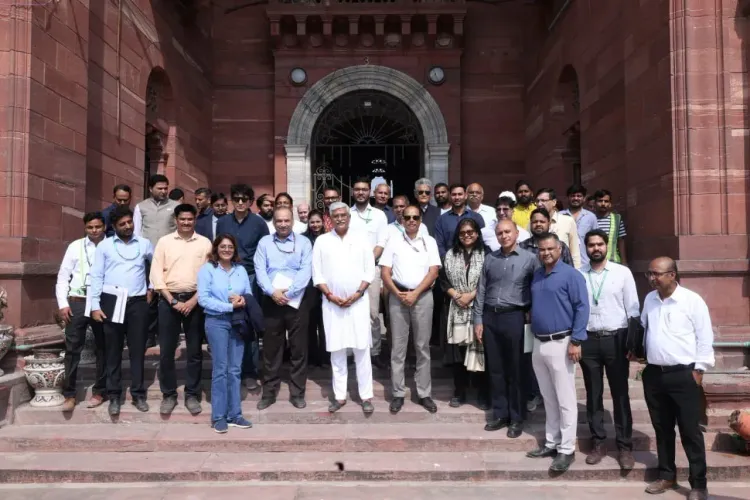
Union Culture Minister Gajendra Singh Shekhawat inspected the proposed Yuge Yugeen Bharat National Museum in New Delhi on 22 October 2026, calling it a planned effort aligned with PM Modi's vision to present India's civilisational heritage across the ages to future generations.
Key Takeaways
Union Minister Gajendra Singh Shekhawat personally inspected the proposed Yuge Yugeen Bharat National Museum site in New Delhi on 22 October 2026 .
The museum is designed to showcase India's civilisational heritage, art, and culture 'across all eras' in a single institution.
The project is framed as aligned with Prime Minister Narendra Modi's vision for presenting India's cultural legacy.
Shekhawat described it as a 'planned effort' to connect India's glorious heritage with future generations.
The Ministry of Culture is the nodal body overseeing the project, with tourism integration also a stated goal.
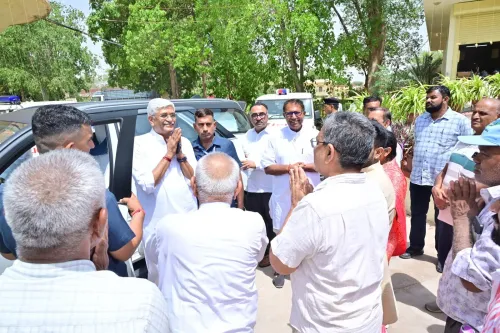
A sweeping new chapter in India's cultural infrastructure took shape on Thursday, 22 October 2026, as Union Culture and Tourism Minister Gajendra Singh Shekhawat conducted a hands-on inspection of the proposed Yuge Yugeen Bharat National Museum in New Delhi — a project billed as the most ambitious attempt yet to house India's civilisational story under one roof.
Sharing his assessment on X, the minister wrote: 'नई दिल्ली में प्रस्तावित युगे युगीन भारत राष्ट्रीय संग्रहालय के कार्यों का निरीक्षण कर परियोजना की प्रगति का जायजा लिया' — 'I inspected the works of the proposed Yuge Yugeen Bharat National Museum in New Delhi and took stock of the project's progress.' He described the museum as developing in alignment with Prime Minister Narendra Modi's vision and said it would present India's 'rich civilisational heritage, art and culture through the journey of the ages', while also serving as a planned effort to connect that legacy with future generations.
What the 'Yuge Yugeen' vision promises
The name itself signals ambition: Yuge Yugeen translates literally as 'across all eras' or 'timeless' — signalling a museum designed not around a single dynasty or artefact collection but around the full arc of Indian civilisation. The project falls under the Ministry of Culture and is positioned as a flagship statement of the government's cultural infrastructure drive, placing heritage on the same priority tier as roads and railways.
India's existing national museums — spread across archaeology, natural history and modern art — have long been criticised for dated presentation formats and inadequate space. A purpose-built institution of this scale, if executed, would represent a generational upgrade to how the country displays and narrates its own past.
Shekhawat's inspection and what it signals
Ministerial site visits of this kind are deliberate signals: they keep projects publicly accountable and demonstrate political ownership at the cabinet level. For Shekhawat, the Jodhpur MP who holds both the Culture and Tourism portfolios, the museum ties his two briefs together neatly — a world-class heritage institution in the capital is simultaneously a magnet for cultural tourism and a soft-power statement for India abroad.
The broader government pattern is consistent: over recent years, new cultural campuses, revamped heritage corridors, and museum modernisation drives have been rolled out with growing pace, all framed under the idea that a confident India must tell its own story in its own spaces.
The next milestones to watch are formal construction timeline announcements and any budget line items that surface in upcoming parliamentary sessions — details that will convert ministerial intent into measurable progress.
India is building a museum meant to last the ages. The question now is how fast it rises.
Point of View
The government signals that cultural infrastructure is now strategic, not ceremonial. For Shekhawat, holding both the Culture and Tourism portfolios, the project is a convergence point — a heritage institution that can double as a tourism anchor. The real test will be delivery: timelines and funding allocations in coming budget cycles will determine whether this vision translates into mortar and exhibits.
NationPress
22 Oct 2026
Frequently Asked Questions
What is the Yuge Yugeen Bharat National Museum?
The Yuge Yugeen Bharat National Museum is a proposed national museum in New Delhi intended to showcase India's civilisational heritage, art, and culture across historical periods, developed under the Ministry of Culture.
Where will the Yuge Yugeen Bharat National Museum be located?
The museum is proposed to be located in New Delhi , India's capital.
Who inspected the Yuge Yugeen Bharat National Museum project?
Union Culture and Tourism Minister Gajendra Singh Shekhawat inspected the project on 22 October 2026 and reviewed its progress.
What is the vision behind the Yuge Yugeen Bharat museum?
According to Minister Shekhawat, the museum is being developed in alignment with Prime Minister Narendra Modi's vision to present India's rich civilisational heritage through the journey of the ages and to connect that legacy with future generations.
Which ministry is responsible for the Yuge Yugeen Bharat National Museum?
The Ministry of Culture, Government of India is the nodal ministry overseeing the project.