Shekhawat launches Yuva Somnath Yatra from New Delhi
Synopsis
Union Culture Minister Gajendra Singh Shekhawat launched the Yuva Somnath Yatra from New Delhi on 20 November 2026 under the Somnath Swabhiman Parv, sending youth pilgrims to Gujarat's historic Somnath Temple to reconnect with India's cultural heritage and history of resilience.
Key Takeaways
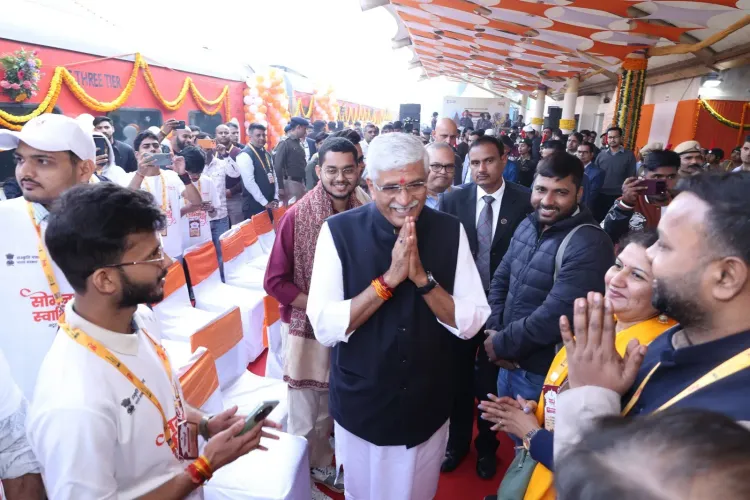
Union Culture and Tourism Minister Gajendra Singh Shekhawat flagged off the Yuva Somnath Yatra from Safdarjung Railway Station, New Delhi on 20 November 2026 .
The yatra is part of the Somnath Swabhiman Parv , a cultural programme aimed at connecting younger generations with the history and significance of the Somnath Temple in Gujarat.
Somnath Temple was destroyed by Mahmud of Ghazni in 1026 CE and rebuilt multiple times; the modern reconstruction was inaugurated by President Rajendra Prasad in May 1951 following Sardar Vallabhbhai Patel's initiative.
The initiative aligns with the Ministry of Tourism's PRASAD scheme (launched 2014–15) for pilgrimage site development and broader central-state coordination on Gujarat tourism.
Gujarat Chief Minister Bhupendra Patel and Gujarat Tourism are tagged partners in the initiative.
Shekhawat urged youth participants to learn Somnath's history, reconnect with their heritage, and carry forward India's cultural consciousness.
Invokers may have crumbled and conquerors long faded into dust — but the flame at Somnath never went out. Union Culture and Tourism Minister Gajendra Singh Shekhawat flagged off the Yuva Somnath Yatra from Safdarjung Railway Station, New Delhi, on Friday, 20 November 2026, launching a youth pilgrimage to one of Hinduism's most historically charged shrines under the Somnath Swabhiman Parv initiative.
Posting on X, Shekhawat captured the spirit of the launch in a phrase that distilled centuries of history: 'Aakranta mit gaye, aastha amit rahi' — 'The invaders vanished, the faith endured.' He called the Somnath Temple an 'invincible symbol of India's unbreakable faith and cultural self-respect,' and urged young participants to deepen their knowledge of the temple's history, reconnect with that heritage, and carry the flame of cultural consciousness forward.
A temple that refused to fall
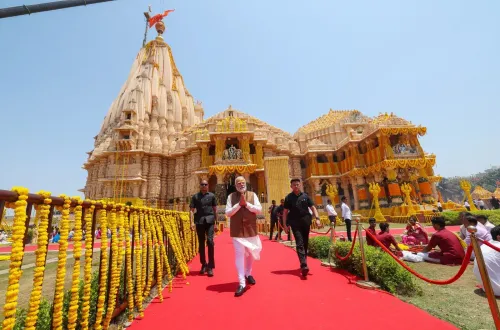
The Somnath Temple, located in Prabhas Patan, Gujarat, is among the most storied shrines in India — and among the most violently tested. The temple was sacked and looted by Mahmud of Ghazni in 1026 CE, an act that entered the collective memory of the subcontinent as a defining moment of cultural assault. It was razed and rebuilt multiple times over the subsequent centuries, each reconstruction a defiant act of restoration.
The modern chapter opened under Sardar Vallabhbhai Patel, who championed the temple's reconstruction after Independence. President Rajendra Prasad inaugurated the restored structure in May 1951, marking a moment the government explicitly framed as cultural renewal. That lineage — of destruction, resilience, and state-backed revival — is precisely the story the Yuva Somnath Yatra wants young Indians to absorb.
Swabhiman Parv and the government's heritage pivot
The Somnath Swabhiman Parv is a broader cultural programme designed to spotlight the temple's history and weave younger generations into its narrative. The yatra launched today is a centrepiece of that effort — a physical journey meant to translate historical awareness into lived experience.
This sits within a wider pattern of central government cultural programming. The Ministry of Tourism's PRASAD scheme, launched in 2014–15, has channelled investment into pilgrimage sites across the country. Gujarat, home to Somnath, has become a focal point for coordinated state-and-centre tourism promotion, with Chief Minister Bhupendra Patel and Gujarat Tourism tagged in Shekhawat's post as partners in the initiative.
Youth, heritage, and what the yatra is meant to do
Youth-oriented heritage programmes have become a recurring instrument in India's cultural policy toolkit — the idea being that personal engagement with a site creates a bond that textbooks alone cannot. By routing the yatra through Safdarjung Railway Station, a central Delhi departure point, the initiative draws participants from across north India and frames the journey as national rather than purely regional.
Shekhawat closed his post with the salutation 'Om Shri Somnathaya Namah' and wished all travellers a blessed journey. The yatra's reach, participant numbers, and any follow-on announcements of similar heritage corridors to other historically significant sites will be the next metrics to watch.
The invaders are gone. The temple still stands. Now, the government wants to make sure the next generation knows exactly why that matters.
Point of View
With youth as the primary vehicle. By pairing a government minister's flag-off with a heritage pilgrimage explicitly framed around 'swabhiman' (self-respect), the initiative bridges tourism policy and identity politics in a way that has become a signature of the current dispensation. The invocation of Sardar Patel's post-Independence reconstruction adds a cross-party legitimacy layer, allowing the programme to be framed as a national rather than partisan project. Whether the yatra translates into durable heritage awareness or remains a symbolic gesture will depend on scale, follow-through, and whether similar corridors are activated at other contested historical sites.
NationPress
20 Nov 2026
Frequently Asked Questions
What is the Yuva Somnath Yatra?
The Yuva Somnath Yatra is a youth pilgrimage journey launched from Safdarjung Railway Station in New Delhi on 20 November 2026, taking young participants to the Somnath Temple in Gujarat under the Somnath Swabhiman Parv cultural programme.
Who launched the Yuva Somnath Yatra?
Union Culture and Tourism Minister Gajendra Singh Shekhawat flagged off the yatra from New Delhi on 20 November 2026.
What is the Somnath Swabhiman Parv?
The Somnath Swabhiman Parv is a cultural programme organised to highlight the history and significance of the Somnath Temple and to connect younger generations with India's heritage of cultural resilience.
Why is Somnath Temple historically significant?
The Somnath Temple in Prabhas Patan, Gujarat, is one of India's most ancient Shiva temples. It was famously destroyed by Mahmud of Ghazni in 1026 CE and rebuilt multiple times; the modern restoration was inaugurated by President Rajendra Prasad in May 1951 following Sardar Vallabhbhai Patel's initiative.
What government scheme supports pilgrimage site development in India?
The Ministry of Tourism's PRASAD scheme, launched in 2014–15, is dedicated to the development and beautification of pilgrimage sites across India, including Somnath.