Shekhawat meets Rajasthan Education Minister Dilawar in Delhi
Synopsis
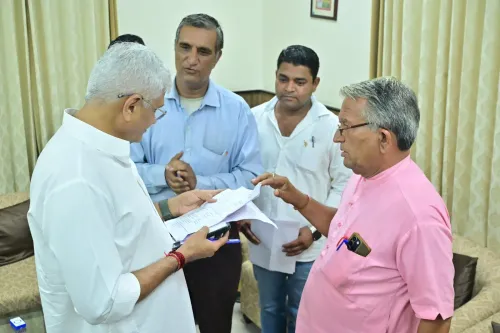
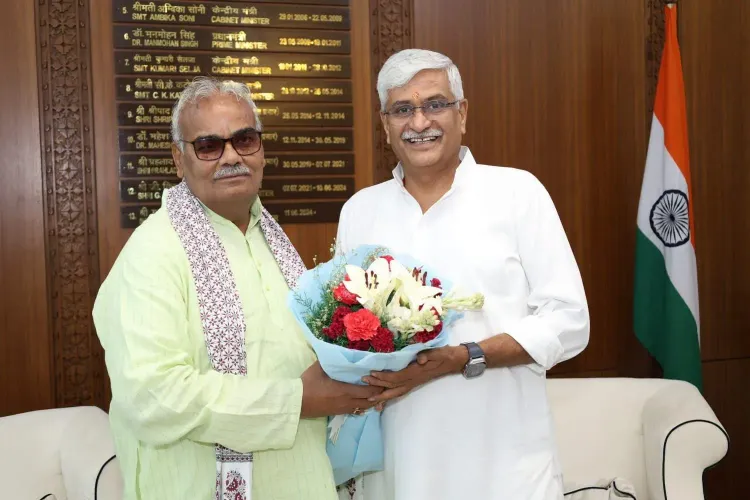
Union Culture and Tourism Minister Gajendra Singh Shekhawat met Rajasthan Education and Panchayati Raj Minister Madan Dilawar in New Delhi on 2 July 2026. The two leaders discussed public welfare issues in a courtesy meeting that reflects routine BJP state-centre coordination on education and rural governance.
Key Takeaways
Gajendra Singh Shekhawat , Union Minister of Culture and Tourism, hosted Rajasthan Education and Panchayati Raj Minister Madan Dilawar for a courtesy meeting in New Delhi on 2 July 2026 .
The discussion focused on topics related to public welfare ( जनकल्याण ), as stated in Shekhawat's post on X.
Madan Dilawar holds the education and panchayati raj portfolio in Rajasthan's BJP government , which came to power in December 2023 .
The meeting reflects ongoing state-centre coordination between BJP-governed Rajasthan and the Union government on welfare delivery.
Key policy frameworks underpinning the discussion include the National Education Policy 2020 and the 73rd Constitutional Amendment of 1992 on Panchayati Raj.
Union Culture and Tourism Minister Gajendra Singh Shekhawat received Rajasthan Education and Panchayati Raj Minister Madan Dilawar for a courtesy call in New Delhi on 2 July 2026. The two leaders discussed issues related to public welfare, according to a post by Shekhawat on X.
Context
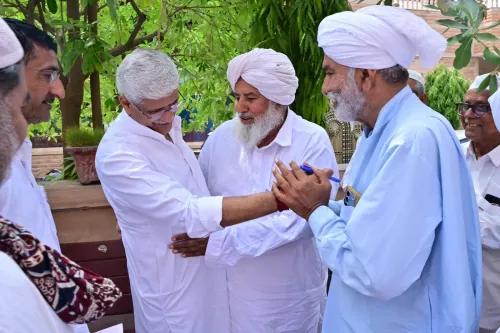
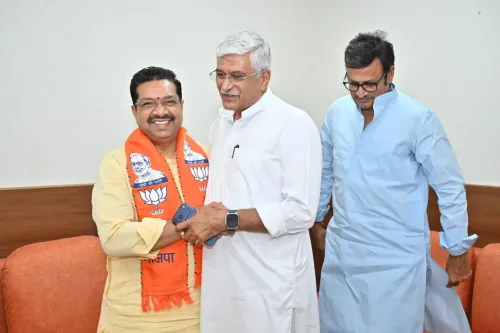
Shekhawat shared on X that Dilawar — referred to as 'माननीय शिक्षा एवं पंचायती राज मंत्री' (Honourable Education and Panchayati Raj Minister) — came for a 'शिष्टाचार भेंट' (courtesy meeting) and that discussions were held on topics connected to 'जनकल्याण' (public welfare). The post was accompanied by an image from the meeting.
Madan Dilawar holds the education and panchayati raj portfolio in Rajasthan's BJP government, which came to power in December 2023. His ministry oversees school education reform and the functioning of rural local-body institutions across the state.
Policy Backdrop
Education and panchayati raj are two areas where central and state governments must work in close coordination. The National Education Policy 2020 lays out a broad framework for school and higher education reform, and its ground-level implementation depends heavily on state education departments.
Similarly, Panchayati Raj institutions draw their constitutional mandate from the 73rd Constitutional Amendment of 1992, which devolved powers to local rural bodies. Central welfare schemes — ranging from rural sanitation to livelihood programmes — are channelled through these institutions, making state-centre alignment critical for effective delivery.
Stakeholders and Impact
Rajasthan is one of India's largest states by area, with a significant rural population that depends on panchayati raj bodies for access to government services. Coordination between state ministers and Union ministers can shape the pace at which centrally sponsored schemes reach beneficiaries in districts and gram panchayats.
The Rajasthan education department and the state's panchayati raj institutions are the primary stakeholders. Any alignment reached between the two sides on welfare delivery could affect millions of students and rural residents across the state.
What's Next
Meetings of this nature between BJP-ruled state ministers and Union ministers are part of routine administrative coordination, particularly around budget cycles when scheme allocations and implementation targets are reviewed. Follow-up coordination on education and panchayat-linked welfare programmes is possible in the coming weeks.
Given that both leaders belong to the same party at the state and central levels, such interactions reflect the broader emphasis on aligning state delivery mechanisms with central policy priorities — a pattern that has been consistent in BJP governance since 2014.
Point of View
Where state departments seek central support for scheme implementation. The emphasis on 'public welfare' as the stated agenda signals alignment on voter-facing programmes — education and panchayat-linked services — that carry political as well as administrative weight. Consistent coordination of this kind has been a defining feature of BJP's governance model since 2014, blurring the traditional distance between New Delhi and state capitals.
NationPress
1 Oct 2026
Frequently Asked Questions
Why did Rajasthan Education Minister Madan Dilawar meet Gajendra Singh Shekhawat in Delhi?
Madan Dilawar visited Union Minister Gajendra Singh Shekhawat in New Delhi on 2 July 2026 for a courtesy call, during which they discussed issues related to public welfare, including areas touching on education and panchayati raj.
Who is Madan Dilawar?
Madan Dilawar is the Rajasthan state minister holding the Education and Panchayati Raj portfolio in the BJP government that came to power in Rajasthan in December 2023.
Who is Gajendra Singh Shekhawat?
Gajendra Singh Shekhawat is the Union Minister of Culture and Tourism, a senior BJP leader, and a Lok Sabha MP from Jodhpur, Rajasthan.
What is Panchayati Raj and why does it matter for welfare delivery?
Panchayati Raj refers to the system of local self-governance in rural India, established constitutionally by the 73rd Amendment of 1992. Central welfare schemes for rural populations are channelled through these institutions, making state-centre coordination essential.
What is the significance of BJP ministers from the state meeting Union ministers?
When BJP-ruled state ministers meet Union ministers, it facilitates alignment between state delivery mechanisms and central policy priorities, particularly for schemes under the National Education Policy 2020 and rural governance programmes.