Shekhawat Links Kashmir Tourism to Spirituality in TV Interview
Synopsis
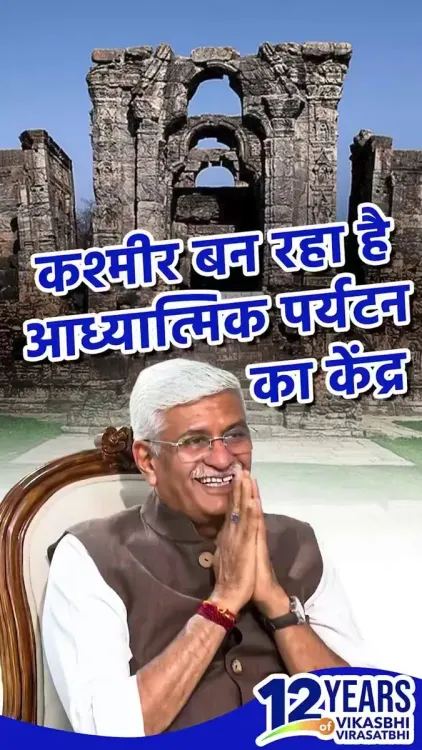
Union Culture and Tourism Minister Gajendra Singh Shekhawat has said the Modi government linked Jammu and Kashmir's tourism to spirituality, breaking what he called earlier geographic limits on the sector. He made the remarks in a television interview shared on his X account on 13 June 2026.
Key Takeaways
Gajendra Singh Shekhawat stated the Modi government has connected Kashmir 's tourism to spirituality, expanding its scope.
The minister claimed that before the current government, Jammu and Kashmir 's tourism was confined to specific areas.
The PRASAD scheme , launched in 2014-15 , supports pilgrimage and spiritual tourism infrastructure across India , including J&K .
The 2019 reorganisation of Jammu and Kashmir into a Union Territory brought tourism policy under closer Central government oversight.
Spiritual tourists — pilgrims to Amarnath , Vaishno Devi , and Buddhist sites — already form a large share of total arrivals in the region.
Further announcements on spiritual tourism circuits or infrastructure funding for J&K are being watched as a follow-through on the minister's remarks.
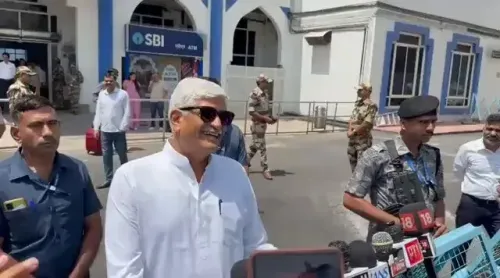
Union Culture and Tourism Minister Gajendra Singh Shekhawat said on Saturday, 13 June 2026 that the Modi government has connected Jammu and Kashmir's tourism ecosystem to spirituality, arguing that the region's visitor economy was previously confined to specific geographic pockets. The minister made the remarks in a television interview, a clip of which he shared on his official X account.
Context
Posting in Hindi, Shekhawat wrote: 'कश्मीर के टूरिज़्म को मोदी जी की सरकार ने अध्यात्म से भी जोड़ा है' ['The Modi government has also linked Kashmir's tourism to spirituality']. He added that before the current government, tourism in Jammu and Kashmir had been 'limited to specific areas' (क्षेत्र विशेष तक सीमित). The post carried a video of his interview on a Hindi-language news channel.
The remarks place Jammu and Kashmir's tourism development squarely within the broader cultural and spiritual framing that the Ministry of Culture and Tourism has adopted in recent years. Shekhawat, who represents Jodhpur in the Lok Sabha, has been an active spokesperson for the government's tourism agenda since taking charge of the ministry.
Policy Backdrop
The Central government's PRASAD scheme, launched in 2014-15, was designed to develop infrastructure at pilgrimage and spiritual tourism sites across India, and its ambit has extended to sites in Jammu and Kashmir. The integration of spiritual circuits into mainstream tourism planning accelerated after the 2019 reorganisation of the former state into two Union Territories — Jammu and Kashmir and Ladakh — which brought tourism policy more directly under Central oversight.
The policy rationale, as articulated by the ministry, is to diversify the visitor base beyond leisure travellers to include religious pilgrims and spiritual seekers, thereby spreading economic activity across a wider geography and a longer season. Destinations such as the Vaishno Devi shrine, the Amarnath cave, and emerging Buddhist circuits in the region are central to this approach.
Stakeholders and Impact
The Jammu and Kashmir tourism industry — comprising hoteliers, tour operators, transporters, and local artisans — stands to gain from any expansion of visitor segments. Spiritual tourists often travel in larger groups, seek longer stays, and visit during off-peak leisure seasons, which could help smooth the demand curve that has historically made the sector volatile.
Religious pilgrims, particularly those undertaking the annual Amarnath Yatra or visiting Vaishno Devi, already represent a substantial share of total arrivals in the Union Territory. Formalising spiritual tourism as a policy category could unlock dedicated infrastructure funding and promotional budgets from the Centre.
What's Next
Attention will now turn to whether the Ministry of Culture and Tourism follows the minister's remarks with concrete announcements — such as new spiritual tourism circuits, enhanced pilgrim facilities, or allocations under centrally sponsored schemes — specifically targeting Jammu and Kashmir. The rollout of any such projects would be a test of whether the government's stated ambition translates into on-ground development for one of India's most strategically significant tourism destinations.
Point of View
Not merely an economic one — a narrative the BJP has cultivated since the 2019 reorganisation. By invoking spirituality, the government seeks to broaden the constituency of stakeholders invested in J&K's stability and growth, drawing in pilgrims and religious travellers from across the country. The claim that tourism was previously 'limited to specific areas' is a political contrast device aimed at the pre-2019 dispensation. Whether the rhetorical push is matched by measurable infrastructure investment under schemes like PRASAD will determine its policy credibility.
NationPress
27 Sept 2026
Frequently Asked Questions
What did Gajendra Singh Shekhawat say about Kashmir tourism?
Shekhawat said the Modi government has linked Kashmir 's tourism to spirituality and expanded it beyond the limited geographic zones it was confined to earlier.
How has the Modi government connected Kashmir tourism to spirituality?
Through schemes like PRASAD (launched 2014-15 ), the Central government has invested in pilgrimage infrastructure at sites such as Amarnath and Vaishno Devi , formally integrating spiritual tourism into J&K 's visitor economy.
What is the PRASAD scheme and does it apply to Jammu and Kashmir?
The PRASAD scheme is a Central government programme launched in 2014-15 to develop infrastructure at pilgrimage and spiritual tourism sites across India , and its scope covers destinations in Jammu and Kashmir .
How did the 2019 reorganisation affect Jammu and Kashmir tourism?
After the 2019 reorganisation , Jammu and Kashmir became a Union Territory, bringing its tourism policy under direct Central government oversight and enabling closer integration with national tourism schemes.
Who is Gajendra Singh Shekhawat?
Gajendra Singh Shekhawat is the Union Minister of Culture and Tourism, a senior BJP leader, and a Lok Sabha MP representing Jodhpur in Rajasthan .