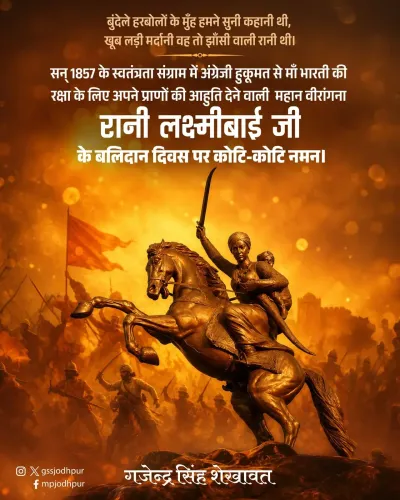
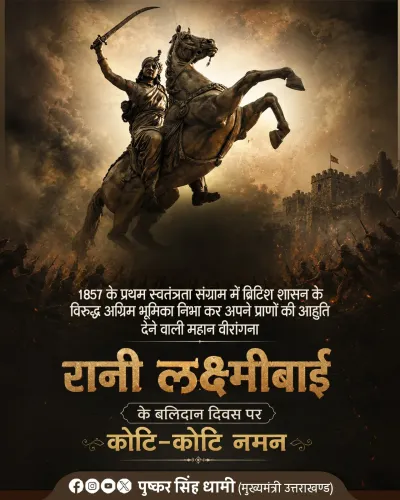
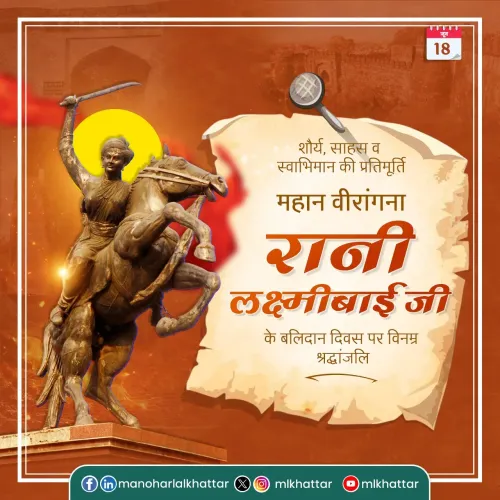
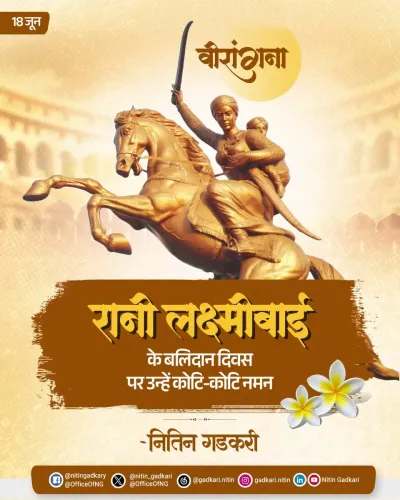
Shekhawat pays tribute to Rani Lakshmibai on her birth anniversary
Synopsis
Union Culture and Tourism Minister Gajendra Singh Shekhawat paid tribute to Rani Lakshmibai on her birth anniversary on 19 November 2026, honouring the warrior queen's role in the 1857 First War of Independence against British rule.
Key Takeaways
Union Culture and Tourism Minister Gajendra Singh Shekhawat posted a tribute to Rani Lakshmibai on her birth anniversary, 19 November 2026 .
Rani Lakshmibai was born on 19 November 1828 and died in battle near Gwalior in June 1858 .
She played a leading role against British forces during the 1857 First War of Independence and refused to surrender the kingdom of Jhansi .
The tribute is part of a cross-party annual tradition of honouring 1857 resistance figures on this date.
As Union Culture Minister, Shekhawat's post also reflects an institutional responsibility to uphold India's historical heritage.
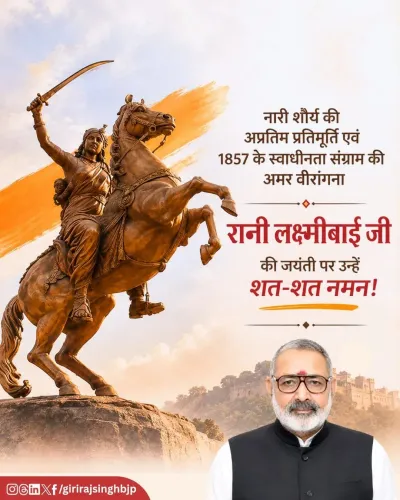
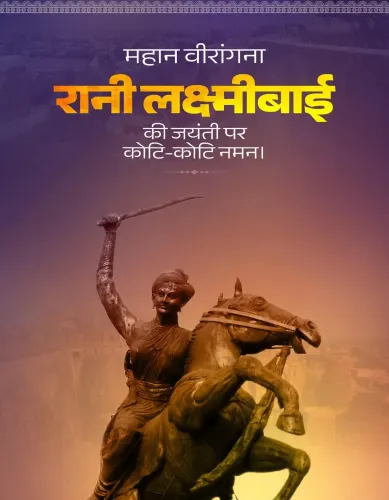
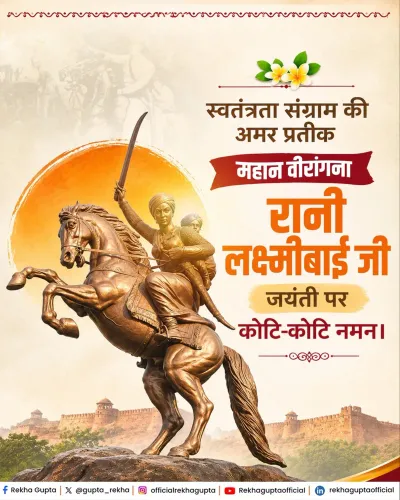
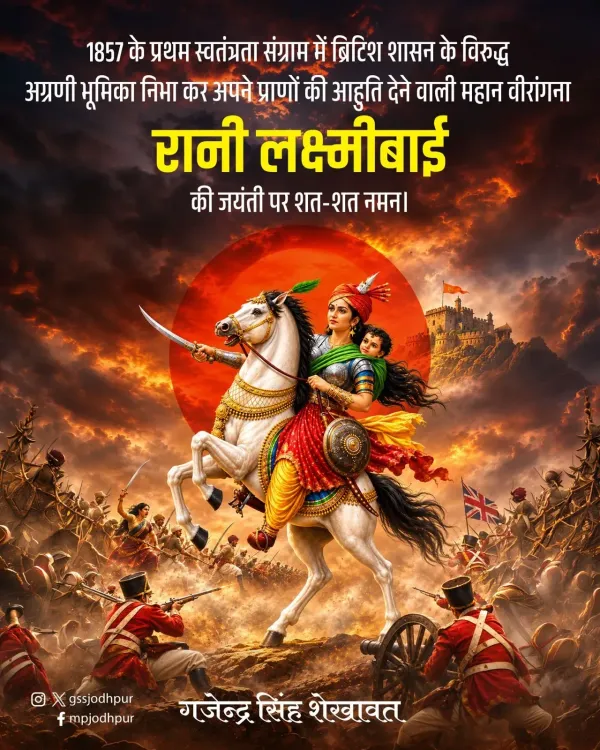
On the birth anniversary of one of India's most revered freedom fighters, Union Culture and Tourism Minister Gajendra Singh Shekhawat on Thursday, 19 November 2026, offered tribute to Rani Lakshmibai of Jhansi, honouring the warrior queen who gave her life battling British forces in the 1857 First War of Independence.
Posting in Hindi, Shekhawat wrote: '1857 के प्रथम स्वतंत्रता संग्राम में ब्रिटिश शासन के विरुद्ध अग्रणी भूमिका निभा कर अपने प्राणों की आहुति देने वाली महान वीरांगना रानी लक्ष्मीबाई की जयंती पर शत-शत नमन।' — 'A hundred salutations on the birth anniversary of the great warrior woman Rani Lakshmibai, who played a leading role against British rule in the First War of Independence of 1857 and sacrificed her life.'The warrior queen who refused to yield
Rani Lakshmibai, born on 19 November 1828, became the Rani of Jhansi and emerged as one of the most iconic figures of the 1857 uprising against the East India Company. When British authorities sought to annex Jhansi under the Doctrine of Lapse following the death of her husband, she refused to surrender her kingdom. She led her troops in direct combat, and died in battle near Gwalior in June 1858 — a death that cemented her place in India's national memory as a symbol of uncompromising resistance.
A tradition of annual remembrance
Shekhawat's tribute is part of a well-established annual practice across India's political spectrum: leaders from virtually every party and government office mark 19 November with public statements honouring Rani Lakshmibai. The commemorations reflect a broader, long-running effort to anchor regional resistance figures — particularly those from central India — firmly within the national historical narrative. Jhansi in Uttar Pradesh and Gwalior in Madhya Pradesh, the two cities most associated with her life and death, typically see official ceremonies on this date each year.
As Union Minister for Culture, Shekhawat's portfolio directly encompasses the preservation and promotion of India's historical heritage, making tributes of this kind a formal as much as a personal expression of institutional memory.
Point of View
But they carry particular weight when issued by the Union Culture Ministry, whose mandate includes shaping how the nation's past is remembered and taught. The BJP government has consistently emphasised 1857 as a foundational moment of Indian nationhood, elevating regional warrior figures into the mainstream historical canon. Shekhawat's post, however routine in form, sits within that larger project of constructing a continuous thread from 1857 resistance to contemporary national identity. The fact that both Jhansi and Gwalior — the sites of her life and death — remain active pilgrimage points for this memory every year underscores how alive the symbolism remains in public life.
NationPress
19 Nov 2026
Frequently Asked Questions
When is Rani Lakshmibai's birth anniversary?
Rani Lakshmibai's birth anniversary falls on 19 November each year. She was born on 19 November 1828 and is remembered as the Rani of Jhansi who fought against British rule in the 1857 uprising.
What did Gajendra Singh Shekhawat post about Rani Lakshmibai?
Union Culture and Tourism Minister Gajendra Singh Shekhawat posted a Hindi tribute on 19 November 2026 offering 'a hundred salutations' to Rani Lakshmibai on her birth anniversary, honouring her sacrifice in the First War of Independence of 1857.
How did Rani Lakshmibai die?
Rani Lakshmibai died in battle near Gwalior in June 1858 while leading troops against British forces. She had refused to surrender her kingdom of Jhansi and took direct command in combat during the 1857 uprising.
What was the 1857 First War of Independence?
The 1857 First War of Independence was a widespread armed uprising across northern and central India against the rule of the British East India Company. It involved sepoys, princes, and civilians, and Rani Lakshmibai of Jhansi became one of its most celebrated leaders.
Where are ceremonies held on Rani Lakshmibai's birth anniversary?
Jhansi in Uttar Pradesh and Gwalior in Madhya Pradesh — the two cities most closely associated with her life and final battle — are the primary sites of official and public commemorations each year on 19 November .