Shekhawat Pays Tribute to Rani Lakshmibai on Balidan Diwas
Synopsis
Union Culture and Tourism Minister Gajendra Singh Shekhawat on 18 June 2026 paid homage to Rani Lakshmibai on her martyrdom anniversary, quoting Subhadra Kumari Chauhan's celebrated verse and honouring her sacrifice in the 1857 War of Independence against British rule.
Key Takeaways
Gajendra Singh Shekhawat , Union Minister of Culture and Tourism, paid tribute to Rani Lakshmibai on her Balidan Diwas on 18 June 2026 .
The minister quoted the iconic verse by poet Subhadra Kumari Chauhan , among the most recognised lines in Hindi literature.
Rani Lakshmibai , queen of Jhansi , was killed near Gwalior in June 1858 while fighting British forces during the 1857 uprising.
The tribute is part of a broader Ministry of Culture pattern of marking 1857 anniversaries to highlight indigenous resistance and promote heritage tourism.
Key legacy sites at Jhansi and Gwalior remain central to domestic tourism circuits overseen by Shekhawat's ministry.
Further announcements on conservation or tourism schemes at these sites are possible ahead of Independence Day, August 2026 .
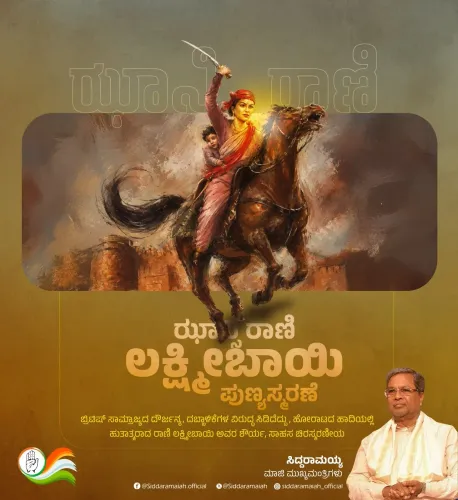
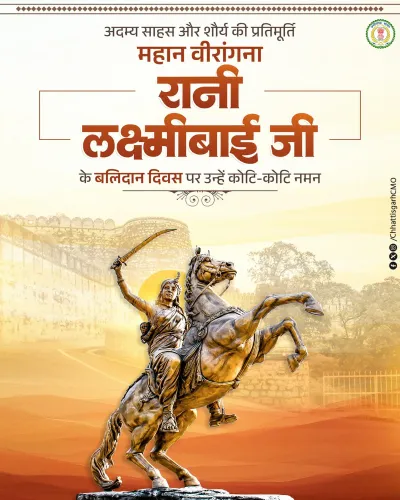
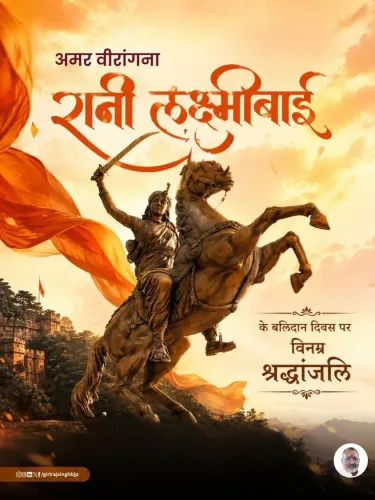
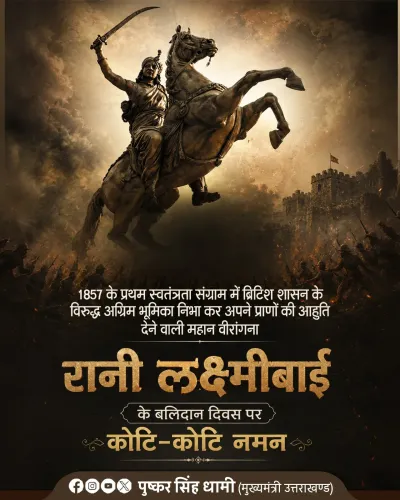
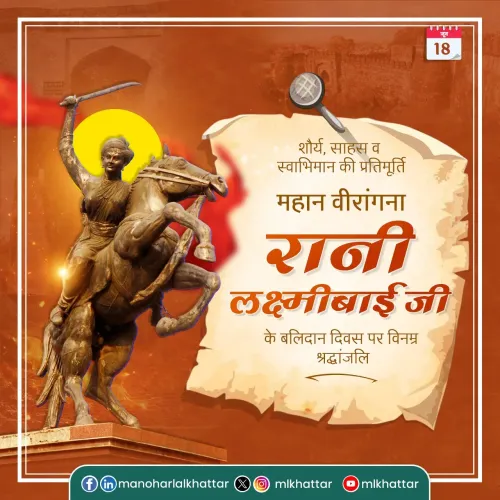
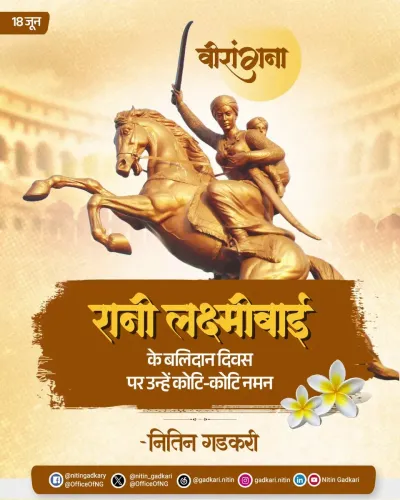
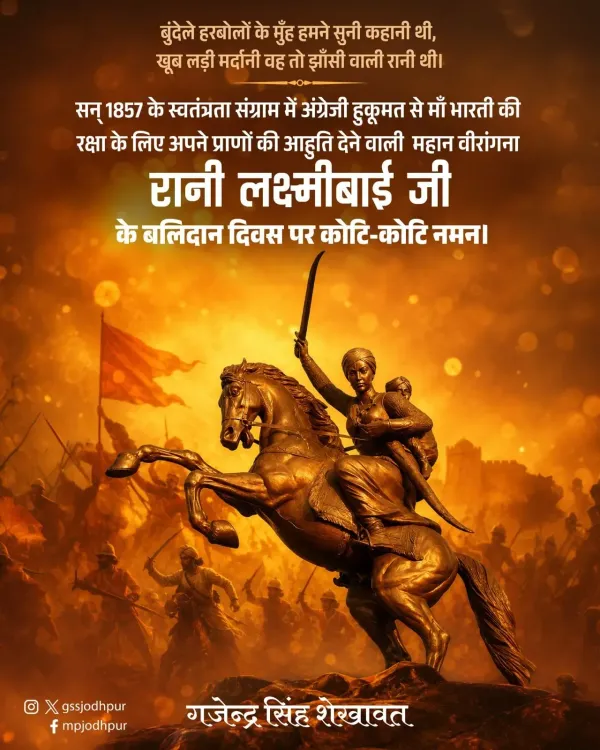
Union Culture and Tourism Minister Gajendra Singh Shekhawat on Thursday, 18 June 2026, paid homage to Rani Lakshmibai of Jhansi on her martyrdom anniversary, invoking the celebrated verse by poet Subhadra Kumari Chauhan to honour the queen's sacrifice during the 1857 War of Independence.
Context
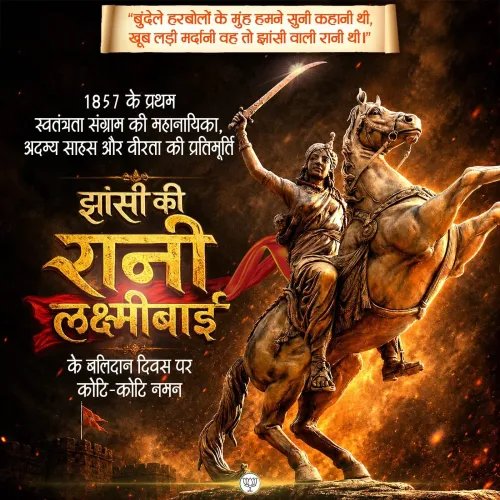
The minister's post opens with the iconic lines — 'Bundele harbolon ke munh hamne suni kahani thi, khoob ladi mardani woh toh Jhansi wali Rani thi' ('We heard the tale from the bards of Bundelkhand: she fought like a warrior, that queen of Jhansi') — among the most recognised verses in Hindi literature. He then described Rani Lakshmibai as a 'great warrior woman' (veerangana) who 'offered her life to protect Mother India from British rule in the freedom struggle of 1857,' extending 'crores of salutations' (koti-koti naman) on her Balidan Diwas (martyrdom day).
Rani Lakshmibai, ruler of the princely state of Jhansi in present-day Uttar Pradesh, led her forces against the British East India Company following its attempt to annex her kingdom under the Doctrine of Lapse. She was killed in battle near Gwalior in June 1858, and has since been enshrined as one of the foremost symbols of Indian resistance.
Policy Backdrop
The tribute fits a sustained pattern in which the Ministry of Culture and senior BJP leaders mark anniversaries associated with the 1857 rebellion to foreground indigenous resistance and regional martial traditions. The Government of India has previously organised nationwide commemorations, including the 150th anniversary of the revolt in 2007, featuring exhibitions and memorial events centred on figures such as Rani Lakshmibai.
As Union Minister of Culture and Tourism, Shekhawat oversees policy on heritage conservation and patriotic education — portfolios that intersect directly with the legacy sites linked to the 1857 uprising, including the forts and memorials at Jhansi and Gwalior. The ministry has been developing domestic tourism circuits around such sites as part of broader cultural outreach.
Stakeholders and Impact
The commemoration resonates with citizens, educators, and the heritage tourism sector alike. Jhansi and Gwalior draw a significant share of domestic tourists drawn by their association with the 1857 revolt, and ministerial attention to such anniversaries typically sustains public interest in these circuits. For the Bundelkhand region specifically, Rani Lakshmibai remains a deeply rooted cultural and political symbol.
The post's use of Subhadra Kumari Chauhan's verse — taught in school curricula across India — also signals an appeal to a broad, pan-generational audience beyond policy circles, reinforcing the cultural ministry's mandate to connect citizens with shared historical memory.
What's Next
Observers will watch for any follow-up announcements from the Ministry of Culture regarding conservation projects or interpretation centres at Jhansi Fort or Gwalior ahead of the Independence Day cycle in August 2026. State-level tourism linkages in Uttar Pradesh and Madhya Pradesh, both of which claim heritage stakes in Rani Lakshmibai's story, could also see renewed momentum. Ministerial tributes of this kind often serve as soft precursors to larger cultural programming, making the coming weeks worth watching for formal scheme announcements.
Point of View
Using literary verse to amplify emotional resonance across generations. By invoking the Chauhan poem — a staple of school syllabuses — the minister reaches far beyond policy audiences, effectively turning a calendar commemoration into a moment of shared national identity. The Culture and Tourism portfolio gives such gestures an institutional weight they would otherwise lack: tributes can be followed by tangible announcements on conservation funding or tourism circuits. Sustained ministerial attention to 1857 sites in Bundelkhand also carries implicit political signalling in states like Uttar Pradesh and Madhya Pradesh, where the queen's legacy commands strong regional loyalty.
NationPress
18 Sept 2026
Frequently Asked Questions
When is Rani Lakshmibai's Balidan Diwas observed?
Rani Lakshmibai's Balidan Diwas is observed on 18 June each year, marking the anniversary of her death in battle near Gwalior in 1858 .
Who was Rani Lakshmibai and why is she important?
Rani Lakshmibai was the queen of the princely state of Jhansi in present-day Uttar Pradesh. She led her forces against the British East India Company during the 1857 War of Independence and is celebrated as one of India's foremost symbols of resistance and courage.
What is the poem quoted by Shekhawat in his tribute?
The lines are from a celebrated poem by Hindi poet Subhadra Kumari Chauhan , which translates as: 'We heard the tale from the bards of Bundelkhand — she fought like a warrior, that queen of Jhansi.' The poem is widely taught in Indian schools.
What is Gajendra Singh Shekhawat's role in the government?
Gajendra Singh Shekhawat is the Union Minister of Culture and Tourism, a senior BJP leader, and the Lok Sabha MP from Jodhpur, Rajasthan .
What heritage sites are associated with Rani Lakshmibai?
The principal heritage sites linked to Rani Lakshmibai are Jhansi Fort in Uttar Pradesh, where she mounted her defence, and the battlefield near Gwalior in Madhya Pradesh, where she fell in June 1858. Both sites are part of domestic tourism circuits.