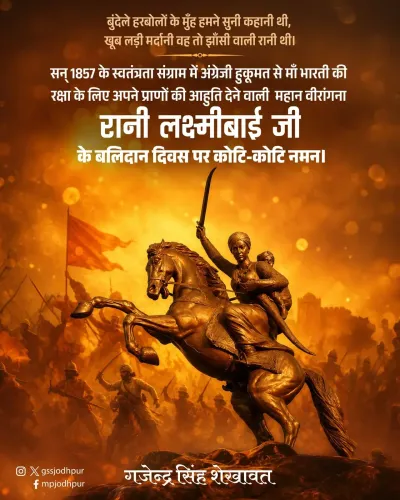
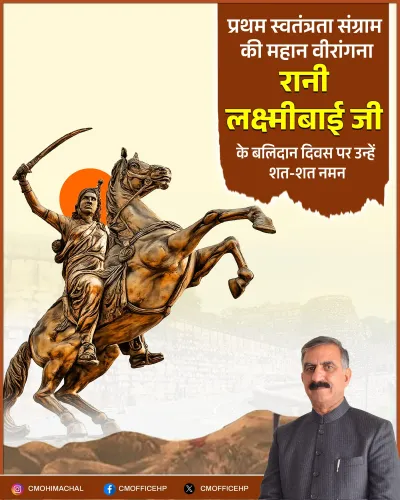
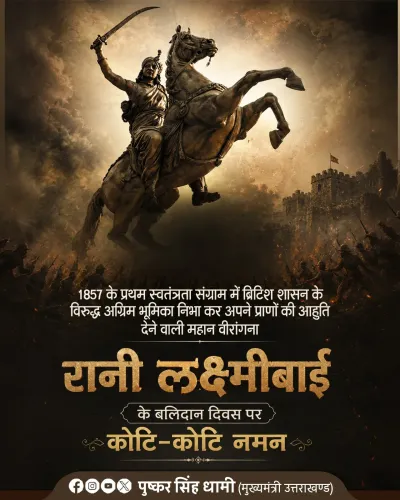
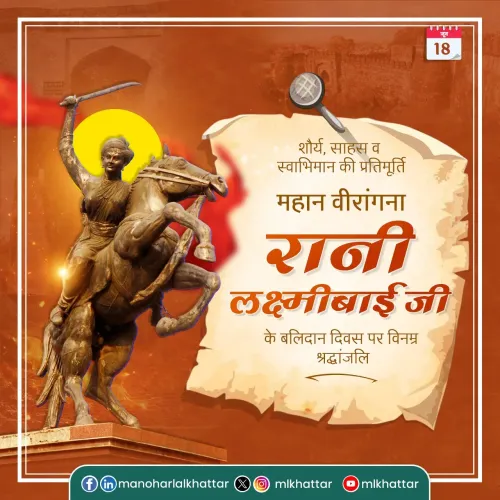
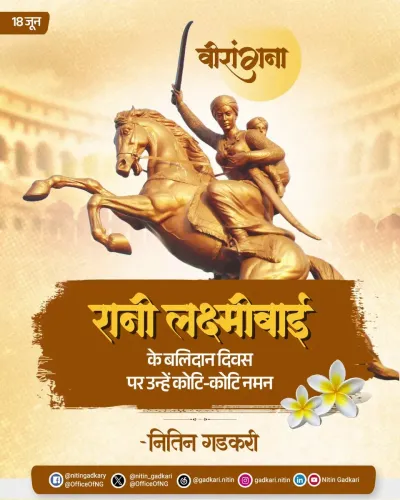
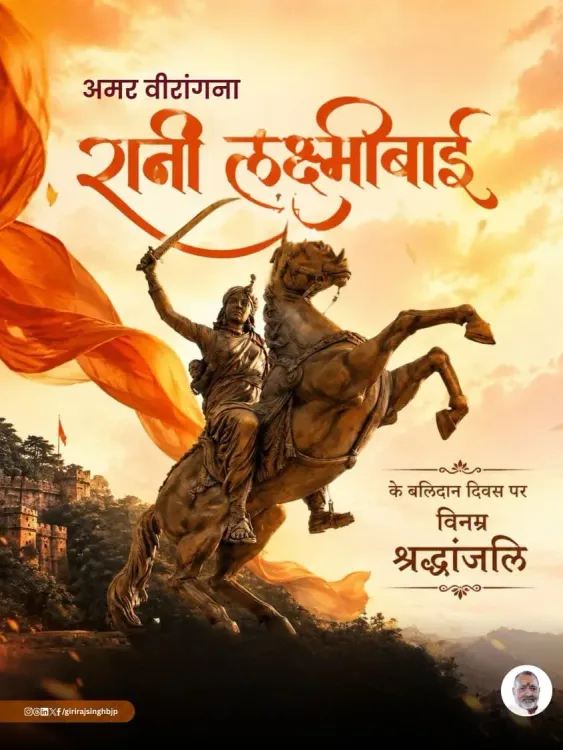
Giriraj Singh Pays Tribute to Rani Lakshmibai on Balidan Diwas
Synopsis
Union Textiles Minister Giriraj Singh marked Rani Lakshmibai's martyrdom anniversary on 18 June 2026, quoting Subhadra Kumari Chauhan's iconic poem and calling the queen of Jhansi an eternal symbol of courage and women's power whose sacrifice continues to inspire national service.
Key Takeaways
Union Textiles Minister Giriraj Singh posted a tribute to Rani Lakshmibai on her Balidan Diwas, 18 June 2026 .
He opened with lines from Subhadra Kumari Chauhan 's 1930s poem Jhansi ki Rani , one of the most recited Hindi poems in Indian schools.
Rani Lakshmibai was killed in battle near Gwalior on 17 June 1858 during the 1857 revolt against British rule.
Singh described her as an 'undying symbol of indomitable courage, valour, and women's power.' He said her supreme sacrifice would continue to inspire every generation towards national service and patriotism.
The tribute fits a broader pattern of senior BJP leaders marking 1857 anniversaries as part of sustained emphasis on anti-colonial martial history.
Union Textiles Minister Giriraj Singh on Thursday, 18 June 2026, paid tribute to Rani Lakshmibai of Jhansi on her martyrdom anniversary, honouring her as an eternal symbol of courage, valour, and women's power in India's freedom struggle.
Context
Singh opened his post with the iconic lines from Hindi poet Subhadra Kumari Chauhan's celebrated poem 'Jhansi ki Rani' — 'We heard the story from the bards of Bundelkhand: she fought like a warrior, the Queen of Jhansi.' The verse, written in the 1930s, is among the most widely recited poems in Indian schools and remains a touchstone of popular memory around the 1857 uprising.
He described Lakshmibai as one who 'sacrificed her life for the freedom and self-respect of the motherland' and offered 'koti-koti naman' (countless salutations) and heartfelt homage on the occasion of her Balidan Diwas (martyrdom day).
Policy Backdrop
Rani Lakshmibai, queen of the princely state of Jhansi, led her forces against the British East India Company during the 1857 revolt and was killed in battle near Gwalior on 17 June 1858 — making 18 June the day many observe as her martyrdom anniversary. She has since become one of the most prominent icons of India's anti-colonial resistance narrative.
Senior BJP ministers and leaders have consistently marked the anniversaries of 1857 figures on social media as part of a broader emphasis on anti-colonial martial history. Such tributes often coincide with official programmes that foreground regional heroes within a unified national narrative of resistance, linking figures like Lakshmibai to the party's cultural and political messaging.
Stakeholders and Impact
Singh's tribute resonates across a wide audience — from students who recite Chauhan's poem in school assemblies to nationalist organisations that hold commemorative events at Jhansi Fort and Gwalior Fort each June. The post reinforces Lakshmibai's place in mainstream political discourse as a symbol of both women's empowerment and patriotic sacrifice.
The minister concluded his message with a forward-looking note, stating that 'her supreme sacrifice will continue to inspire every generation of this country towards national service and patriotism' — framing the tribute not merely as historical remembrance but as a call to civic duty.
What's Next
Annual observances at Jhansi and Gwalior typically draw political leaders, cultural organisations, and school groups each June. Observers will watch for any state-level memorials or government programmes announced in connection with 1857-related commemorations in the coming months.
Point of View
Broadening its reach beyond ideological audiences. The forward-looking framing, invoking each generation's duty to national service, signals that such tributes serve a dual purpose: historical commemoration and contemporary political mobilisation. As India's political landscape increasingly contests ownership of freedom-struggle icons, these social-media observances are a low-cost but high-visibility tool for reinforcing ideological positioning.
NationPress
17 Sept 2026
Frequently Asked Questions
When did Rani Lakshmibai die?
Rani Lakshmibai was killed in battle near Gwalior on 17 June 1858 during the 1857 revolt against British rule, and her martyrdom is widely commemorated on 18 June.
Who is Giriraj Singh?
Giriraj Singh is a senior BJP leader, Lok Sabha MP from Begusarai in Bihar, and currently serves as Union Minister of Textiles in the Indian government.
Which poem did Giriraj Singh quote in his tribute?
He quoted the opening lines of 'Jhansi ki Rani', the celebrated Hindi poem written by Subhadra Kumari Chauhan in the 1930s, which begins 'Bundele harbolon ke munh hamne suni kahani thi.'
What is Balidan Diwas?
Balidan Diwas literally means 'martyrdom day' in Hindi and is observed to honour those who gave their lives for a cause; Rani Lakshmibai's Balidan Diwas is marked each year on 18 June.
Why do BJP leaders regularly pay tribute to 1857 figures?
Senior BJP leaders consistently mark anniversaries of 1857 figures as part of a sustained emphasis on anti-colonial martial history, using such tributes to foreground regional heroes within a unified national narrative of resistance.