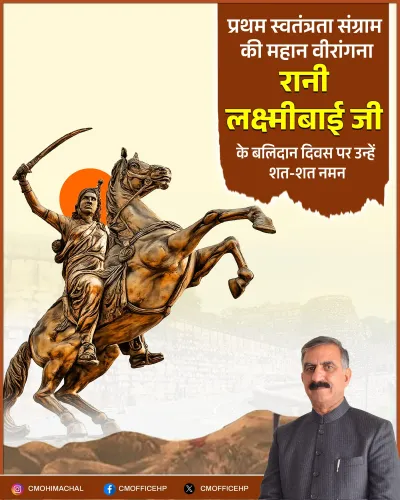
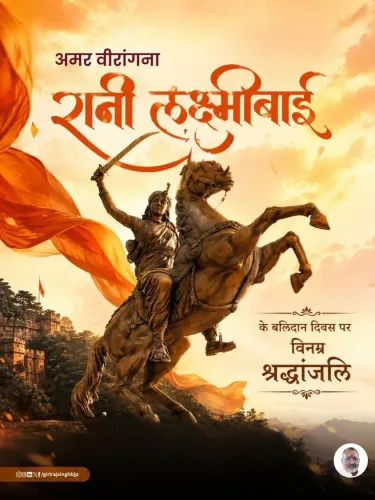
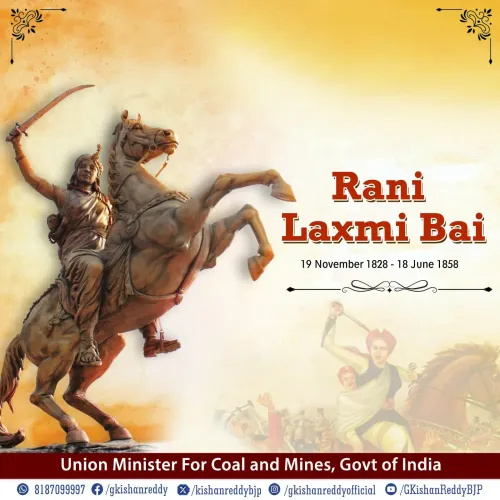
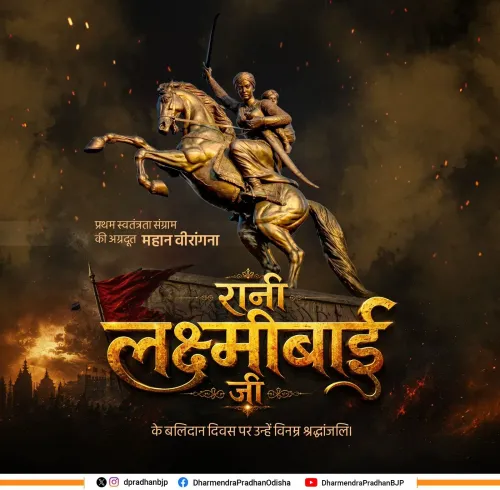
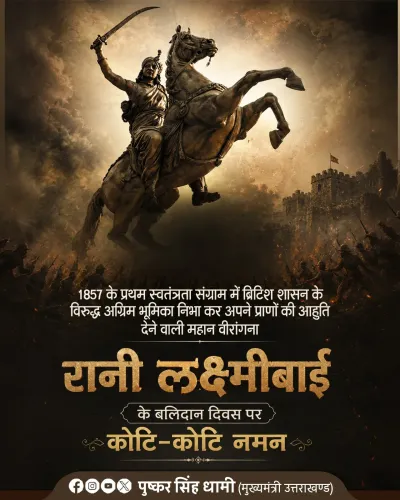
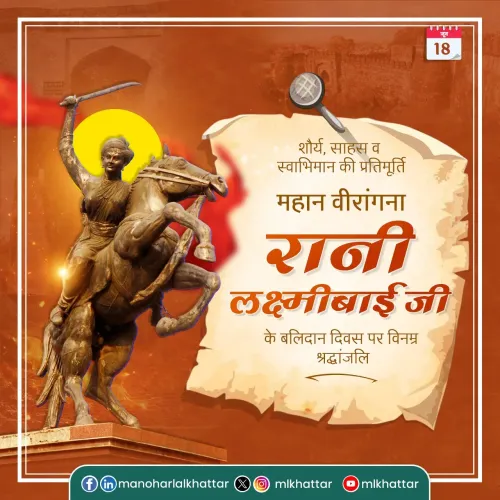
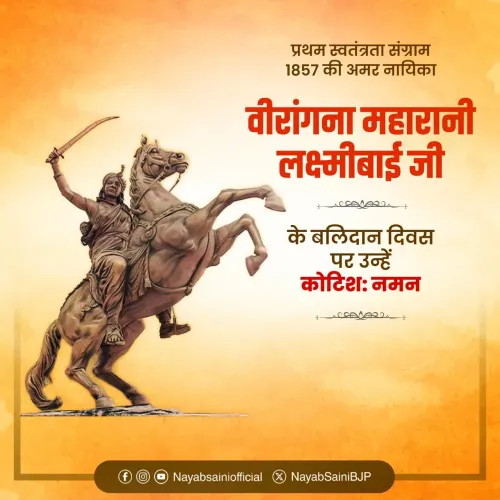
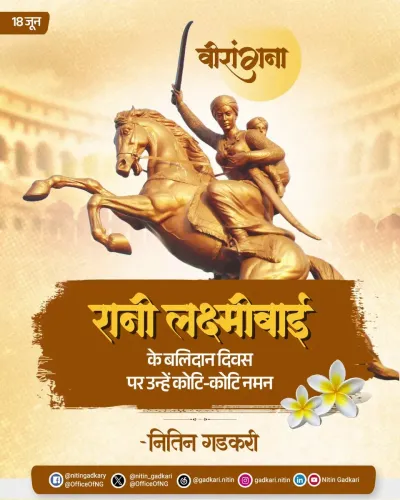
Puri pays tribute to Rani Lakshmibai on her Balidan Diwas
Synopsis
Union Petroleum Minister Hardeep Singh Puri marked Rani Lakshmibai's martyrdom anniversary on 18 June 2026, honouring the Queen of Jhansi as a symbol of courage and an enduring inspiration for every Indian's national service and self-respect.
Key Takeaways
Union Petroleum Minister Hardeep Singh Puri posted a tribute on 18 June 2026 , the martyrdom anniversary of Rani Lakshmibai .
Rani Lakshmibai died fighting near Gwalior on 18 June 1858 , during the First War of Independence against British rule.
Puri described her as a symbol of 'indomitable courage and valour' whose sacrifice will inspire Indians towards national service and self-respect.
The tribute is part of a sustained BJP government practice, visible since 2014 , of marking 1857 leaders' anniversaries on social media.
Similar ministerial observances are expected on other key 1857 anniversaries and at any upcoming Ministry of Culture memorial programmes.
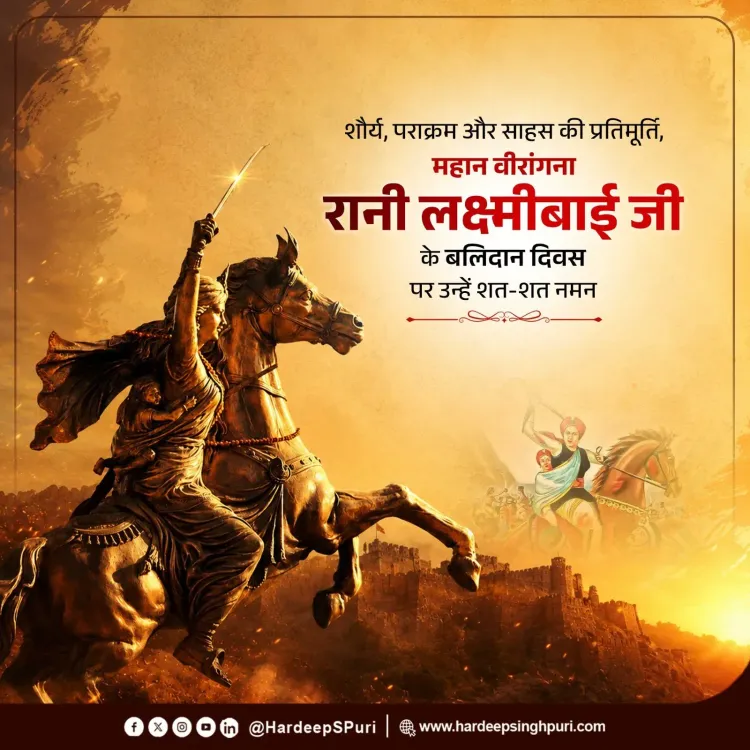
Union Petroleum Minister Hardeep Singh Puri on Thursday, 18 June 2026, paid tribute to Rani Lakshmibai of Jhansi on her martyrdom anniversary, honouring her as a symbol of indomitable courage and valour in India's First War of Independence.
Context
Posting in Hindi on X, Minister Puri wrote: 'अदम्य साहस और पराक्रम की प्रतीक रानी लक्ष्मीबाई जी के बलिदान दिवस पर विनम्र श्रद्धांजलि!' — translated as 'Humble tribute on the martyrdom day of Rani Lakshmibai, the symbol of indomitable courage and valour!' He added that her story of bravery in the First War of Independence and her supreme sacrifice in defence of the motherland 'will continue to inspire every Indian towards national service and self-respect.'
Rani Lakshmibai, the Queen of Jhansi, died fighting near Gwalior on 18 June 1858, making this date her official Balidan Diwas — or martyrdom day — observed annually across India.
Policy Backdrop
Senior ministers from the BJP-led government have consistently marked the death anniversaries of key figures from the 1857 uprising on social media, a practice that has been sustained since 2014 across multiple ministries. These observances align with official commemorations that foreground themes of sacrifice, self-reliance, and martial resistance within India's independence narrative.
The Ministry of Culture has periodically organised programmes around freedom-struggle sites and memorials, and ministerial social-media tributes on fixed calendar dates such as 18 June serve as a visible, recurring component of that broader effort to keep 1857 leaders in public memory.
Stakeholders and Impact
The tribute is directed at Indian citizens broadly, with particular resonance for students, educators, and communities in Jhansi and Gwalior — the two cities most closely associated with Lakshmibai's legacy. Her image as a warrior-queen who chose death over surrender has made her one of the most widely taught figures in Indian school curricula.
The First War of Independence of 1857 involved Indian rulers, soldiers, and civilians rising against the East India Company, ultimately resulting in direct British Crown rule over India. Lakshmibai's role in that conflict has been central to nationalist historiography and continues to carry symbolic weight in political discourse.
What's Next
Similar ministerial tributes are expected on other significant 1857 anniversaries through the year, as well as on the birth anniversaries of other regional martial figures. Any Ministry of Culture programmes marking freedom-struggle memorials or sites in Jhansi and Gwalior in the coming months would extend this commemorative pattern into institutional action. The sustained political emphasis on 1857 leaders suggests these observances will remain a fixture of the government's public communication calendar.
Point of View
Consistent with the BJP government's sustained effort since 2014 to foreground 1857 figures in the national imagination. By invoking themes of self-sacrifice and 'swabhimaan' (self-respect), the post connects a historical icon to the ruling party's broader ideological emphasis on civilisational pride and national service. The regularity of these tributes across ministries signals an institutionalised communications strategy rather than spontaneous remembrance. Over time, this pattern shapes the public calendar of patriotic memory in ways that reinforce specific historical narratives about resistance and sovereignty.
NationPress
22 Sept 2026
Frequently Asked Questions
When did Rani Lakshmibai die and why is 18 June observed as her martyrdom day?
Rani Lakshmibai died in battle near Gwalior on 18 June 1858, during the First War of Independence against the East India Company, which is why 18 June is observed annually as her Balidan Diwas.
What did Hardeep Singh Puri say about Rani Lakshmibai?
Hardeep Singh Puri called Rani Lakshmibai a symbol of indomitable courage and valour, saying her bravery in the 1857 uprising and her supreme sacrifice for the motherland will continue to inspire every Indian towards national service and self-respect.
Who was Rani Lakshmibai?
Rani Lakshmibai was the Queen of Jhansi and one of the foremost leaders of the 1857 First War of Independence; she led troops in battle against British forces and died fighting near Gwalior, becoming a lasting national symbol of resistance.
What is the First War of Independence of 1857?
The First War of Independence of 1857 was a widespread uprising of Indian rulers, soldiers, and civilians against the East India Company's administration; it ultimately led to the British Crown taking direct control of India.
Why do BJP ministers regularly post tributes to 1857 leaders?
Senior BJP ministers have consistently marked the anniversaries of key 1857 figures on social media since 2014, as part of a broader government emphasis on themes of sacrifice, self-reliance, and martial resistance in India's independence narrative.