Giriraj Singh Pays Tribute to Rani Durgavati on Balidan Diwas
Synopsis
Union Textiles Minister Giriraj Singh marked Rani Durgavati Balidan Diwas on 24 June 2026, honouring the 16th-century Gond queen as a timeless symbol of courage, self-respect, and national pride who died resisting Mughal forces near Jabalpur in 1564.
Key Takeaways
Giriraj Singh , Union Minister of Textiles, paid tribute to Rani Durgavati on her Balidan Diwas, 24 June 2026 .
Rani Durgavati was the queen of the Gond kingdom in central India and died in battle on 24 June 1564 near present-day Jabalpur, Madhya Pradesh .
Singh described her as a symbol of 'unparalleled courage, valour, and self-respect' and said her life would inspire future generations toward national service.
The BJP has consistently highlighted pre-colonial women rulers who resisted Mughal expansion as part of a broader narrative of indigenous valour.
24 June is officially observed as Rani Durgavati Balidan Diwas by central and state governments, with events particularly prominent in Madhya Pradesh .
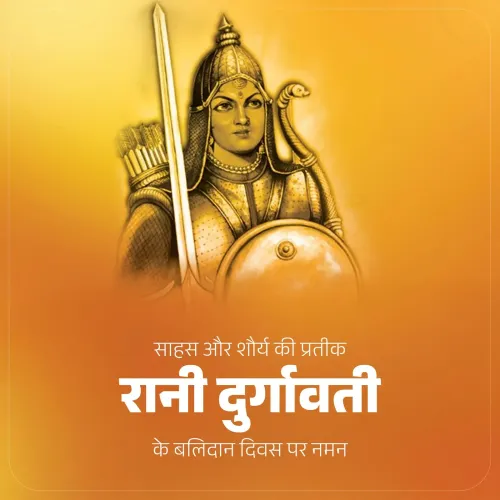
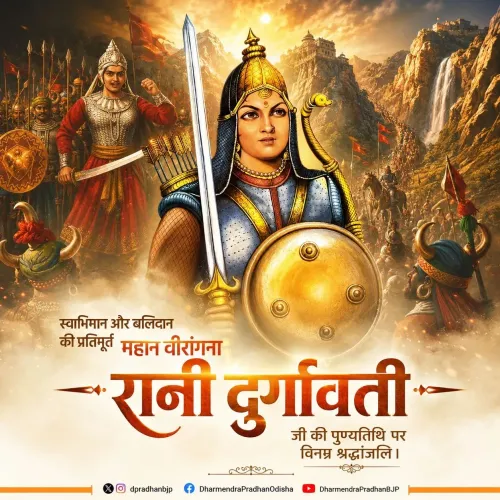
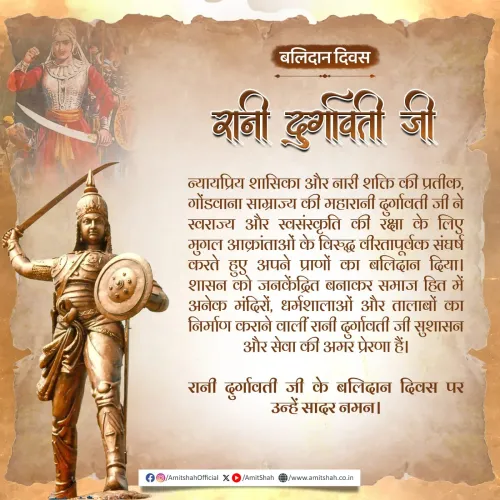
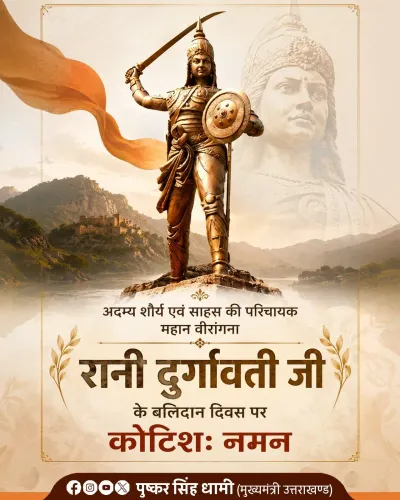
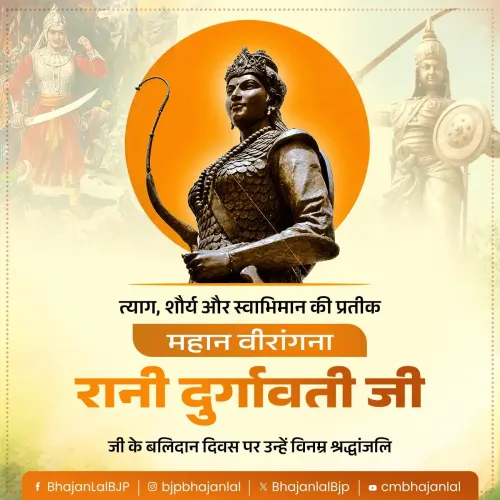
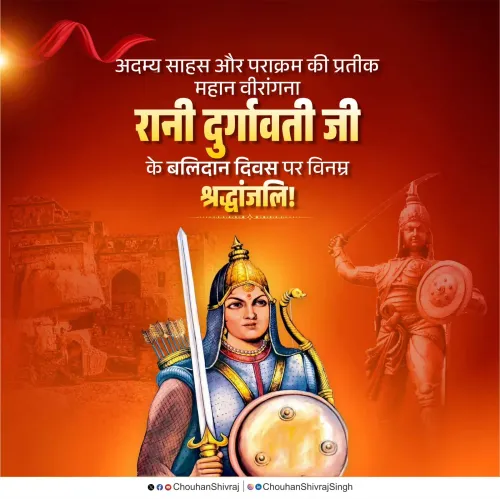
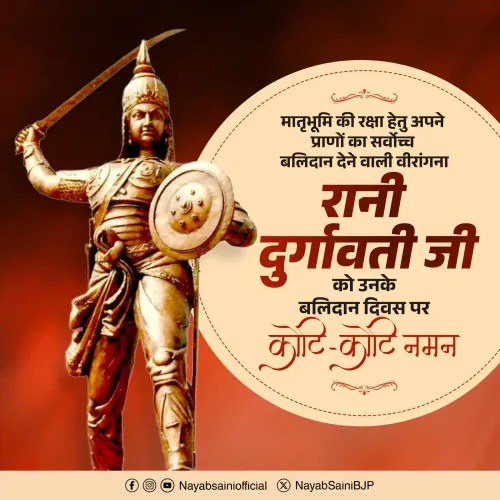
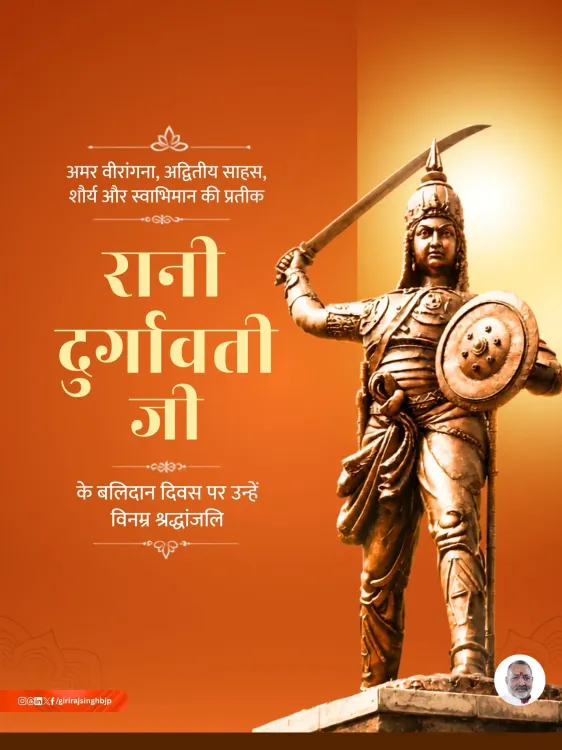
Union Textiles Minister Giriraj Singh on Wednesday, 24 June 2026, paid tribute to Rani Durgavati on her Balidan Diwas (martyrdom anniversary), honouring the 16th-century Gond queen as a symbol of unmatched courage, valour, and self-respect.
Posting on X, the senior BJP leader wrote in Hindi: 'Advitiya sahas, shaurya aur swabhiman ki pratik, amar veerangana Rani Durgavati ji ke balidan diwas par unhe koti-koti naman' — 'Saluting, a crore times over, the immortal warrior queen Rani Durgavati, a symbol of unparalleled courage, valour, and self-respect, on her martyrdom anniversary.' He added that her total dedication and exemplary life of bravery would forever inspire future generations toward national service and pride.
Context
Rani Durgavati was the queen of the Gond kingdom in central India, ruling from Garha-Mandla, a domain that broadly corresponds to present-day Madhya Pradesh. She died in battle on 24 June 1564, near present-day Jabalpur, while leading her forces against the advancing Mughal army under Asaf Khan, a general of Emperor Akbar. Refusing to surrender, she is said to have taken her own life on the battlefield to preserve her honour — an act that has been commemorated as an act of supreme sacrifice for over four centuries.
Her legacy holds particular resonance for Gond and other tribal communities of central India, for whom she remains a defining figure of indigenous sovereignty and resistance.
Policy Backdrop
Central and state governments have formally observed 24 June as Rani Durgavati Balidan Diwas since at least the early 2010s, with official events, educational references, and local commemorations held annually across Madhya Pradesh. The observance has grown more prominent in recent years as part of a broader governmental effort to spotlight pre-colonial martial figures in public memory and school curricula.
The BJP, in particular, has consistently highlighted women rulers who resisted Mughal expansion — figures such as Rani Lakshmibai, Ahilyabai Holkar, and Rani Durgavati — to reinforce narratives of indigenous valour, national self-respect, and what the party frames as an unbroken tradition of resistance to foreign domination.
Stakeholders and Impact
Gond tribal communities and residents of the Jabalpur region in Madhya Pradesh are the primary communities for whom this anniversary carries deep cultural and historical significance. Institutions bearing Rani Durgavati's name — including Rani Durgavati Vishwavidyalaya in Jabalpur — mark the day with academic and cultural programmes.
Tributes from Union ministers on national platforms amplify the reach of these local observances, bringing the queen's legacy to a pan-India audience and reinforcing her place in the national historical imagination.
What's Next
State government programmes in Madhya Pradesh are expected to mark the day with official ceremonies, cultural events, and educational activities centred on Rani Durgavati's life and sacrifice. As annual observances of Balidan Diwas grow in official stature, the anniversary is likely to see increasing institutional participation — including potential curriculum references and the inauguration or renovation of local memorials — reinforcing the queen's position as a symbol of national pride for generations to come.
Point of View
Anti-Mughal women warriors in public discourse — a pattern that serves both cultural nationalism and outreach to tribal and central Indian constituencies. The annual Balidan Diwas observance has steadily gained official weight, suggesting a long-term effort to embed such figures into the mainstream national historical narrative. For the Gond community and residents of Madhya Pradesh, the ministerial attention lends institutional legitimacy to a locally cherished legacy. The post, while ceremonial in tone, is part of a broader political arc that links historical memory to contemporary identity politics.
NationPress
22 Sept 2026
Frequently Asked Questions
Who was Rani Durgavati?
Rani Durgavati was a 16th-century queen of the Gond kingdom in central India who ruled from Garha-Mandla, in present-day Madhya Pradesh. She died on 24 June 1564 near Jabalpur while leading her forces against the Mughal army, and is celebrated as a symbol of courage and self-sacrifice.
When is Rani Durgavati Balidan Diwas observed?
Rani Durgavati Balidan Diwas is observed on 24 June every year, marking the anniversary of her death in battle in 1564. Central and state governments, particularly in Madhya Pradesh, hold official commemorations on this date.
Why did Giriraj Singh pay tribute to Rani Durgavati?
Giriraj Singh, Union Textiles Minister and senior BJP leader, posted a tribute on X on 24 June 2026 to mark Rani Durgavati Balidan Diwas, calling her an eternal inspiration for national service and pride. Such tributes on historical anniversaries are a regular practice among BJP leaders.
Where did Rani Durgavati die?
Rani Durgavati died in battle near present-day Jabalpur in Madhya Pradesh on 24 June 1564, while resisting the advance of Mughal forces led by Asaf Khan, a general of Emperor Akbar.
What is the significance of Rani Durgavati for tribal communities?
Rani Durgavati holds deep cultural and historical significance for Gond and other tribal communities of central India, for whom she represents indigenous sovereignty, resistance to external domination, and supreme sacrifice. Institutions such as Rani Durgavati Vishwavidyalaya in Jabalpur are named in her honour.