Shekhawat pays tribute to Tagore on death anniversary
Synopsis
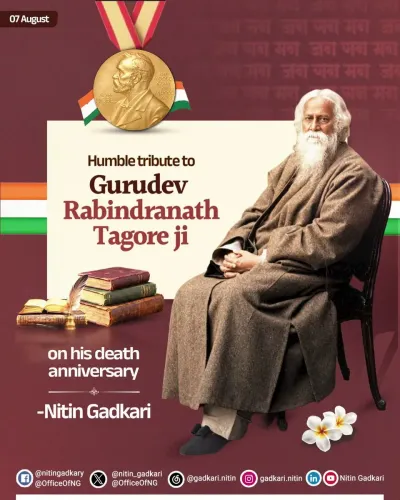
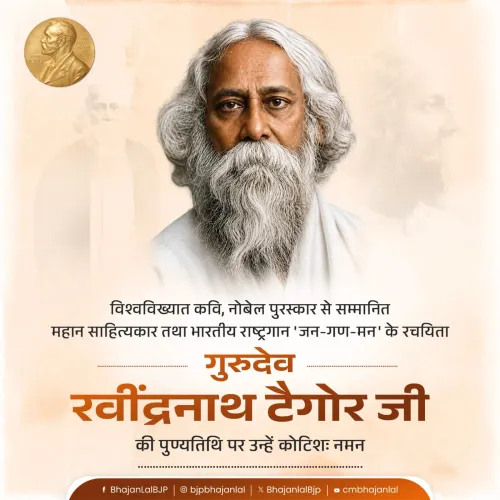
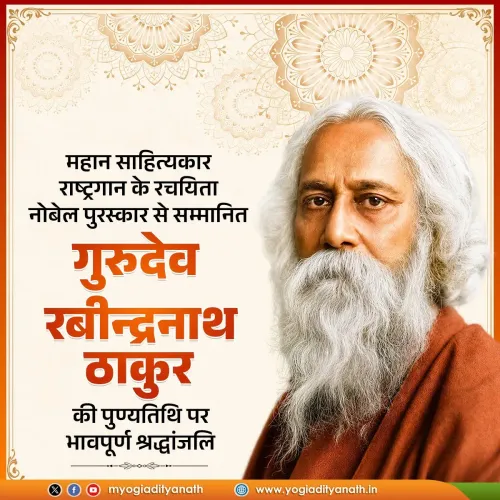
Union Culture and Tourism Minister Gajendra Singh Shekhawat paid tribute to Rabindranath Tagore on his death anniversary, honouring the Nobel laureate poet and composer of India's national anthem Jana Gana Mana.
Key Takeaways
Gajendra Singh Shekhawat , Union Minister of Culture and Tourism, posted a tribute to Rabindranath Tagore on his death anniversary on 7 August 2026 .
Tagore won the Nobel Prize in Literature in 1913 , becoming the first non-European to receive the honour.
Tagore composed Jana Gana Mana , adopted as India's national anthem after independence.
The tribute reflects the Ministry of Culture's annual practice of commemorating national cultural icons on their death anniversaries.
On the death anniversary of Rabindranath Tagore, Union Culture and Tourism Minister Gajendra Singh Shekhawat offered his respects to the Nobel laureate who gave India its national anthem — a quiet, dignified moment of national remembrance on 7 August 2026.
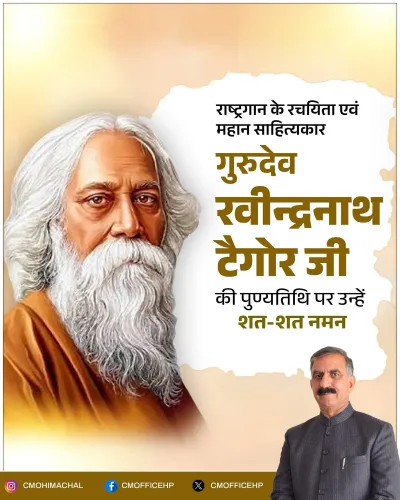
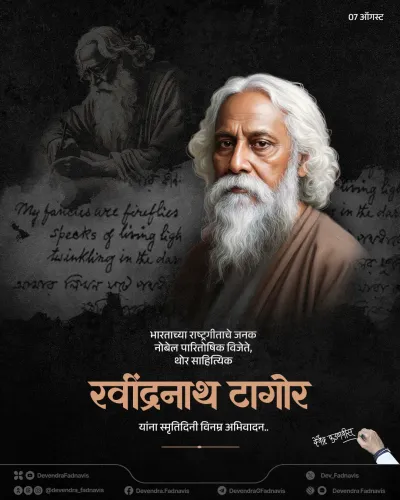
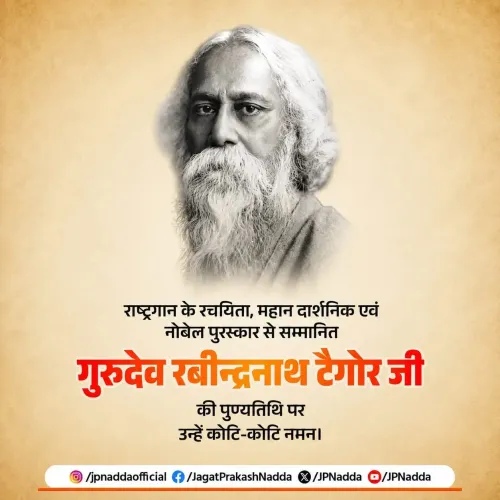
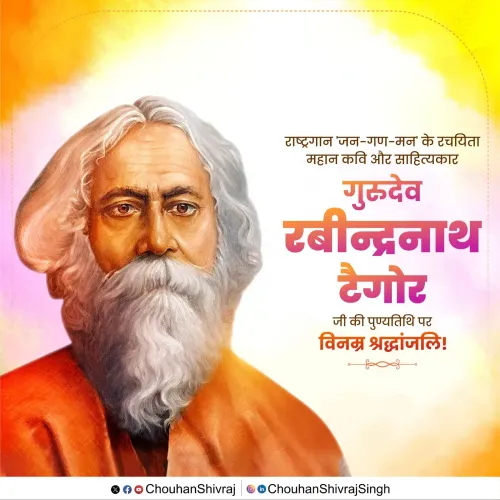
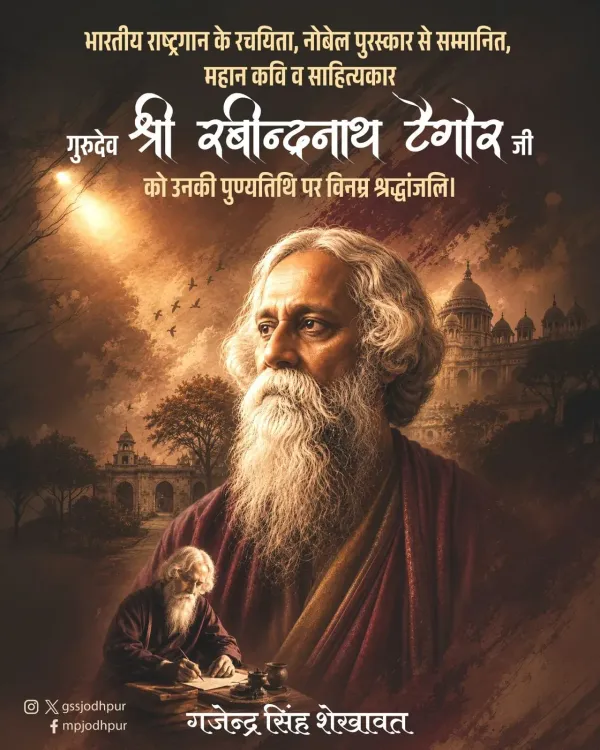
Shekhawat's post in Hindi read: 'भारतीय राष्ट्रगान के रचयिता, नोबेल पुरस्कार से सम्मानित, महान कवि व साहित्यकार गुरुदेव श्री रबीन्द्रनाथ टैगोर जी को उनकी पुण्यतिथि पर विनम्र श्रद्धांजलि।' ('Humble tribute on the death anniversary of the composer of India's national anthem, Nobel Prize laureate, great poet and litterateur, Gurudev Shri Rabindranath Tagore.')
The man behind Jana Gana Mana
Rabindranath Tagore remains one of the most towering figures in Indian cultural history. Born in 1861 in Calcutta, he became the first non-European to win the Nobel Prize in Literature, receiving the honour in 1913 for his collection Gitanjali. His composition Jana Gana Mana was adopted as India's national anthem after independence — a legacy that makes his anniversary a moment of quiet, national significance.
Culture Ministry's annual moment of remembrance
Union ministers routinely mark the death anniversaries of India's foundational cultural icons with public tributes. For the Ministry of Culture in particular, Tagore's punyatithi carries institutional weight — the poet's work sits at the very heart of India's national identity. Shekhawat, as the minister overseeing culture policy, is among the most prominent voices to observe the occasion each year.
Tagore's death anniversary is a moment India pauses to acknowledge not just a poet, but the man whose words still open every state occasion in the country.
Point of View
Honouring Tagore on his death anniversary is part of the ministry's soft-power calendar, reinforcing the government's custodianship of India's cultural heritage. The BJP has increasingly leaned into commemorating figures like Tagore to signal a broad, inclusive nationalism. Annual tributes of this kind carry low political risk and high symbolic value, particularly for a minister whose portfolio places cultural identity at its centre.
NationPress
7 Aug 2026
Frequently Asked Questions
When is Rabindranath Tagore's death anniversary?
Rabindranath Tagore's death anniversary falls on 7 August , marking the day he passed away in 1941 .
Why is Rabindranath Tagore important to India?
Tagore composed Jana Gana Mana , India's national anthem, and was the first non-European to win the Nobel Prize in Literature in 1913 .
What did Gajendra Singh Shekhawat say about Tagore?
Shekhawat offered a 'humble tribute' to Tagore on his death anniversary, describing him as the composer of India's national anthem, a Nobel laureate, and a great poet and litterateur.
Who is Gajendra Singh Shekhawat?
Gajendra Singh Shekhawat is India's Union Minister of Culture and Tourism, a senior BJP leader and Lok Sabha MP from Jodhpur, Rajasthan .
Which Nobel Prize did Rabindranath Tagore win?
Tagore won the Nobel Prize in Literature in 1913 for his poetry collection Gitanjali .