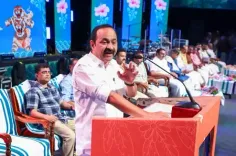
Sonowal Pays Tribute to Tagore on Death Anniversary
Synopsis
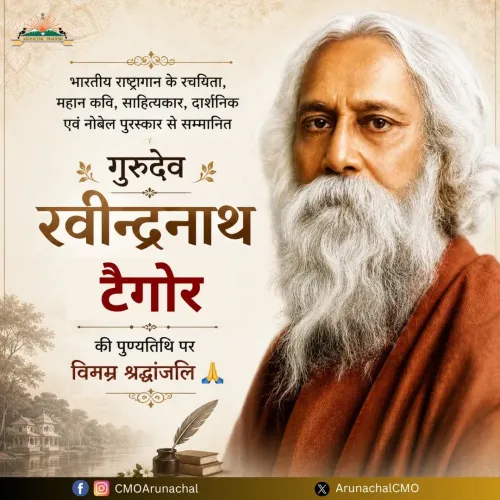
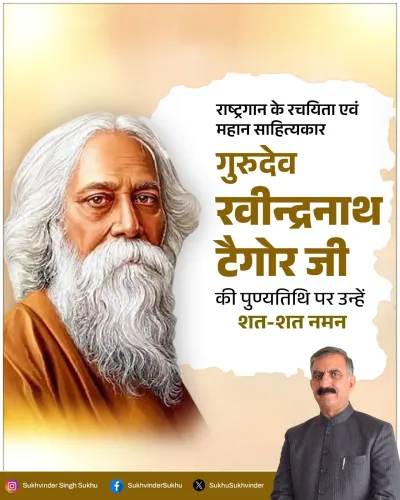
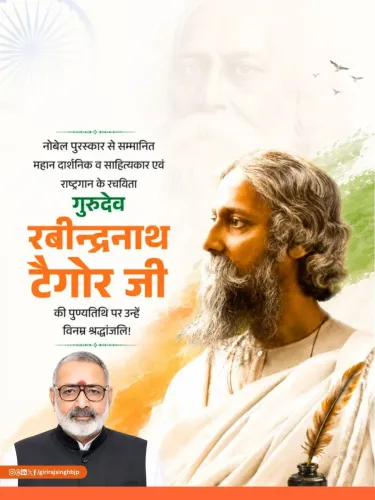
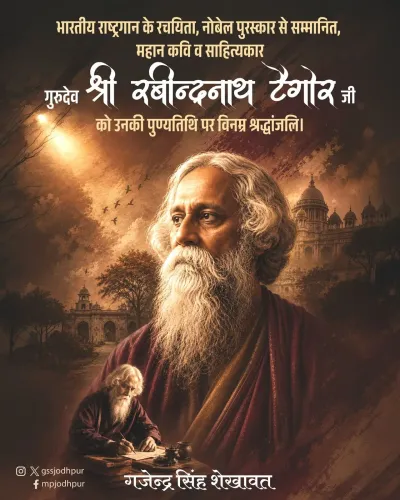
Union Minister Sarbananda Sonowal marked Rabindranath Tagore's death anniversary on 7 August, honouring the Nobel laureate who composed India's national anthem Jana Gana Mana and remains a defining figure of the Bengal Renaissance.
Key Takeaways
Union Minister Sarbananda Sonowal paid tribute to Rabindranath Tagore on his death anniversary, observed on 7 August .
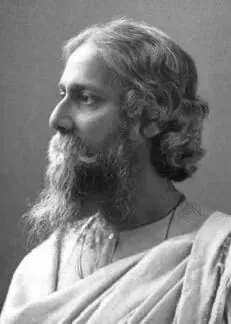
Tagore is the composer of Jana Gana Mana , India's national anthem.
He was awarded the Nobel Prize in Literature in 1913 , the first Indian to receive the honour.
Sonowal described Tagore as a 'multifaceted genius' whose legacy continues to inspire generations.
Tagore was a central figure of the Bengal Renaissance , influencing literature, music, art, and education.
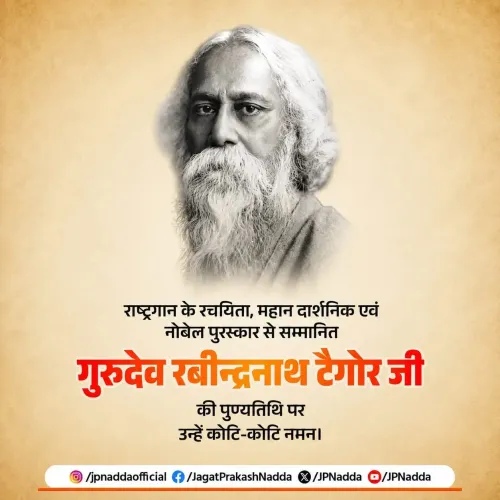
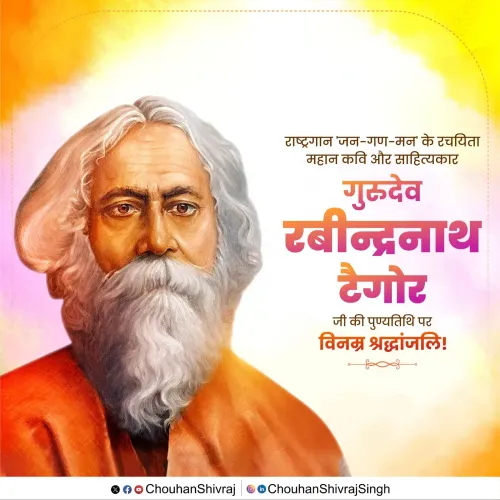
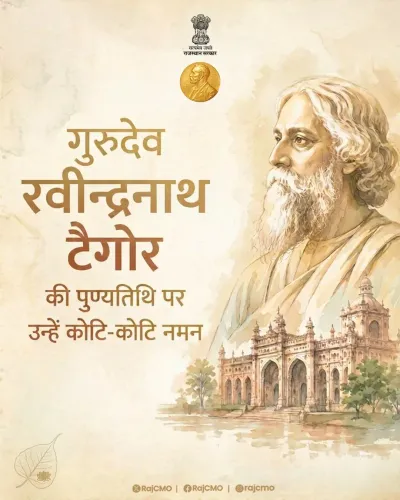
A Nobel laureate who gave India its voice — and its anthem. On the death anniversary of Gurudev Rabindranath Tagore, Union Minister of Ports, Shipping and Waterways Sarbananda Sonowal joined the nation in remembering the poet, philosopher, and polymath who shaped modern Indian identity.
Tagore, born in 1861 in Calcutta, remains the only Indian to have won the Nobel Prize in Literature — awarded in 1913 for his collection Gitanjali. His reach extended far beyond verse: he composed Jana Gana Mana, adopted as India's national anthem, and stood as a towering figure of the Bengal Renaissance — a movement that reshaped art, education, and social thought across the subcontinent.
The Anthem-Writer's Enduring Reach
Sonowal's tribute described Tagore as a 'multifaceted genius,' a phrase that barely scratches the surface. Tagore wrote novels, plays, essays, and over two thousand songs — a body of work that continues to be taught in schools, performed on stages, and quoted in parliament. His death anniversary, observed on 7 August, draws tributes from across the political spectrum each year, a rare moment of shared reverence in Indian public life. For a nation that hears his words every morning in the national anthem, Tagore is not history — he is daily ritual. That is the legacy Sonowal invoked: not just a literary giant, but a living inheritance.Point of View
And Tagore draws tributes that cut across party lines — making this a moment of civic consensus rather than political positioning. The tribute carries no connection to Sonowal's ports and shipping portfolio, functioning instead as a signal of cultural continuity. In a polarised political climate, invocations of Tagore — who was both a nationalist and a universalist — serve as a reminder of the shared inheritance that precedes contemporary divisions. The post adds to a long pattern of BJP leaders publicly claiming the legacy of figures from India's independence-era intellectual tradition.
NationPress
21 Sept 2026
Frequently Asked Questions
When is Rabindranath Tagore's death anniversary?
Rabindranath Tagore's death anniversary is observed on 7 August each year. He passed away on 7 August 1941.
Who composed India's national anthem Jana Gana Mana?
Rabindranath Tagore composed Jana Gana Mana, which was adopted as India's national anthem after independence.
What Nobel Prize did Rabindranath Tagore win?
Tagore won the Nobel Prize in Literature in 1913 , becoming the first Indian and first non-European to receive the honour, recognised for his poetry collection Gitanjali.
Who is Sarbananda Sonowal?
Sarbananda Sonowal is a senior BJP leader and Union Minister of Ports, Shipping and Waterways. He previously served as Chief Minister of Assam.
Why is Rabindranath Tagore important to India?
Tagore is regarded as one of India's greatest cultural figures — he composed the national anthem, won the Nobel Prize in Literature, and was a leading voice of the Bengal Renaissance that shaped modern Indian thought in literature, music, and education.