Shekhawat fires back at Rahul Gandhi over 'pathetic' remark

Synopsis
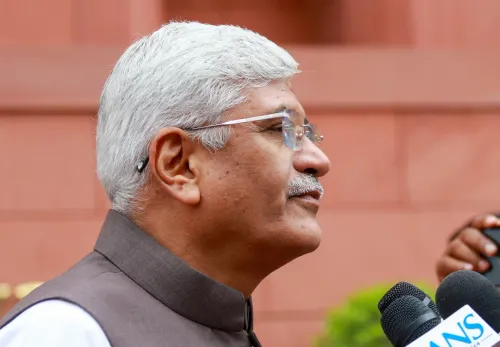
Union Culture Minister Gajendra Singh Shekhawat hit back at Rahul Gandhi on 25 July 2026, quoting a Sanskrit maxim to argue that Gandhi's 'pathetic' label for a government initiative reflects a flawed political mindset, not a flawed policy.
Key Takeaways
Union Culture and Tourism Minister Gajendra Singh Shekhawat publicly rebuked Rahul Gandhi on 25 July 2026 via social media.
Shekhawat opened with the Sanskrit maxim Yatha drishtih, tatha srishtih — 'as is one's vision, so is one's world.' He argued that Gandhi's 'flawed intent and political desperation' caused him to see a positive initiative as 'pathetic.' The minister concluded that the truly 'pathetic' element is Gandhi's mindset, not any government initiative.
The exchange reflects a sustained pattern of direct BJP -Congress confrontations over the framing of cultural and tourism programmes.
The specific initiative Gandhi criticised could not be independently verified at the time of publication.
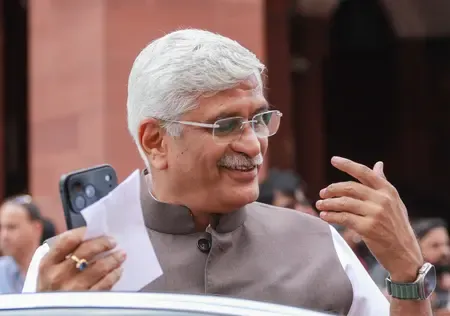
Union Culture and Tourism Minister Gajendra Singh Shekhawat on Friday, 25 July 2026, publicly rebuked Congress leader Rahul Gandhi on social media, invoking a Sanskrit maxim to counter Gandhi's characterisation of a government initiative as 'pathetic'.
Context
Shekhawat's post opens with the Sanskrit phrase Yatha drishtih, tatha srishtih — meaning 'as is one's vision, so is one's world' — before addressing Gandhi directly. He argued that when a political actor is driven by 'flawed intent and desperation in politics,' even a genuinely positive initiative will appear 'pathetic' to them. His closing line turned the charge around: 'What is truly pathetic is not the initiative, but such a mindset.'
The exchange is the latest in a sustained pattern of direct social-media confrontations between senior BJP ministers and Congress figures over the framing of government programmes. Cultural and tourism initiatives have repeatedly become flashpoints, with the ruling party presenting them as nation-building and the opposition questioning their implementation or intent.
Policy Backdrop
The Ministry of Culture and Tourism under Shekhawat has overseen a range of initiatives spanning heritage conservation, religious tourism circuits, and the promotion of India's soft power abroad. These programmes have drawn both bipartisan acknowledgement and political criticism, making them a recurring subject of parliamentary debate and public discourse.
Rahul Gandhi, as a sitting Lok Sabha MP and the most prominent face of the Congress opposition, has consistently scrutinised the government's cultural agenda, framing several initiatives as either cosmetic or exclusionary. The specific initiative he described as 'pathetic' could not be independently verified from available information at the time of publication.
Stakeholders and Impact
The exchange is primarily political, but it carries implications for how government cultural and tourism projects are perceived in public discourse. When senior ministers and opposition leaders spar publicly, the programmes caught in the crossfire often see their public reception coloured by partisan framing rather than on-ground outcomes.
For the BJP, Shekhawat's swift, rhetorically sharp response signals a deliberate strategy of not allowing opposition criticism to go unanswered on social media, a platform where narrative battles increasingly shape voter perception ahead of electoral cycles.
What's Next
Political observers will watch for a response from Rahul Gandhi or the Congress party, either on social media or during the next sitting of Parliament. The Ministry of Culture and Tourism may also use the controversy as an opportunity to spotlight the specific initiative in question, turning a political attack into a communications moment for the programme itself.
As India's cultural diplomacy and domestic tourism agenda continue to expand, the political contestation around them is unlikely to subside — making exchanges like this a barometer of the broader ideological battle over who defines India's cultural identity and national progress.
Point of View
While casting Gandhi as someone constitutionally incapable of appreciating India's civilisational projects. The exchange illustrates how cultural policy has become one of the sharpest edges of BJP-Congress rivalry, where every ministerial initiative is simultaneously a governance act and an ideological statement. By responding within hours and with rhetorical precision, the minister signals that the BJP intends to contest not just policy ground but the very language of political legitimacy. Congress will need to move beyond a single-word dismissal if it wants to sustain a credible critique of the government's cultural agenda.
NationPress
22 Oct 2026
Frequently Asked Questions
Why did Gajendra Singh Shekhawat target Rahul Gandhi on social media?
Shekhawat responded to Rahul Gandhi after Gandhi reportedly called a government initiative 'pathetic.' The minister used a Sanskrit maxim to argue that Gandhi's negative perception stems from his own political mindset rather than any flaw in the initiative.
What does 'Yatha drishtih tatha srishtih' mean?
It is a Sanskrit phrase meaning 'as is one's vision, so is one's world.' Shekhawat used it to suggest that Gandhi's critical outlook distorts his perception of positive government work.
Which government initiative did Rahul Gandhi call pathetic?
The specific initiative Gandhi described as 'pathetic' was not independently verifiable from available information at the time of publication.
Is this the first time Shekhawat and Rahul Gandhi have clashed publicly?
This exchange is part of a broader pattern of direct social-media confrontations between senior BJP ministers and Congress leaders, particularly over cultural and tourism programmes.
What is Gajendra Singh Shekhawat's role in the government?
Gajendra Singh Shekhawat is the Union Minister of Culture and Tourism, a senior BJP leader, and a Lok Sabha MP representing Jodhpur in Rajasthan.