Shekhawat Reviews Historic Anangtal in Mehrauli for Conservation
Synopsis
Union Culture and Tourism Minister Gajendra Singh Shekhawat visited the historic Anangtal water tank in Mehrauli, New Delhi on 22 June 2026, discussing conservation, enhancement, and tourism development possibilities for the 11th-century Tomar-era heritage site.
Key Takeaways
Gajendra Singh Shekhawat visited Anangtal in Mehrauli, New Delhi on 22 June 2026 to assess its heritage and tourism potential.
Anangtal is a medieval water tank traditionally linked to 11th-century Tomar ruler Anangpal , one of Delhi's earliest recorded rulers.
The minister discussed possibilities for conservation, enhancement, and tourism development at the site.
The post tagged the PMO, Ministry of Culture, and Ministry of Tourism , indicating a coordinated inter-ministerial approach.
The site sits in Mehrauli , South Delhi, near the Qutub Minar complex , one of the country's most visited heritage destinations.
Any formal project would likely involve the Archaeological Survey of India and could draw on schemes such as Swadesh Darshan or Monument Mitra .
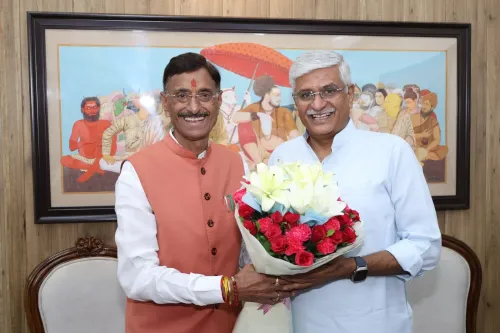
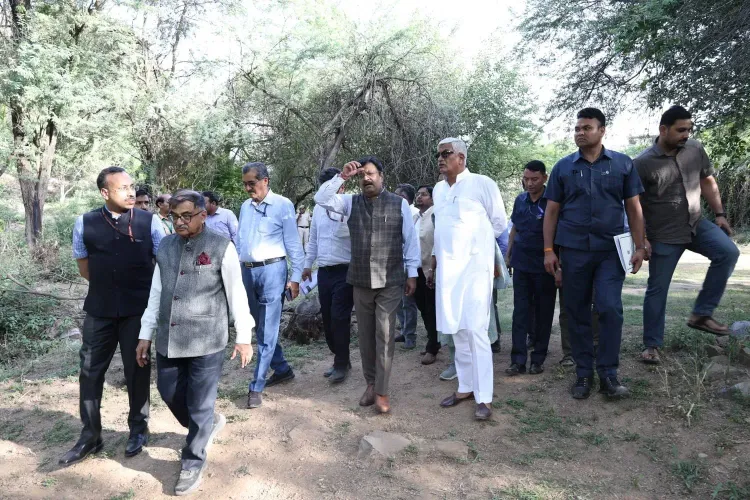
Union Culture and Tourism Minister Gajendra Singh Shekhawat on Monday, 22 June 2026, visited the historic Anangtal water tank in Mehrauli, New Delhi, and held discussions on its conservation, development, and tourism potential.
Context
Anangtal is a medieval water tank in Mehrauli, South Delhi, traditionally associated with the 11th-century Tomar ruler Anangpal, who is credited with founding an early settlement at the site that would later become Delhi. The structure holds significance both as a hydrological heritage asset and as a marker of the city's pre-Sultanate past. Mehrauli itself is among Delhi's densest concentrations of medieval monuments, anchored by the Qutub Minar complex.
Shekhawat shared photographs from his site visit on X, tagging the Prime Minister's Office, the Ministry of Culture, and the Ministry of Tourism, signalling an inter-ministerial approach to the site's future. In his post, he wrote — 'Aaj Nayi Dilli ke Mehrauli sthit aitihasik Anangtal ka avlokan kar iske sanrakshan, samvardhan evam paryatan vikas ki sambhavnaon par charcha ki' — meaning: 'Today, I visited the historic Anangtal located in Mehrauli, New Delhi, and discussed the possibilities for its conservation, enhancement, and tourism development.'
Policy Backdrop
The visit aligns with a broader Central Government push to integrate heritage water bodies and monuments into structured tourism circuits. The Swadesh Darshan scheme, launched in 2014-15, was designed to develop theme-based tourist circuits, with heritage sites forming a core component. The Monument Mitra scheme, introduced in 2017, further opened avenues for private-sector participation in monument adoption and upkeep.
The Archaeological Survey of India (ASI), which functions under the Ministry of Culture, is the primary agency responsible for protecting and maintaining centrally protected monuments across the country. Any formal conservation project at Anangtal would likely involve ASI's technical and financial frameworks. The PRASAD scheme has also been expanded over the years to link pilgrimage destinations with broader heritage tourism development, a model that could be applied to sites like Anangtal.
Stakeholders and Impact
Residents of Mehrauli and the surrounding localities stand to benefit from any infrastructure improvement tied to enhanced footfall at the site. Heritage tourists — both domestic and international — who visit the adjacent Qutub Minar complex represent a natural audience for an upgraded Anangtal experience, should the site be developed as a complementary attraction.
Conservation specialists and archaeologists who study Delhi's pre-Sultanate history regard Anangtal as an underexplored asset. Integrating it into a formal tourism circuit could raise its public profile while also generating resources for its upkeep — a model the Central Government has pursued at several other medieval-era sites across the country.
What's Next
The tagging of the PMO, Ministry of Culture, and Ministry of Tourism in Shekhawat's post suggests the discussion is intended to draw coordinated institutional attention to the site. Observers will watch for any formal announcement regarding Anangtal's inclusion in upcoming ASI conservation budgets or in a new tourism circuit proposal.
Parliamentary discussions on heritage conservation budgets and inter-ministerial tourism plans are the most likely forums where concrete next steps for Anangtal could be outlined. The site's trajectory will depend on whether Monday's review translates into a structured project proposal in the months ahead.
Point of View
He is publicly signalling that this is not a routine departmental inspection but a push for coordinated executive attention. Anangtal's proximity to the Qutub Minar complex makes it a logical candidate for a cluster tourism model, which the government has successfully deployed at other heritage corridors. The visit could mark an early step toward a formal project announcement, though concrete outcomes remain to be seen.
NationPress
21 Sept 2026
Frequently Asked Questions
What is Anangtal in Mehrauli, Delhi?
Anangtal is a historic water tank located in Mehrauli, South Delhi, traditionally associated with the 11th-century Tomar ruler Anangpal, who is considered one of the earliest founders of a settlement at the site that would grow into Delhi.
Why did Gajendra Singh Shekhawat visit Anangtal?
Union Culture and Tourism Minister Gajendra Singh Shekhawat visited Anangtal on 22 June 2026 to assess the site and discuss possibilities for its conservation, enhancement, and tourism development.
Which government schemes could apply to Anangtal's development?
Schemes such as Swadesh Darshan, which supports theme-based tourist circuits, and Monument Mitra, which enables private-sector adoption of monuments, are among the existing frameworks that could be applied to Anangtal's development.
Is Anangtal protected by the Archaeological Survey of India?
The Archaeological Survey of India, which functions under the Ministry of Culture, is responsible for centrally protected monuments. Any formal conservation project at Anangtal would likely involve ASI's technical and financial frameworks.
What is the significance of Mehrauli as a heritage area?
Mehrauli in South Delhi is one of the city's densest concentrations of medieval monuments, anchored by the Qutub Minar complex, making it a strategically important zone for heritage tourism development.