Sonowal Reviews 12-Year Maritime Journey, Lothal Heritage Complex
Synopsis
Union Minister Sarbananda Sonowal chaired a review of India's 12-year maritime journey and the Maritime Amritkaal 2047 roadmap on June 17, 2026, also assessing progress on the National Maritime Heritage Complex at Lothal — a project designed to showcase ancient India's seafaring civilisation to a global audience.
Key Takeaways
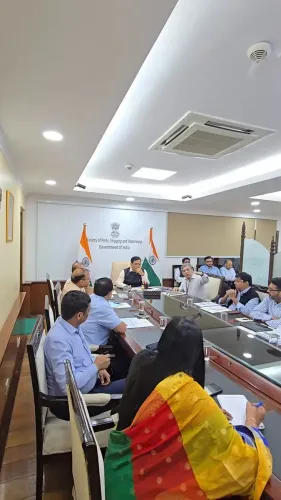
Union Minister Sarbananda Sonowal held a comprehensive review meeting on June 17, 2026 with senior ministry officials and maritime stakeholders.
The review covered India's maritime progress over the past 12 years and the long-term Maritime Amritkaal 2047 vision.
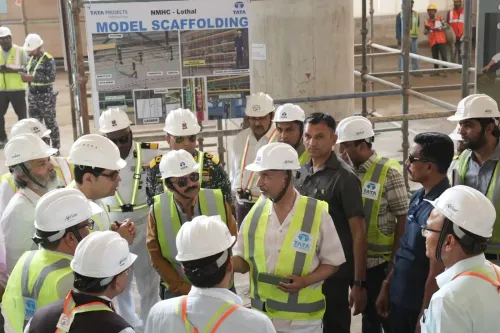
Progress on the National Maritime Heritage Complex at Lothal, Gujarat was assessed; the complex is intended to be a global showcase of ancient Indian maritime heritage.
Lothal is home to one of the world's earliest known dockyards, dating to the Indus Valley Civilisation over 4,500 years ago.
The review builds on the Sagarmala Project (2015) and Maritime India Vision 2030 (2021) policy frameworks.
Key watch points include construction milestones for the Lothal complex and any follow-up policy or budget announcements tied to the 2047 roadmap .
Union Minister of Ports, Shipping and Waterways Sarbananda Sonowal on Wednesday, June 17, 2026, chaired a comprehensive review meeting with senior Ministry of Ports, Shipping and Waterways officials and maritime stakeholders, assessing India's maritime progress over the past 12 years and charting the course toward Maritime Amritkaal 2047. The session also took stock of the construction progress of the National Maritime Heritage Complex at Lothal, Gujarat, a flagship cultural infrastructure project aimed at showcasing ancient India's seafaring legacy to the world.
Context
In his post on X, Minister Sonowal stated that the meeting involved 'a comprehensive review of India's maritime journey over the past 12 years and the roadmap towards Maritime Amritkaal 2047.' He also noted that the team 'assessed progress of the National Maritime Heritage Complex at Lothal, which will serve as a global window to ancient India's oceanic prowess, traditional wisdom and civilisational heritage.'
Lothal is an archaeological site of the Indus Valley Civilisation located in Gujarat and is home to one of the world's earliest known dockyards, dating back over 4,500 years. The choice of Lothal as the site for a national maritime heritage complex is rooted in its historical significance as a centre of ancient maritime trade and shipbuilding.
Policy Backdrop
The review is set against a decade-long push to modernise and expand India's maritime sector. The Sagarmala Project, launched in 2015, laid the groundwork for port-led development, improved coastal connectivity, and the establishment of coastal economic zones. This was followed by the Maritime India Vision 2030, released in 2021, which set ambitious targets for port capacity, shipping tonnage, and coastal shipping growth.
Maritime Amritkaal 2047 represents the next horizon — a long-term vision aligned with the centenary of India's independence, aiming to position the country as a leading global maritime power. The June 2026 review appears to be a mid-course assessment of how the sector has progressed and what policy levers remain to be deployed in the years ahead.
The National Maritime Heritage Complex at Lothal is a central element of this dual strategy: coupling hard infrastructure expansion with a soft-power narrative that anchors India's modern maritime ambitions in a civilisational continuum stretching back millennia.
Stakeholders and Impact
The meeting brought together senior officials from the Ministry of Ports, Shipping and Waterways alongside representatives from the broader maritime industry, reflecting the government's intent to align public policy with private sector readiness. Port operators, shipping companies, inland waterway developers, and coastal logistics players all have a stake in the targets set under the 2047 roadmap.
The Lothal complex, once operational, is expected to draw heritage tourism to Gujarat while also serving as an educational and diplomatic asset — a 'global window,' as Sonowal described it, to India's pre-modern oceanic achievements. The heritage tourism sector, academic institutions, and international cultural bodies are among the stakeholders who stand to benefit from the project's completion.
What's Next
Observers will watch for concrete construction milestones and a confirmed public opening timeline for the National Maritime Heritage Complex at Lothal. Any follow-up policy documents, budget allocations, or revised targets tied to the Maritime Amritkaal 2047 framework are also likely to emerge from the deliberations held at this review. The government's ability to sustain momentum on both the infrastructure and heritage fronts will be a key indicator of how seriously the 2047 maritime vision is being operationalised beyond aspirational targets.
Point of View
500-year-old dockyard, the BJP-led government is crafting a political and diplomatic narrative that frames modern port expansion as the restoration of a historic legacy. This dual-track approach has been consistent since the Sagarmala launch in 2015, and the June 2026 review signals that the government intends to keep both tracks — economic and cultural — advancing in tandem as the independence centenary approaches. Whether the Lothal complex can become a genuine global heritage destination, and whether the 2047 targets translate into measurable capacity gains, will determine how effectively this narrative converts into lasting policy outcomes.
NationPress
19 Sept 2026
Frequently Asked Questions
What is Maritime Amritkaal 2047?
Maritime Amritkaal 2047 is India's long-term vision for the growth and modernisation of its maritime sector, aligned with the centenary of the country's independence in 2047. It builds on earlier frameworks such as the Sagarmala Project and Maritime India Vision 2030.
What is the National Maritime Heritage Complex at Lothal?
The National Maritime Heritage Complex is a planned museum and heritage site being developed at Lothal in Gujarat. It aims to highlight ancient India's maritime history, traditional shipbuilding knowledge, and civilisational contributions to global seafaring.
Why is Lothal significant for India's maritime history?
Lothal is an Indus Valley Civilisation archaeological site in Gujarat and is believed to contain one of the world's earliest known dockyards, dating back over 4,500 years. It is considered evidence of ancient India's advanced maritime trade capabilities.
What is the Sagarmala Project?
The Sagarmala Project was launched in 2015 as a central government initiative focused on port-led development, improving coastal and hinterland connectivity, and establishing coastal economic zones to boost India's maritime economy.
What did Sonowal's June 2026 meeting cover?
The meeting on June 17, 2026 brought together senior Ministry of Ports, Shipping and Waterways officials and maritime stakeholders for a comprehensive review of India's maritime progress over the past 12 years and to assess the roadmap toward Maritime Amritkaal 2047, including a progress review of the Lothal heritage complex.