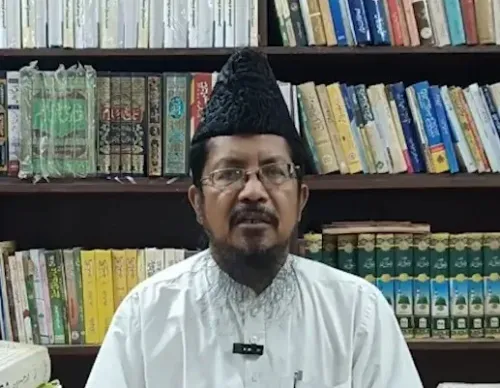
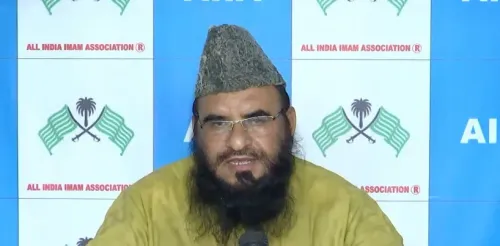
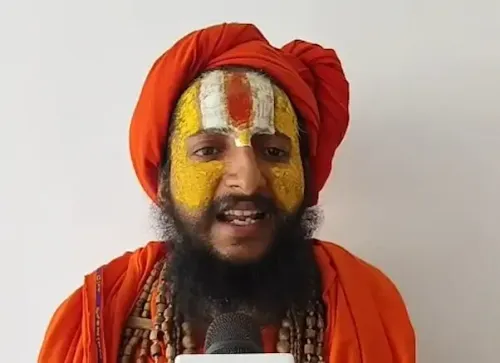
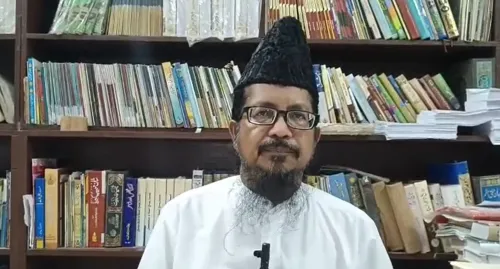
Shia Law Board rebukes Sajid Rashidi: 'Love for homeland comes first'
Synopsis
The All India Shia Personal Law Board has delivered a pointed theological rebuttal to Maulana Sajid Rashidi's claim that Muslims cannot regard India as a mother — with its general secretary declaring that Islamic faith actually places love for the homeland above love for religion. The intervention cuts against hardline clerical framing and signals a significant internal divide within Muslim religious leadership in India.
Key Takeaways
Maulana Sajid Rashidi claimed on 18 May that Muslims do not regard India as a mother, citing Islamic theology.
All India Shia Personal Law Board General Secretary Maulana Yasoob Abbas strongly rejected the remarks.
Abbas stated that Islam teaches 'love for the homeland comes first, and love for religion comes second.' Abbas also dismissed Rashidi's claim that Islam predated Hinduism, calling such debates socially divisive.
The Board urged public focus on issues like poverty and unemployment rather than religious controversies.
The All India Shia Personal Law Board on Monday, 18 May strongly censured remarks made by Maulana Sajid Rashidi in which he asserted that Muslims do not regard India as a mother, with the Board's general secretary countering that Islam explicitly places love for one's homeland above love for religion.
What Rashidi Said
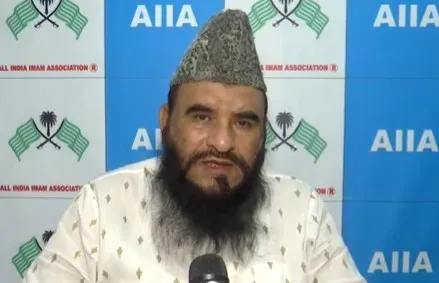
Speaking to reporters earlier in the day, Maulana Sajid Rashidi argued that the concept of Bharat Mata is incompatible with Islamic belief. 'Musalman Bharat ko Maa nahi maante. We have only one mother: the woman who gave us birth. We do not even worship her, nor do we prostrate before her. How, then, could we possibly prostrate before the Earth?' he said.
Rashidi further remarked that Islam was the 'primordial religion' and predated Hinduism, and drew a contrast between Islamic and Hindu traditions around veneration of nature, trees, and mountains — stating he did not believe such practices represented the 'true teaching of Hinduism or Sanatan Dharma.'
The Board's Sharp Rebuttal
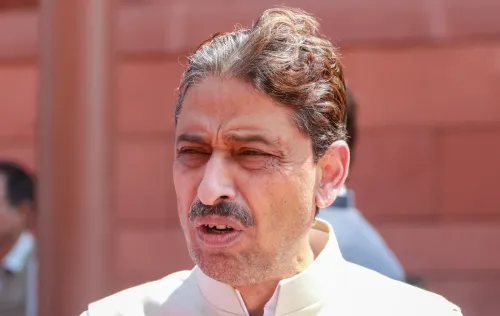
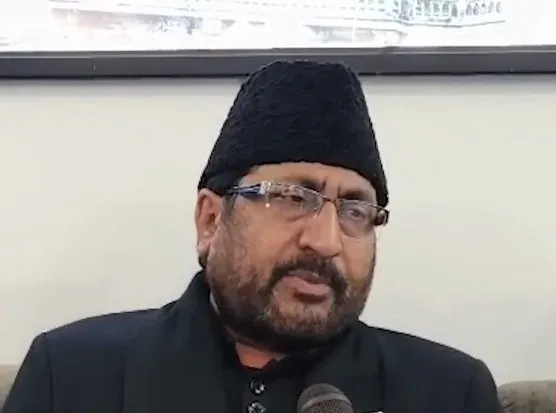
Maulana Yasoob Abbas, General Secretary of the All India Shia Personal Law Board, rejected Rashidi's position in unambiguous terms. Abbas stated that Islam affords the highest respect to one's biological mother — 'Paradise lies beneath a mother's feet,' he noted — but stressed that patriotism is equally embedded in the faith.
'As far as Bharat Mata is concerned, our religion teaches that love for one's homeland is an integral part of one's faith. For us, love for the homeland comes first, and love for religion comes second,' Abbas said.
Dismissing the 'Which Religion Came First' Debate
Abbas also rejected Rashidi's claim about Islam predating Hinduism, warning that such arguments serve only to fracture society. 'We should not engage in debates regarding which religion came first and which came later. Certain Mullahs and Pandits issue controversial statements solely to gain publicity,' he said.
He urged citizens not to be drawn into religion-based controversies and called for public discourse to focus instead on pressing socio-economic concerns. 'Talk about how poverty or unemployment can be excluded and not about other petty things,' Abbas added.
Context and Significance
The exchange, originating in Siddharthnagar, Uttar Pradesh, reflects an ongoing tension within Muslim public discourse in India over the boundaries between religious identity and national belonging. Notably, this is not the first time the All India Shia Personal Law Board has distanced itself from hardline clerical positions — the Board has previously taken stances at odds with more conservative Sunni bodies on several social and civic matters.
Abbas's framing — that homeland love is a religious obligation, not a concession — represents a significant theological counter-narrative to Rashidi's remarks, and one that is likely to resonate beyond the immediate controversy.
Point of View
But the more consequential story is the Shia Personal Law Board's response — a theological argument, not merely a political one. Abbas did not simply call for peace; he inverted Rashidi's hierarchy, placing national love above religious love within the Islamic framework itself. That is a significant doctrinal claim that mainstream coverage has largely glossed over. It also exposes a deepening fault line between Shia and more conservative clerical voices on questions of national identity — a divide that matters for how Muslim civic participation is framed in India's current political climate.
NationPress
19 Sept 2026
Frequently Asked Questions
What did Maulana Sajid Rashidi say about Bharat Mata?
Maulana Sajid Rashidi stated that Muslims do not regard India as their mother, arguing that in Islam, the only mother is the woman who gives birth. He also claimed Islam was the primordial religion that predated Hinduism.
How did the All India Shia Personal Law Board respond?
The Board's General Secretary, Maulana Yasoob Abbas, strongly rejected Rashidi's remarks, asserting that Islam teaches love for one's homeland is an integral part of faith and that homeland love comes before love for religion.
Who is Maulana Yasoob Abbas?
Maulana Yasoob Abbas is the General Secretary of the All India Shia Personal Law Board, one of the principal bodies representing Shia Muslim religious and legal interests in India.
Why did the Shia Law Board reject the 'which religion came first' debate?
Abbas argued that debating the chronological precedence of religions only creates social divisions. He alleged that such statements are made by certain clerics and religious figures solely to attract publicity, and called for focus on real issues like poverty and unemployment.
Where did this controversy originate?
The remarks and the subsequent rebuttal emerged from Siddharthnagar in Uttar Pradesh on 18 May, though the statements carry national significance given the religious bodies involved.