NEET paper leak crackdown: Eknath Shinde backs Centre's 10-year jail, ₹10 crore fine bill
Synopsis
Maharashtra Deputy CM Eknath Shinde has backed the Centre's toughest-ever response to exam paper leaks — fast-track courts, up to 10 years in prison, and a ₹10 crore fine — with a formal bill headed to Parliament. It is the most punitive anti-malpractice legislative push India has seen, arriving at the peak of the NEET controversy.
Key Takeaways
Eknath Shinde , Maharashtra Deputy CM and Shiv Sena chief, endorsed the Centre's exam reform measures on 24 July .
The Centre has announced fast-track courts , up to 10 years imprisonment , and fines of up to ₹10 crore for paper leak offences.
A formal bill codifying these penalties is set to be tabled in Parliament .
PM Narendra Modi has taken a firm stand to permanently end paper leak incidents, according to Shinde.
Nadda and Jitendra Singh met activist Sonam Wangchuk , after which he called off his hunger strike.
Shinde confirmed Maharashtra's full support for the Centre's stance via a post on his official X account.
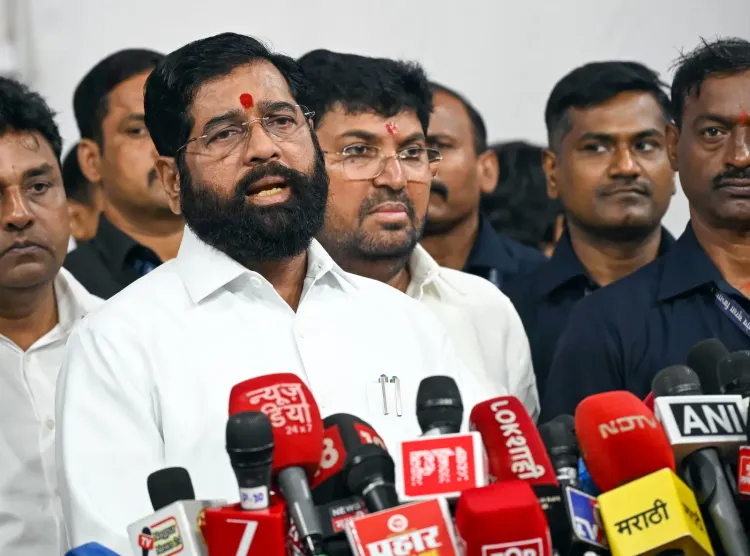
Maharashtra Deputy Chief Minister Eknath Shinde, who also leads the Shiv Sena, on Saturday, 24 July threw his full weight behind a set of measures announced by the Centre to overhaul the examination system and stamp out paper leaks. Shinde's endorsement came amid the nationwide controversy over the NEET paper leak, which has triggered widespread student protests and demands for systemic reform.
Key Measures Announced by the Centre
Shinde said the Central government has taken what he described as 'historic steps' in response to the anxiety gripping students across the country. The measures include setting up fast-track courts to expedite trials in paper leak cases, imposing up to 10 years of imprisonment, and levying a fine of up to ₹10 crore on those found guilty. A formal bill enshrining these penalties is expected to be tabled in Parliament shortly.
Maharashtra's Stance and Shinde's Commitment
Welcoming the Centre's initiative, Shinde declared Maharashtra's unconditional support. He affirmed the state's commitment to working in step with the Central government to protect students' futures and to build a credible, high-quality examination system. In a post on his official X account, Shinde stated that the Maharashtra government 'wholeheartedly welcomes this historic decision.'
PM Modi's Position and Student Protests
Shinde highlighted that Prime Minister Narendra Modi has taken a firm stand to permanently end paper leak incidents and to initiate stringent action against those responsible. He also noted that the government has been maintaining continuous dialogue with students protesting across the country, including those demonstrating at Jantar Mantar in New Delhi.
Sonam Wangchuk Hunger Strike Called Off
Shinde separately mentioned that Union Ministers J. P. Nadda and Jitendra Singh visited a hospital to hold discussions with senior social activist Sonam Wangchuk, who had been on a hunger strike. Following those discussions, Wangchuk reportedly decided to call off his fast.
What Comes Next
The proposed legislation — with its provisions for rigorous imprisonment and steep financial penalties — is set to be placed before Parliament. Analysts note this is the most punitive legislative response to exam malpractice India has seen, and its passage could set a new deterrence benchmark for examination bodies nationwide. Whether enforcement mechanisms will match the severity of the proposed penalties remains the critical question going forward.
Point of View
Yet the track record of fast-track courts in delivering timely verdicts is mixed at best. The harder test will be whether the legislation includes independent oversight of examination bodies, or whether it merely raises the cost of getting caught without fixing the systemic vulnerabilities — lax printing security, opaque NTA processes — that made the NEET leak possible in the first place.
NationPress
23 Oct 2026
Frequently Asked Questions
What action has the Centre announced on the NEET paper leak?
The Centre has announced fast-track courts, up to 10 years of imprisonment, and fines of up to ₹10 crore for those found guilty of paper leaks. A formal bill is expected to be tabled in Parliament shortly.
What did Eknath Shinde say about the Centre's exam reform measures?
Maharashtra Deputy CM Eknath Shinde said the Centre has taken 'historic steps' in response to the NEET paper leak controversy and declared Maharashtra's full support. He posted his endorsement on his official X account.
What is the NEET paper leak controversy?
The NEET paper leak controversy refers to the alleged leaking of question papers for the National Eligibility cum Entrance Test, which triggered nationwide student protests and demands for a transparent, fair examination system.
Who is Sonam Wangchuk and why was he on a hunger strike?
Sonam Wangchuk is a senior social activist. He had undertaken a hunger strike, after which Union Ministers J. P. Nadda and Jitendra Singh visited him at hospital for discussions, reportedly leading him to call off his fast.
When will the paper leak bill be tabled in Parliament?
According to Shinde, the bill proposing up to 10 years of rigorous imprisonment and a fine of up to ₹10 crore for paper leak offences will be tabled in Parliament soon, though a specific date has not been confirmed.