Maharashtra minister orders universities to draft exam paper leak guidelines
Synopsis
Maharashtra's Higher Education Minister Chandrakant Patil has moved to fix accountability directly on university officers for exam paper leaks — a response to the NEET controversy that has rattled the country. The same meeting also triggered a sweeping academic reform package and a Cabinet-cleared overhaul of private skill university regulation, making this one of the most wide-ranging higher education interventions the state has seen in recent years.
Key Takeaways
Minister Chandrakant Patil directed all Maharashtra state universities to draft anti-paper-leak guidelines modelled on the Central government's framework on 12 August .
Universities must issue circulars fixing direct accountability on responsible officers and staff for exam security.
A fourth-year Honours degree programme framework must be ready for rollout from academic years 2026-27 and 2027-28 .
Vice-Chancellors must hold weekly student interaction sessions with at least 50 students .
The Maharashtra Cabinet replaced university-specific skill university acts with the unified Maharashtra Private Skill Universities (Establishment and Regulation) Act, 2024 .
Sponsoring bodies for new skill universities must pay a non-refundable DPR fee of ₹1 crore ; extensions cost ₹50 lakh per year .
Higher and Technical Education Minister Chandrakant Patil on Tuesday, 12 August directed all state universities in Maharashtra to draft and publish comprehensive anti-paper-leak guidelines modelled on the Central government's framework. The move follows nationwide youth protests over recent paper leak incidents in NEET and other major competitive examinations.
Key Directive on Exam Security
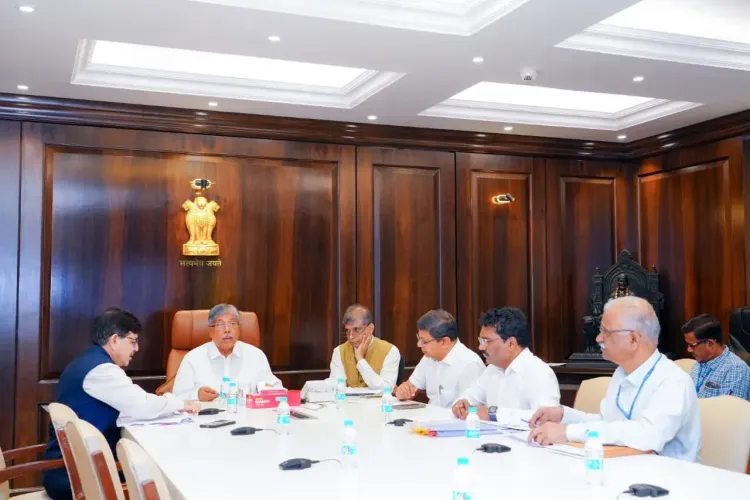
Minister Patil, chairing an online review meeting with Vice-Chancellors of all public universities across the state, instructed authorities to issue an official circular that fixes direct accountability on responsible officers and staff members. The goal, according to the minister's directive, is to ensure fully leak-free examinations going forward. This is part of a broader series of regulatory steps the state government has initiated in response to growing public concern over examination integrity.
Academic Reforms Also on the Agenda
Beyond exam security, the minister directed universities to adopt a uniform academic calendar to effectively implement the National Education Policy (NEP). Institutions have also been asked to prepare a comprehensive framework to roll out the fourth-year Honours degree programme starting from academic years 2026-27 and 2027-28.
Vice-Chancellors and Pro-Vice-Chancellors will be required to hold direct weekly interaction sessions with at least 50 students each to better understand and address student grievances. Colleges will be grouped into clusters to facilitate the sharing of faculty, infrastructure, laboratories, libraries, and educational resources. A specialised workshop for heads of examination control departments will also be conducted to study NEP implementation best practices from other states.
Drawing from cluster courses already developed by Mumbai University and other institutions, the state aims to build an inclusive, high-quality cluster curriculum. Each university has been mandated to execute at least one cluster initiative every month.
Private Skill Universities Get New Regulatory Framework
In a parallel development, the Maharashtra Cabinet cleared an overhaul of its regulatory framework for self-financed private skill universities, replacing university-specific acts with a unified legislative framework — the Maharashtra Private Skill Universities (Establishment and Regulation) Act, 2024. This decision repeals the previous Government Resolution dated 5 February 2021.
Under the new guidelines, sponsoring bodies must submit a Detailed Project Report (DPR) along with a non-refundable fee of ₹1 crore. After receiving the Letter of Intent (LoI), sponsors have one year to submit compliance reports. Up to two one-year extensions may be granted at a fee of ₹50 lakh per year. Failure to comply within the window results in automatic cancellation of the LoI. Any subsequent amendment to a university's constituent act will attract a processing fee of ₹50 lakh.
Land and Infrastructure Requirements
Self-financed private skill universities will be required to come up on a minimum of 25 acres in rural areas, 15 acres at tehsil or district headquarters, and a minimum of 10 acres in urban areas — excluding BrihanMumbai Municipal Corporation (BMC) and Thane Municipal Corporation limits. In Metropolitan Region Development Authority zones, a minimum of 10 acres plus an endowment fund of ₹10 crore is required.
In Mumbai City, Mumbai Suburbs, and Thane Municipal Limits, a standalone building with at least 15,000 sq metres of constructed space is required. Buildings may be self-owned or taken on a minimum 30-year lease, but land transfer rights are prohibited.
With these reforms now in motion, the focus shifts to implementation — particularly whether universities can operationalise the anti-leak circulars before the next major examination cycle begins.
Point of View
But without an independent monitoring mechanism or statutory teeth, such circulars risk becoming paperwork exercises. The NEET crisis has created political pressure to act fast, but the durability of these reforms depends on whether the state builds enforcement infrastructure or simply issues more guidelines. The simultaneous push for NEP implementation, cluster curricula, and a new private university law suggests ambition; the risk is that overstretched university administrations end up doing none of it well.
NationPress
26 Sept 2026
Frequently Asked Questions
Why has Maharashtra directed universities to draft exam paper leak guidelines?
The directive follows nationwide youth protests over recent paper leak incidents in NEET and other major competitive examinations. Minister Chandrakant Patil instructed state universities to model their guidelines on the Central government's framework and fix direct accountability on responsible officers to ensure leak-free exams.
What is the Maharashtra Private Skill Universities (Establishment and Regulation) Act, 2024?
It is a unified legislative framework cleared by the Maharashtra Cabinet to regulate self-financed private skill universities, replacing earlier university-specific acts. It repeals the Government Resolution dated 5 February 2021 and sets new land, fee, and compliance requirements for institutions seeking to establish skill universities.
What are the new fees for setting up a private skill university in Maharashtra?
Sponsoring bodies must submit a Detailed Project Report with a non-refundable fee of ₹1 crore. After receiving the Letter of Intent, they have one year to submit compliance reports, with up to two one-year extensions available at ₹50 lakh per year. Non-compliance leads to automatic cancellation of the LoI.
What academic reforms were announced alongside the anti-leak directive?
Universities were directed to adopt a uniform academic calendar for NEP implementation, prepare a framework for the fourth-year Honours degree programme from 2026-27, hold weekly student interaction sessions with at least 50 students, and execute at least one cluster initiative per month for sharing faculty and infrastructure.
What are the land requirements for new private skill universities in Maharashtra?
Requirements vary by location: 25 acres in rural areas, 15 acres at tehsil or district headquarters, 10 acres in urban areas (excluding BMC and Thane Municipal Corporation limits), and 10 acres plus a ₹10 crore endowment fund in Metropolitan Region Development Authority zones. In Mumbai City, Mumbai Suburbs, and Thane Municipal Limits, a standalone building of at least 15,000 sq metres is required.