Shiv Sena at 60: June 19 Foundation Day is a battle for identity
Synopsis
Shiv Sena's Diamond Jubilee is no anniversary — it is a live legitimacy test. With defection rumours stalking the UBT camp and the Shinde faction still fighting perceptions of being a BJP satellite, June 19 will tell Maharashtra's voters which half of a split party can convincingly claim Balasaheb Thackeray's 1966 legacy heading into the next assembly cycle.
Key Takeaways
Shiv Sena turns 60 on 19 June , with both the Uddhav Thackeray (UBT) and Eknath Shinde factions holding separate Foundation Day events.
The UBT camp is battling defection rumours, reportedly involving monetary inducements targeting its Lok Sabha MPs and state legislators.
Shiv Sena (UBT) continues to operate without the official party name and 'Bow and Arrow' symbol, posing a grassroots identification challenge.
The Shinde faction holds the legal party name and symbol but faces questions about organic legitimacy beyond its alliance with the BJP .
The spectre of 'Operation Tiger' and the approaching Maharashtra monsoon legislative session have heightened the political stakes around the celebrations.
Both factions claim to be the true ideological heirs of Balasaheb Thackeray's original 1966 vision.
Shiv Sena's 60th Foundation Day on 19 June has become far more than an anniversary ritual — it is shaping up as a high-stakes contest for political legitimacy between the Uddhav Thackeray-led Shiv Sena (UBT) and the Eknath Shinde-led Shiv Sena, both claiming the mantle of the party founded by Balasaheb Thackeray in 1966. With Maharashtra's monsoon legislative session imminent and the spectre of 'Operation Tiger' hanging over state politics, the Diamond Jubilee celebrations carry consequences that will ripple well beyond a single day.
Why the Diamond Jubilee Matters
In Maharashtra's hyper-fragmented political landscape, June 19 is no longer a commemoration — it is a live power audit. The faction that commands the loudest and most credible narrative of ownership over Balasaheb Thackeray's legacy will capture momentum heading into the next round of state assembly battles. Both camps understand this, which is why the events are being choreographed as much for optics as for the faithful.
Uddhav Thackeray's Uphill Struggle
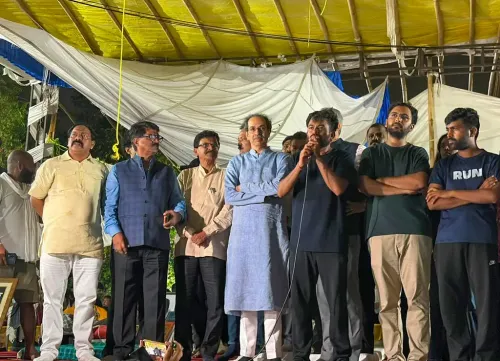
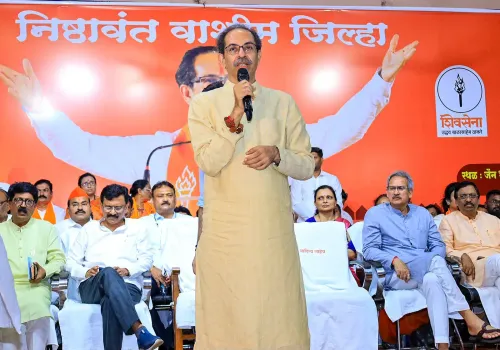
For Shiv Sena (UBT), the immediate pressure is existential. Swirling speculation that several of its Lok Sabha MPs and state legislators are being targeted for defection to the Shinde camp has forced the leadership into defensive loyalty huddles. Rumours of high-value monetary inducements have compelled the Thackeray camp to work overtime to keep its flock together ahead of the Foundation Day show.
The operational handicap is structural: operating without the official party name 'Shiv Sena' and the iconic 'Bow and Arrow' symbol means the UBT camp must continuously reinforce grassroots identification with its new poll symbol. Maintaining cohesion within the Maha Vikas Aghadi (MVA) alliance adds another layer of complexity — Uddhav Thackeray must satisfy a traditionally aggressive Marathi-Hindutva base while aligning with the secular, inclusive narratives of his alliance partners.
Having all public representatives stand united on 19 June is therefore a strategic necessity — a visible rebuttal to rumours of internal collapse and a demonstration that street-level sympathy for the original Thackeray line remains intact.
Shinde's Test of Organic Legitimacy
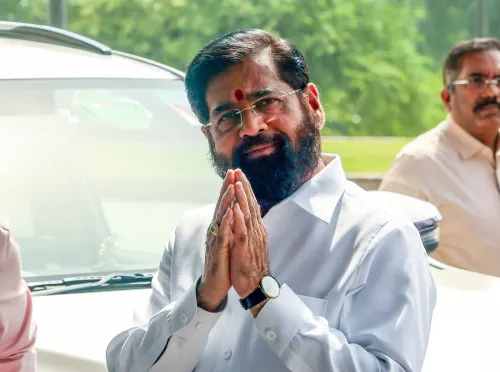
For Eknath Shinde, the challenge runs in the opposite direction. His faction holds the legal right to the party name and symbol, secured from the Election Commission of India, and controls state administrative machinery. Yet the persistent political question — whether the Shinde camp is a genuine political force or a breakaway group operating in the shadow of the Bharatiya Janata Party (BJP) — has not been fully answered.
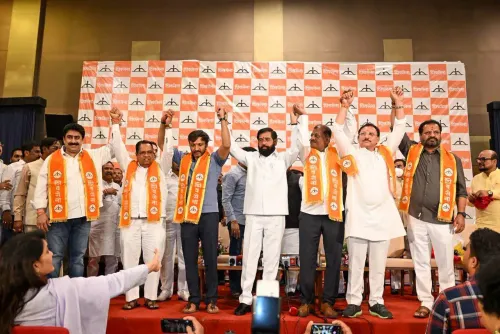
The continuous need to induct grassroots workers from the opposition, as seen in recent structural additions in Mumbai, signals that building a parallel organic party structure is a slow and gruelling process. Balancing seat-sharing arrangements and local turf wars within the ruling alliance, without alienating ambitious party workers, remains a constant tightrope walk.
Shinde has consistently argued that Uddhav Thackeray diluted the party's core Hindutva principles during the MVA government years, and that his own faction is the true custodian of Balasaheb Thackeray's 1966 vision. Foundation Day gives him the platform to press that claim before the widest possible audience.
What Comes Next
With the monsoon session of the Maharashtra legislature set to begin shortly, the political temperature in the state is already elevated. Both factions know that the narrative set on 19 June will colour the legislative session, party recruitment drives, and ultimately the seat-sharing talks ahead of future assembly elections. In a state where political identity is inseparable from legacy, whoever wins the symbolism of the Diamond Jubilee gains a measurable advantage in the battles to come.
Point of View
While the faction with street sympathy lacks the symbol that street voters recognise. Neither side has resolved its foundational weakness in the two-plus years since the split. June 19 will be watched not for the size of the rallies — both camps can mobilise crowds — but for whether the Shinde faction can shed the 'BJP satellite' tag and whether Thackeray can demonstrate that loyalty without legislative numbers is still a political asset. The answer will shape Maharashtra's next assembly arithmetic more than any seat-sharing deal.
NationPress
16 Sept 2026
Frequently Asked Questions
Why is Shiv Sena's Foundation Day on June 19 significant in 2025?
June 19, 2025 marks the 60th anniversary — the Diamond Jubilee — of Shiv Sena's founding by Balasaheb Thackeray in 1966. With the party split between the Uddhav Thackeray-led UBT faction and the Eknath Shinde-led faction, the day has become a contest for ideological ownership and organisational strength ahead of Maharashtra's next assembly elections.
What is 'Operation Tiger' and how does it affect Shiv Sena?
According to reports, 'Operation Tiger' refers to a political effort reportedly aimed at engineering defections from the Shiv Sena (UBT) camp to the Shinde faction. It has forced the Thackeray leadership into defensive loyalty exercises ahead of Foundation Day.
What challenges does the Uddhav Thackeray faction face?
The UBT faction is contending with defection rumours involving Lok Sabha MPs and state legislators, the loss of the official 'Shiv Sena' party name and 'Bow and Arrow' symbol, and the need to balance its Marathi-Hindutva base with the secular outlook of its MVA alliance partners.
How is the Eknath Shinde faction trying to establish legitimacy?
The Shinde faction holds the legal right to the 'Shiv Sena' name and symbol granted by the Election Commission of India, and controls state administrative machinery. However, it is still working to build an organic party structure independent of the BJP, and Shinde uses Foundation Day to position himself as the true successor to Balasaheb Thackeray's Hindutva ideology.
Who founded Shiv Sena and when?
Shiv Sena was founded by Balasaheb Thackeray in 1966, originally as a regional party championing the rights of Marathi people. The 2025 Foundation Day marks its 60th — or Diamond Jubilee — anniversary, now being claimed by two rival factions.