Operation Tiger: Six Shiv Sena(UBT) MPs defy whip, join Shinde faction
Synopsis
'Operation Tiger' has delivered a body blow to Uddhav Thackeray's Shiv Sena — six of its nine Lok Sabha MPs have openly defied a party whip and are moving to merge with the Shinde faction. With a Speaker petition already filed and Foundation Day on 19 June as the likely flashpoint, the Thackeray camp is racing against an anti-defection clock it may not be able to stop.
Key Takeaways
Six of nine Shiv Sena (UBT) Lok Sabha MPs boycotted a party meeting on 18 June , defying a mandatory whip — the operation was reportedly code-named 'Operation Tiger' .
Rebels include Sanjay Dina Patil , Sanjay Deshmukh , Sanjay (Bandu) Jadhav , Omraje Nimbalkar , Bhausaheb Wakchaure , and Nagesh Patil Ashtikar .
The group has filed an application before Lok Sabha Speaker Om Birla to be recognised as a separate parliamentary bloc, paving the way for a formal merger with the Eknath Shinde faction.
Rebels cite drift from Hindutva ideology and fears of a merger with the Congress as reasons for the split.
All six rebel MPs are set to receive Y-plus security ; the Maharashtra Home Department has ordered enhanced protection.
Formal integration into the Shinde faction is widely expected on Shiv Sena's Foundation Day, 19 June .
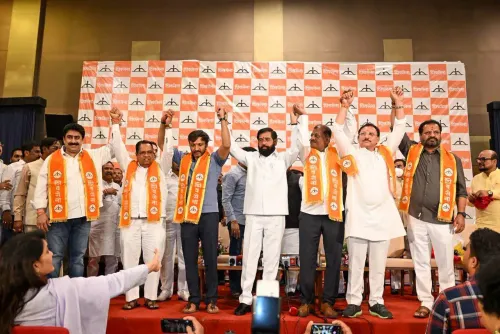
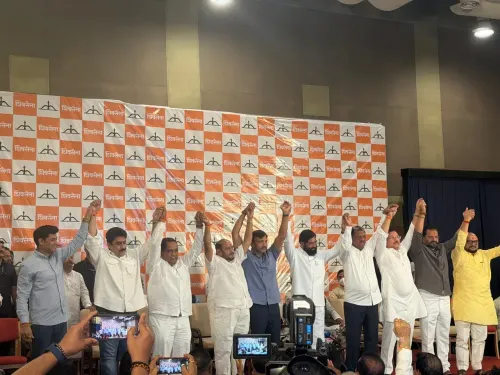
Six of Shiv Sena (UBT)'s nine Lok Sabha members openly defied a party whip on Thursday, 18 June, boycotting a parliamentary meeting convened by Uddhav Thackeray's faction and signalling their formal shift to the Eknath Shinde-led Shiv Sena. The coordinated walkout, reportedly executed under a plan code-named 'Operation Tiger', marks the most severe internal rupture the Thackeray camp has faced since the original 2022 split.
What Happened at the Parliament House Meeting
The Shiv Sena (UBT) parliamentary party convened a meeting at its office in Parliament House at 11:00 am, backed by a strict whip issued the previous day mandating attendance. Only three Lok Sabha members and one Rajya Sabha member complied — Anil Desai, Arvind Sawant, Rajabhau Waje, and Sanjay Raut (Rajya Sabha). The six who staged a complete boycott were Sanjay Dina Patil, Sanjay Deshmukh, Sanjay (Bandu) Jadhav, Omraje Nimbalkar, Bhausaheb Wakchaure, and Nagesh Patil Ashtikar.
The Legal Play: Speaker Petition and Anti-Defection Shield
According to sources, the rebel group has already filed an application before Lok Sabha Speaker Om Birla seeking recognition as a separate parliamentary bloc — a procedural move that would legally pave the way for a formal merger with the Shinde faction. Insiders from the Shinde camp argue that because the six MPs constitute a strict two-thirds majority of the party's total Lok Sabha strength (6 out of 9), the anti-defection law does not bind them once their separate group status is accepted by the Speaker. Sources further indicated the Shinde camp plans to withhold formal announcements for the next 48 hours to carefully counter legal moves from the Thackeray side.
The Shiv Sena (UBT) leadership, meanwhile, has initiated show-cause notices to the six absent MPs, giving them a brief window of hours to respond. Failure to provide a satisfactory explanation will prompt the Thackeray camp to petition Speaker Om Birla for their disqualification under the anti-defection law.
Why the Rebels Say They Left
The dissenting lawmakers reportedly passed an internal resolution citing ideological differences as the primary driver. The resolution, according to sources, states that the party leadership has drifted significantly from the Hindutva ideology established by founder Balasaheb Thackeray. It also flags growing anxiety among the rank and file over a potential full merger of Shiv Sena (UBT) into the Indian National Congress — a development the rebels argue would erase the regional party's distinct identity. The resolution reportedly references recent remarks by senior leader Sanjay Raut, who suggested that regional parties such as the All India Trinamool Congress should merge with Congress, which amplified fears of a similar fate for the Thackeray group.
Security Tightened, Leadership of Rebel Group Emerging
Anticipating potential law-and-order concerns across Maharashtra, security has been substantially reinforced outside the residences of the defecting MPs. Heavy police deployments have been set up at several properties, including the residence of Mumbai North East MP Sanjay Dina Patil. Following what sources described as an open threat by Sanjay Raut, all six rebel MPs are set to receive Y-plus security. The Maharashtra Home Department has directed the State Intelligence Department to bolster their protection. Sources indicate that Sanjay Jadhav is likely to assume leadership of the newly formed parliamentary breakaway group.
Foundation Day and What Comes Next
With Shiv Sena's Foundation Day falling on 19 June, the rebel group is widely expected to formally integrate into the Shinde faction, cementing a dramatic shift in the numbers game within the Lok Sabha. This is the second major split-related crisis for the Thackeray camp in three years, and it comes at a politically sensitive moment as both factions continue to contest the party's name and symbol before constitutional authorities.
Point of View
The rebels will likely have already merged and the Speaker will be holding a fait accompli. What this episode exposes is a structural vulnerability in the MVA alliance: the closer Uddhav Thackeray moves toward Congress for political survival, the more he alienates the Hindutva-leaning cadre that was always Sena's ideological spine. The rebels have handed Eknath Shinde a narrative gift — that the Thackeray camp is Congress by another name.
NationPress
19 Sept 2026
Frequently Asked Questions
What is 'Operation Tiger' in the Shiv Sena context?
'Operation Tiger' is the reported code name for the Eknath Shinde faction's coordinated plan to engineer the defection of six Shiv Sena (UBT) Lok Sabha MPs. The operation came to light on 18 June when the six MPs boycotted a mandatory party meeting and reportedly filed a petition before Lok Sabha Speaker Om Birla for recognition as a separate bloc.
How does the anti-defection law apply to these six MPs?
Under the Tenth Schedule of the Constitution, a split is legally protected if at least two-thirds of a party's legislative members back it. The six rebel MPs represent exactly two-thirds of Shiv Sena (UBT)'s nine-member Lok Sabha group, which the Shinde camp argues shields them from disqualification once the Speaker accepts their separate group status.
Who are the six MPs who defied the Shiv Sena (UBT) whip?
The six MPs who boycotted the 18 June parliamentary meeting are Sanjay Dina Patil, Sanjay Deshmukh, Sanjay (Bandu) Jadhav, Omraje Nimbalkar, Bhausaheb Wakchaure, and Nagesh Patil Ashtikar. Sources indicate Sanjay Jadhav is likely to lead the newly formed breakaway parliamentary group.
Why did the rebel MPs cite ideological reasons for leaving?
According to sources, the rebels passed an internal resolution stating that the Thackeray leadership had drifted from the Hindutva ideology of founder Balasaheb Thackeray. They also flagged fears of a full merger of Shiv Sena (UBT) into the Congress, referencing remarks by Sanjay Raut about regional parties merging with the national outfit.
What happens next for Shiv Sena (UBT) and the rebel group?
The Thackeray camp has issued show-cause notices to the six MPs and may petition Speaker Om Birla for their disqualification under the anti-defection law. The rebels are widely expected to formally merge with the Shinde faction on Shiv Sena's Foundation Day, 19 June. The Shinde camp has said it will hold back formal announcements for 48 hours to manage the legal counter-strategy.