Operation Tiger: 6 UBT Lok Sabha MPs join Shinde's Shiv Sena, shifting Maharashtra power balance
Synopsis
Operation Tiger is Shinde's most consequential move since the 2022 split — six UBT Lok Sabha MPs have crossed over, cutting Uddhav Thackeray's parliamentary strength from nine to three while boosting Shinde's count to thirteen. With the defecting bloc claiming two-thirds of the UBT parliamentary group, the anti-defection shield appears legally intact, and Maharashtra's political balance has shifted sharply.
Key Takeaways
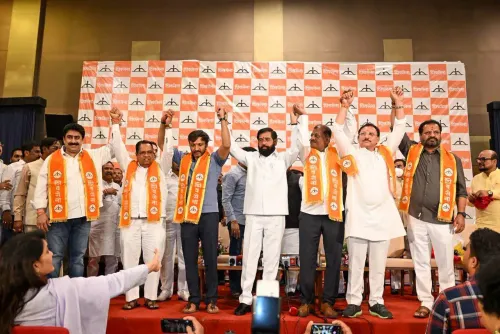
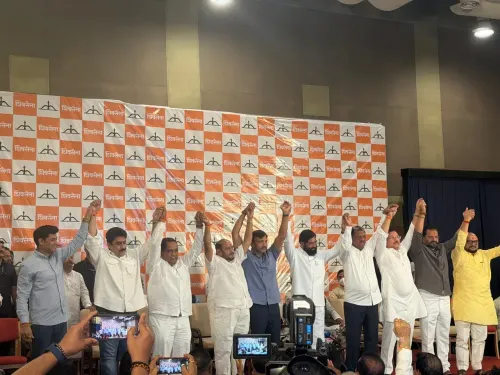
Eknath Shinde declared 'Operation Tiger' a legal success on 22 June after six UBT Lok Sabha MPs joined his Shiv Sena faction in Mumbai .
The six MPs are Sanjay Dina Patil , Sanjay Jadhav , Sanjay Deshmukh , Bhausaheb Wakchaure , Omraje Nimbalkar , and Nagesh Patil-Ashtikar .
Uddhav Thackeray 's parliamentary group shrinks from 9 MPs to 3 ; Shinde's tally rises from 7 to 13 .
The defecting bloc constitutes a two-thirds majority of the UBT parliamentary group, potentially shielding them from anti-defection disqualification.
Shinde called the move Phase Two of his June 2022 rebellion and said all six MPs will contest the 2029 general elections on the bow-and-arrow symbol.
The MPs cited lack of development funds and inability to deliver in opposition as key reasons for switching sides.
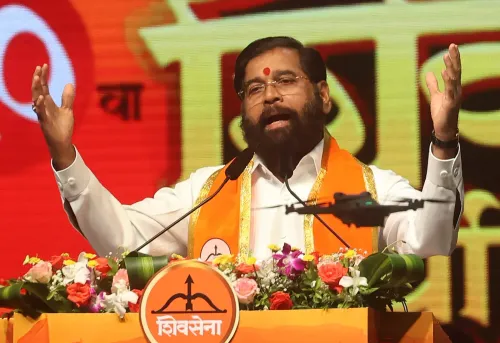
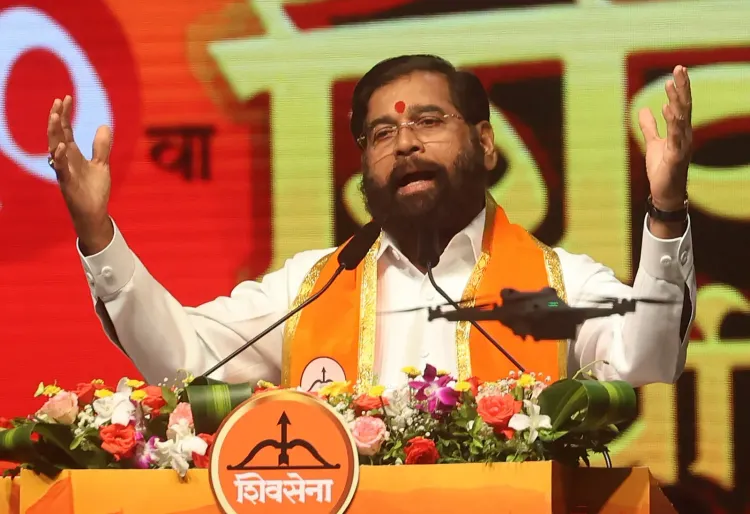
Eknath Shinde, Deputy Chief Minister of Maharashtra and chief of Shiv Sena, on Monday, 22 June declared 'Operation Tiger' a complete legal success after six Lok Sabha MPs from the rival Shiv Sena (Uddhav Balasaheb Thackeray) faction formally joined his party at a press conference in Mumbai. The crossover, Shinde asserted, was executed strictly within legal, constitutional, and parliamentary frameworks — and marks what he called Phase Two of his June 2022 political uprising.
The Six MPs Who Crossed Over
The defecting legislators are Sanjay Dina Patil (Mumbai North East), Sanjay Jadhav (Parbhani), Sanjay Deshmukh (Yavatmal-Washim), Bhausaheb Wakchaure (Shirdi), Omraje Nimbalkar (Dharashiv), and Nagesh Patil-Ashtikar (Hingoli). Their departure reduces Uddhav Thackeray's parliamentary camp from nine MPs to three, while Shinde's Lok Sabha strength climbs from seven to thirteen.
The Anti-Defection Angle
Crucially, the defecting bloc constitutes a two-thirds majority of the UBT parliamentary group — the threshold required under the Tenth Schedule of the Constitution to escape disqualification under the anti-defection law. By meeting this bar, the six MPs are expected to avoid the kind of legal jeopardy that has shadowed earlier political splits in Maharashtra. Shinde was emphatic on this point: 'We don't do incomplete operations. Operation Tiger is a resounding legal success. We have completed all the necessary legal formalities for this.'
Shinde's Political Framing
Shinde positioned the development as a continuation of the June 2022 rebellion in which he led a group of MLAs out of the undivided Shiv Sena, eventually splitting the party and claiming the original name and the bow-and-arrow election symbol. 'Four years ago, 40 MLAs came along to save the Shiv Sena, to protect the bow-and-arrow symbol, and to safeguard Balasaheb Thackeray's thoughts. Critics said those 40 would never win again, but 40 became 60 MLAs. From Chaanda to Banda, Shiv Sena grew,' he said. He added that all six MPs would contest the 2029 general elections on the bow-and-arrow symbol.
Shinde also took a pointed jab at UBT strategist Sanjay Raut, noting that his faction now has three MPs named Sanjay: 'With this combined strength, our Shiv Sena will become unbreakable.' He praised Sanjay Jadhav and Sanjay Deshmukh as grassroots leaders and defended Omraje Nimbalkar against social media criticism, calling him a 'Real Star.'
Why the MPs Said They Left
The defecting MPs cited a lack of development funds and an inability to deliver on civic and infrastructure promises while sitting in opposition as their primary reasons for switching sides. Shinde assured them that resource allocation would be a priority under the ruling 'double-engine' alliance with the Bharatiya Janata Party (BJP). 'Whether your issues are tied to the state or require backing from the Central Government in Delhi, nothing will be stalled. Your trust will never be betrayed,' he said.
He also criticised the Thackeray camp's internal management: 'They routinely abuse their own MPs and then expect them to stay. There is a serious chemical locha (mental glitch) in how they treat their leaders.'
What Comes Next
Shinde concluded by stating that Shiv Sena functions as a collaborative organisation without a singular authority, and that the party's immediate priority would be strengthening its presence across Maharashtra ahead of future electoral cycles. The UBT faction, now reduced to three Lok Sabha MPs, faces a significantly diminished parliamentary footprint — and the broader Maharashtra political equation tilts further in favour of the ruling Mahayuti alliance.
Point of View
But courts have not always treated parliamentary and assembly anti-defection rules identically, and a challenge from the UBT camp cannot be ruled out. What the mainstream coverage underplays is the resource argument made by the defecting MPs: their stated reason — inability to deliver development funds from the opposition benches — is a structural indictment of how India's federal fiscal architecture disadvantages opposition lawmakers, not just a Maharashtra-specific grievance. Shinde's 'double-engine' pitch is politically potent precisely because it exploits this asymmetry.
NationPress
21 Sept 2026
Frequently Asked Questions
What is Operation Tiger in Maharashtra politics?
Operation Tiger is the name given to Eknath Shinde's effort to bring Lok Sabha MPs from the Shiv Sena (UBT) faction into his own Shiv Sena. On 22 June, six UBT MPs formally joined Shinde's party at a press conference in Mumbai, which Shinde declared a 'resounding legal success.'
Which six MPs joined Eknath Shinde's Shiv Sena?
The six MPs are Sanjay Dina Patil (Mumbai North East), Sanjay Jadhav (Parbhani), Sanjay Deshmukh (Yavatmal-Washim), Bhausaheb Wakchaure (Shirdi), Omraje Nimbalkar (Dharashiv), and Nagesh Patil-Ashtikar (Hingoli). All six are sitting Lok Sabha members who were previously part of the Uddhav Thackeray-led UBT faction.
Will the six MPs face disqualification under the anti-defection law?
Shinde's camp argues the crossover is legally protected because the six MPs constitute a two-thirds majority of the UBT parliamentary group — the threshold required under the Tenth Schedule of the Constitution to avoid disqualification. However, a legal challenge from the UBT side remains possible.
How does this change the balance of power in Maharashtra?
Uddhav Thackeray's parliamentary strength drops from nine MPs to three, while Shinde's Lok Sabha count rises from seven to thirteen. This further consolidates the ruling Mahayuti alliance's dominance and leaves the UBT faction with a significantly weakened national footprint.
Why did the six MPs leave the UBT faction?
The defecting MPs cited a lack of development funds and inability to resolve civic and infrastructure issues while sitting in opposition as their primary reasons. Shinde assured them that under the ruling alliance with the BJP, both state and central resources would be made accessible to them.