Shiv Sena-UBT split: 6 rebel MPs execute 'Operation Tiger' to join Shinde faction
Synopsis
Codenamed 'Operation Tiger', the defection of six Shiv Sena-UBT MPs to the Eknath Shinde faction was no spontaneous revolt — it was a multi-city, pre-dawn logistical operation with a late-night conference call, a Jaipur safe house, and legal two-thirds arithmetic built in from the start. Uddhav Thackeray now holds just three of nine Lok Sabha seats in his own Parliamentary wing.
Key Takeaways
Six Shiv Sena-UBT MPs defected to the Eknath Shinde faction on 17 June in an operation codenamed 'Operation Tiger' .
Uddhav Thackeray is left with just three loyal Lok Sabha MPs out of nine in the Parliamentary wing.
The six MPs submitted a signed resolution to Lok Sabha Speaker Om Birla at 10:20 am on 17 June , alleging ideological deviation and a push to merge with Congress.
The Shinde faction's two-thirds majority in the Parliamentary Party is designed to satisfy the threshold under the Tenth Schedule anti-defection law.
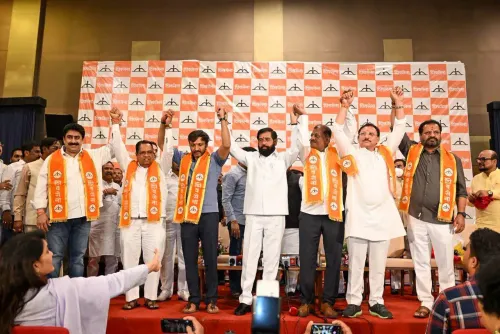
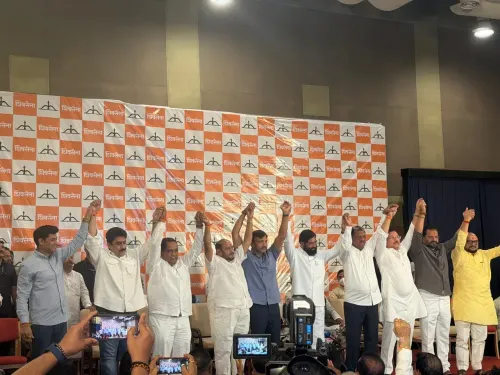
A formal merger meeting between Eknath Shinde and the six MPs is scheduled for 20 June .
Police security has been reinforced outside the residences of all six rebel MPs across Maharashtra amid warnings from Sanjay Raut .
Six Shiv Sena-UBT Lok Sabha MPs defected to the Eknath Shinde-led Shiv Sena faction on 17 June in a meticulously coordinated operation codenamed 'Operation Tiger', leaving Uddhav Thackeray with just three loyal MPs out of nine in the Parliamentary wing. The defection, executed with near-military precision across multiple cities and transport routes, marks a fresh rupture in Maharashtra's already fractured political landscape.
How 'Operation Tiger' Was Executed
To avoid detection by the Thackeray camp, the six MPs travelled to New Delhi from different cities via entirely separate routes and modes of transport. On 16 June at 1:30 am, rebel MP Nagesh Patil Ashtikar flew in from Nanded. Later that afternoon, Sanjay Deshmukh and Sanjay Bandu Jadhav arrived on separate flights, also from Nanded. By evening, Bhausaheb Wakchaure reached Delhi via private jet from Hyderabad, while Sanjay Dina Patil arrived at night alongside Minister Pratap Sarnaik.
In the early hours of 17 June, Deputy Chief Minister Eknath Shinde himself arrived in Delhi via the Mumbai-Jaipur route at 3 am. At 4:30 am, Omprakashraje Nimbalkar reached the capital from Pune. All six MPs were quietly checked into a five-star hotel in Delhi that served as the operation's base.
Formal Submission to the Lok Sabha Speaker
On the morning of 17 June, the split was formalised in back-to-back meetings with Lok Sabha Speaker Om Birla. At 7 am, Omprakashraje Nimbalkar met the Speaker alone to lay the groundwork. At 10:20 am, the remaining five MPs joined him to submit a signed, official resolution.
In their formal submission, the six MPs alleged that the Shiv Sena-UBT had deviated from its core ideological foundation and that senior party leaders were actively attempting to merge the party into the Indian National Congress (Congress). They formally requested to merge with Eknath Shinde's Shiv Sena faction and demanded a change in their seating arrangements in the Lok Sabha chamber.
The Late-Night Call That Sealed the Deal
A critical moment came late on the night of 17 June, when Shiv Sena-UBT Parliamentary leader Arvind Sawant called for a 'Litmus Test' meeting the following day to assess MP loyalty. To prevent any wavering, Shrikant Shinde — Shiv Sena MP and son of Deputy Chief Minister Eknath Shinde — organised a 30-minute late-night conference call between his father and the six rebel MPs.
During the call, specific concerns raised by MPs including Omprakashraje Nimbalkar (Dharashiv) and Sanjay Dina Patil (North East Mumbai) were addressed. Shrikant Shinde gave a firm assurance: 'The Shiv Sena will stand solidly behind you.' Shortly after, the six MPs were moved at dawn from their Delhi hotel to a secure location in Jaipur, Rajasthan, keeping them out of reach of Thackeray's emissaries.
Legal Stakes and the Anti-Defection Angle
With six of nine Lok Sabha MPs defecting, the Shinde faction commands a clear two-thirds majority of the Parliamentary Party — the threshold required under the Tenth Schedule of the Indian Constitution (anti-defection law) to avoid disqualification. This legal positioning appears to have been a central consideration in the operation's design.
The Uddhav Thackeray-led faction has announced plans to approach Speaker Om Birla demanding the immediate disqualification of the six members for defying the party whip. Shinde camp sources indicate no joint photographs or formal merger announcements will be made for the next 48 hours while legal teams assess potential counter-moves.
What Happens Next
A formal in-person meeting between Eknath Shinde and the six MPs is scheduled for 20 June, at which official paperwork and the stated reasons for their departure are to be made public. Meanwhile, police security has been significantly reinforced outside the residences of all six rebel MPs across Maharashtra, anticipating localised backlash following sharp public warnings from Shiv Sena-UBT leader Sanjay Raut. The next legal and political moves from both sides are expected to define the shape of Maharashtra's parliamentary arithmetic for the remainder of this term.
Point of View
The staggered travel routes, the Jaipur safe house, and the late-night reassurance call all point to weeks of planning. The ideological justification — that Thackeray was merging Shiv Sena into Congress — is a legal framing as much as a political one, designed to survive Tenth Schedule scrutiny. What this really reflects is the continuing fragmentation of the Shiv Sena brand: a party that once defined Maharashtra's street-level politics is now split across three competing claimants to the same legacy. Thackeray's challenge is not just legal — it is whether three MPs and a depleted parliamentary wing can sustain any meaningful national relevance heading into the next election cycle.
NationPress
19 Sept 2026
Frequently Asked Questions
What is 'Operation Tiger' in the Shiv Sena-UBT split?
'Operation Tiger' is the codename for the covert defection plan through which six Shiv Sena-UBT Lok Sabha MPs broke away from Uddhav Thackeray's faction and formally aligned with Deputy Chief Minister Eknath Shinde's Shiv Sena on 17 June. The operation involved staggered travel to Delhi, a late-night conference call, and a formal submission to Lok Sabha Speaker Om Birla.
Why did the six MPs defect from Shiv Sena-UBT?
In their formal submission to Lok Sabha Speaker Om Birla, the six MPs alleged that Shiv Sena-UBT had deviated from its core ideological foundation and that senior leaders were attempting to merge the party into the Congress. They said they collectively decided to form a separate group and join the Eknath Shinde faction.
How does the defection affect anti-defection law proceedings?
With six of nine Lok Sabha MPs defecting, the Shinde faction holds a two-thirds majority of the Shiv Sena-UBT Parliamentary Party — the threshold required under the Tenth Schedule of the Indian Constitution to avoid disqualification. The Uddhav Thackeray camp has announced it will approach Speaker Om Birla to demand the six MPs' disqualification for defying the party whip.
Who managed the ground operations for 'Operation Tiger'?
Shrikant Shinde, Shiv Sena MP and son of Deputy Chief Minister Eknath Shinde, managed ground operations in Delhi. He organised a critical 30-minute late-night conference call between Eknath Shinde and the six rebel MPs on the night of 17 June to resolve their concerns and prevent any change of heart.
What happens next in the Shiv Sena-UBT defection case?
A formal in-person meeting between Eknath Shinde and the six rebel MPs is scheduled for 20 June, when official paperwork and stated reasons for departure are to be made public. The Shinde camp has said no joint photographs or merger announcements will be released for 48 hours while legal teams assess counter-moves from the Thackeray faction.