Uddhav calls urgent meet as 6 Shiv Sena-UBT MPs eye Shinde camp
Synopsis
History is repeating itself for Uddhav Thackeray. Exactly six of his nine Lok Sabha MPs — the precise two-thirds threshold needed to legally split under anti-defection rules — have reportedly signed on to join the Shinde camp, in what looks like a surgically planned 'Operation Tiger'. The second major rebellion in four years could strip the Thackeray faction of its parliamentary identity.
Key Takeaways
Six of nine Shiv Sena (UBT) Lok Sabha MPs skipped a party whip meeting in New Delhi on 18 June , reportedly aligned with the Shinde camp.
The rebels — including Sanjay Dina Patil , Omraje Nimbalkar , Sanjay Jadhav , Sanjay Deshmukh , Nagesh Patil Ashtikar , and Bhausaheb Wakchaure — have reportedly signed a letter to form a separate Lok Sabha bloc.
Uddhav Thackeray has called an emergency meeting at Matoshree on Friday at 12 pm , focused on grassroots leaders from Mumbai North-East .
The party has issued show-cause notices to all six absent MPs, with a seven-day response window before disqualification proceedings begin.
Under the Tenth Schedule , six MPs — exactly two-thirds of nine — constitute a legally valid breakaway, shielding the rebels from anti-defection disqualification.
This is the second major rebellion against Thackeray in four years, following Eknath Shinde's 2022 revolt that toppled the MVA government .
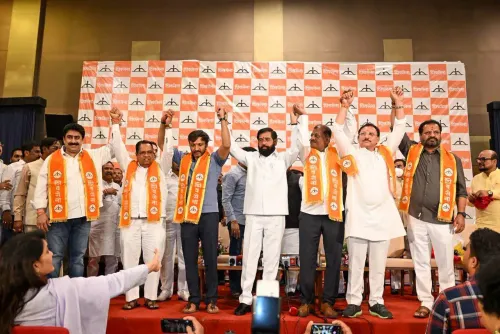
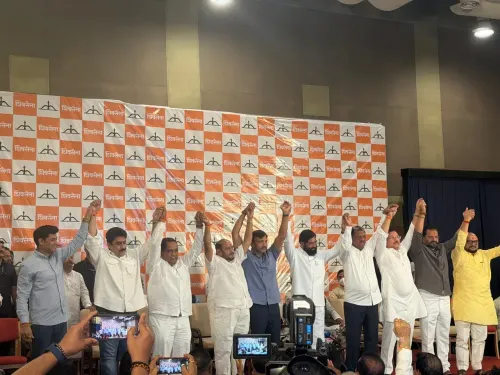
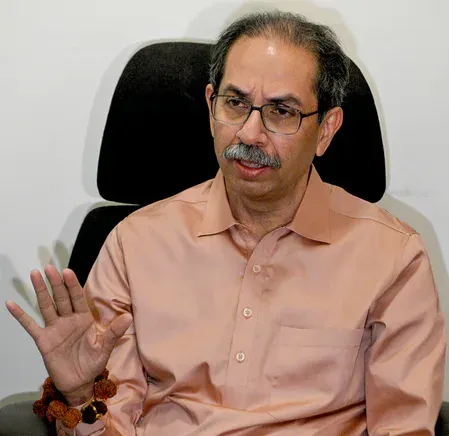
Shiv Sena (UBT) chief Uddhav Thackeray has convened an emergency meeting at his residence Matoshree on Friday, 20 June, after six of the party's nine Lok Sabha MPs skipped a parliamentary party meeting in New Delhi, defying a formal whip — triggering what could be the second major vertical split of his party in under four years.
The six absent MPs — Sanjay Dina Patil (Mumbai North-East), Omraje Nimbalkar (Dharashiv), Sanjay Jadhav (Parbhani), Sanjay Deshmukh (Yavatmal-Washim), Nagesh Patil Ashtikar (Hingoli), and Bhausaheb Wakchaure (Shirdi) — have reportedly signed a letter seeking to form a separate bloc in the Lok Sabha and are widely expected to formally join the Eknath Shinde-led Shiv Sena.
Operation Tiger and the Shinde Camp's Push
The coordinated absence is being attributed to 'Operation Tiger', a reported effort by the Shinde camp to engineer defections from the Thackeray faction. The operation, which has reportedly gathered significant momentum, appears to have secured commitments from exactly the number of MPs needed to legally constitute a breakaway group.
Under the Tenth Schedule of the Constitution — the anti-defection law — a splinter faction must have the backing of at least two-thirds of a parliamentary party's elected members to avoid automatic disqualification. With nine Lok Sabha MPs, the Thackeray faction's threshold is precisely six — the exact number now reportedly in rebellion.
Uddhav's Damage-Control Strategy
Friday's emergency meeting at Matoshree at 12 pm will bring together local office-bearers, former corporators, and grassroots leaders specifically from the Mumbai North-East constituency — the home turf of the most symbolically significant defector, Sanjay Dina Patil. Thackeray's aim is to directly gauge the alignment of lower-tier leaders and prevent further poaching by the Shinde camp and the Bharatiya Janata Party (BJP).
Angry party workers have reportedly raised concerns about the organisational vacuum a Mumbai MP's departure could create, given the Thackeray faction's historically strong grassroots presence in the city.
Show-Cause Notices and Legal Battle
Chief Whip Anil Desai called the emergency parliamentary party meeting in New Delhi, which was attended by only three Lok Sabha MPs — Arvind Sawant, Anil Desai, and Rajabhau Waze — along with Rajya Sabha MP Sanjay Raut. The party has since issued formal show-cause notices to the six absent lawmakers, giving them a seven-day window to respond before initiating disqualification proceedings.
Sanjay Raut said the party would contest the defection on both the streets and in the courts, alleging that 'massive financial inducements' were used to lure the MPs. 'We will fight this battle on the streets, and we will fight it in the courts,' Raut said.
The Mumbai Blow and Historical Context
The most politically painful defection is that of Sanjay Dina Patil, who defeated the BJP candidate in the 2024 Lok Sabha elections from Mumbai North-East — the heart of Thackeray's home base. Patil, who originally came from a Nationalist Congress Party (NCP) background before joining the undivided Shiv Sena in 2019, had publicly denied any defection plans just days before skipping the Delhi meeting. Notably, his daughter was recently elected on a Shiv Sena (UBT) ticket in elections to the Brihanmumbai Municipal Corporation (BMC).
This crisis is the second major rebellion against Thackeray in four years. In June 2022, Eknath Shinde led a revolt of 40 Shiv Sena MLAs, collapsing the Maha Vikas Aghadi (MVA) government. The Election Commission of India (ECI) subsequently recognised Shinde's faction as the 'real' Shiv Sena, awarding it the iconic 'Bow and Arrow' symbol. Despite that setback, Thackeray's Shiv Sena (UBT) won nine seats in the 2024 Lok Sabha elections, demonstrating enduring grassroots support. Whether that support can withstand a second parliamentary fracture remains the central question heading into the next political cycle.
Point of View
Exactly the two-thirds threshold, no more, no less. This is not a spontaneous rebellion; it is a legally engineered manoeuvre designed to neutralise the anti-defection shield. For Uddhav Thackeray, the deeper wound is symbolic: the defection of a Mumbai MP from his own backyard signals that even the emotional capital built after 2022 has limits. The Thackeray faction's 2024 Lok Sabha performance suggested a resilient base, but parliamentary numbers are the currency of political survival, and Uddhav is about to be left with three.
NationPress
18 Sept 2026
Frequently Asked Questions
Why are six Shiv Sena-UBT MPs expected to join the Shinde camp?
The six MPs reportedly skipped a formal parliamentary party meeting in New Delhi, defying a party whip, and have allegedly signed a letter to form a separate bloc in the Lok Sabha. They are widely expected to formally merge with the Eknath Shinde-led Shiv Sena as part of a coordinated effort dubbed 'Operation Tiger'.
Who are the six rebel Shiv Sena-UBT MPs?
The six MPs are Sanjay Dina Patil (Mumbai North-East), Omraje Nimbalkar (Dharashiv), Sanjay Jadhav (Parbhani), Sanjay Deshmukh (Yavatmal-Washim), Nagesh Patil Ashtikar (Hingoli), and Bhausaheb Wakchaure (Shirdi). All six were absent from the emergency parliamentary party meeting called by Chief Whip Anil Desai.
Why does the two-thirds rule matter in this defection?
Under the Tenth Schedule of the Constitution, a breakaway faction needs the support of at least two-thirds of a parliamentary party's elected members to avoid disqualification. Since Shiv Sena-UBT has nine Lok Sabha MPs, exactly six constitute the legal minimum for a protected split — the precise number now in rebellion.
What action has Uddhav Thackeray taken in response?
Thackeray has called an emergency meeting at his residence Matoshree on Friday at 12 pm, targeting grassroots leaders and former corporators from Mumbai North-East. The party has also issued show-cause notices to all six absent MPs, giving them seven days to respond before disqualification proceedings are initiated.
How does this compare to the 2022 Shiv Sena split?
In June 2022, Eknath Shinde led a revolt of 40 Shiv Sena MLAs that collapsed the MVA government, with the Election Commission later recognising his faction as the 'real' Shiv Sena. The current crisis mirrors that episode but targets the Thackeray faction's Lok Sabha presence, potentially leaving it with just three MPs.