Shiv Sena-UBT slams BJP over Vande Mataram row, cites 'intellectual bankruptcy'
Synopsis
Shiv Sena-UBT's Saamana editorial didn't just punch back at Amit Shah — it went for the BJP's foundational legitimacy, invoking Syama Prasad Mookerjee's alleged pro-British stance, the RSS's reported 50-year silence on the Tricolour, and Congress's documented ownership of Vande Mataram since 1896. The battle over a national song is really a battle over who owns India's independence narrative.
Key Takeaways
Shiv Sena (UBT) accused the BJP of 'intellectual bankruptcy' over the Vande Mataram controversy in a Saamana editorial on 18 August .
The editorial alleged BJP founder Syama Prasad Mookerjee supported the British regime's suppression of the Quit India Movement .
Union Home Minister Amit Shah had labelled Congress's stance on Vande Mataram as 'intellectual Naxalism', triggering the Thackeray camp's response.
RSS allegedly did not hoist the Indian Tricolour at its offices on Independence Day for nearly 50 years post-independence.
The editorial traced Vande Mataram's Congress legacy to the 1896 Kolkata Session , where Rabindranath Tagore first sang the song.
Former Vice President M Venkaiah Naidu 's past statements were invoked to argue the song must remain above political division.
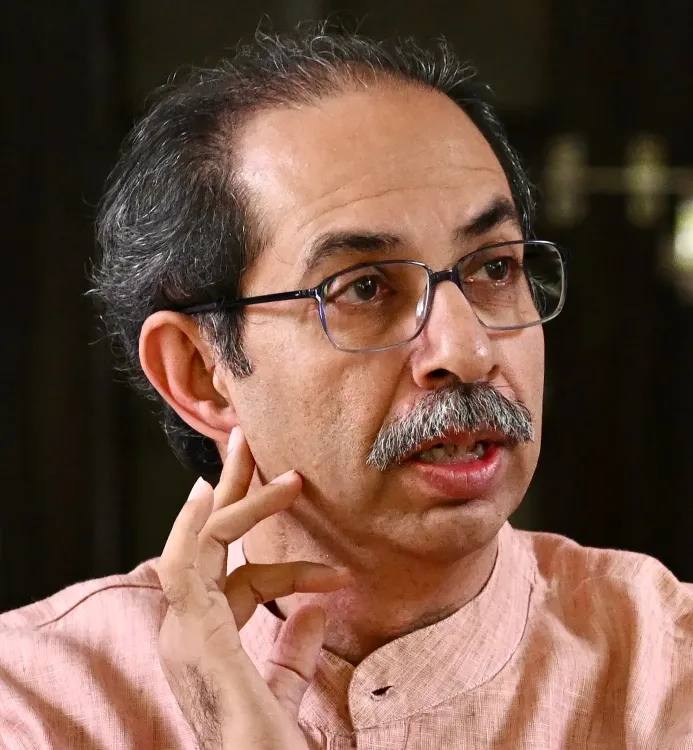
Shiv Sena (Uddhav Balasaheb Thackeray) on Tuesday, 18 August launched a sharp offensive against the Bharatiya Janata Party (BJP), accusing the ruling party of 'intellectual bankruptcy' and exploiting the national song Vande Mataram for political gain. The attack came through a hard-hitting editorial in the party's mouthpiece Saamana, asserting that the BJP has no historic claim over the song or the broader freedom struggle.
The Core Charge: BJP's Freedom Struggle Record
The Saamana editorial argued that the BJP played no meaningful role in India's independence movement, national milestones, or iconic slogans such as Vande Mataram and Inquilab Zindabad. It targeted BJP founder Syama Prasad Mookerjee, alleging his involvement in the Muslim League-led Bengal cabinet and claiming he had advocated for the British regime to forcefully suppress freedom movements, including the Quit India Movement.
The Thackeray camp argued that instead of demanding apologies from political opponents, the BJP owed the nation an apology for what the editorial described as a historical betrayal of the freedom movement.
The Vande Mataram Controversy in Parliament
The editorial's broadside came amid heightened tensions between the Opposition and the central government over parliamentary proceedings. According to the editorial, the Congress-led Opposition recently disrupted Parliament to demand a statement and apology from Union Home Minister Amit Shah over an alleged pellet gun firing incident at Jantar Mantar.
The editorial claimed Shah subsequently sidestepped the parliamentary session and later labelled Congress's position on Vande Mataram as 'intellectual Naxalism', while calling for an apology. 'To drag Vande Mataram into political battles and accuse opponents of intellectual Naxalism reflects a sheer lack of historical awareness and political desperation,' the editorial stated.
Historical Record: Who Championed Vande Mataram
The editorial offered an extensive historical counter-narrative. It noted that at the 1896 Kolkata Congress Session, Rabindranath Tagore first sang Vande Mataram under the presidency of Rahamatullah M Sayani. When the British colonial government banned the song and arrested those who sang it, the editorial said it was Congress members and leftists who went to jail to uphold it.
In 1937, following advice from Rabindranath Tagore in a letter to Netaji Subhash Chandra Bose, the Congress Working Committee — including Mahatma Gandhi, Sardar Vallabhbhai Patel, Jawaharlal Nehru, Netaji Subhash Chandra Bose, Maulana Azad, Govind Ballabh Pant, and Acharya Kripalani — unanimously adopted the song's first two stanzas. The editorial also recalled that before Nehru's landmark Tryst with Destiny speech, Sucheta Kripalani rendered Vande Mataram at the special midnight session of Parliament.
RSS, New Parliament, and the Tricolour
The Thackeray-led party broadened its attack to include the Rashtriya Swayamsevak Sangh (RSS), the BJP's ideological parent, alleging that the organisation did not hoist the Indian Tricolour at its offices or branches on Independence Day for nearly 50 years after independence.
The editorial also accused Prime Minister Narendra Modi of shutting down the historic Parliament building — where India's independence was originally inaugurated — and replacing it with a structure it likened to a 'private Gujarati marriage hall.' Drawing further historical parallels, it recalled Balajipant Natu lowering the Maratha flag to hoist the British Union Jack at Pune's Shaniwar Wada on 17 November 1817, contrasting that with freedom fighter Krantisinh Nana Patil raising the Tricolour at the same site on 15 August 1947, amid chants of Vande Mataram.
Invoking former Vice President M Venkaiah Naidu's past statements, the editorial emphasised that Vande Mataram must remain above political division. With the Maharashtra political landscape already fractured along Shiv Sena's two factions, this latest salvo signals that the ideological battle over national symbols is set to intensify ahead of future electoral contests.
Point of View
The Thackeray camp is attempting to reframe the entire controversy as one of credibility, not patriotism. What mainstream coverage misses is that this exchange is also a proxy war within Maharashtra's fractured Shiv Sena landscape: Uddhav's faction needs to out-Hindutva the Eknath Shinde camp while simultaneously anchoring itself to a secular-nationalist reading of history. That is a genuinely difficult needle to thread, and the editorial's reliance on historical grievance over policy contrast suggests the opposition has more ammunition for symbolism than for governance critique.
NationPress
2 Oct 2026
Frequently Asked Questions
What is the Vande Mataram controversy involving BJP and Shiv Sena-UBT?
The controversy centres on Union Home Minister Amit Shah 's labelling of Congress's stance on Vande Mataram as 'intellectual Naxalism' and his demand for an apology. In response, Shiv Sena (UBT) published a Saamana editorial on 18 August accusing the BJP of 'intellectual bankruptcy' and arguing that the Congress — not the BJP — has the deeper historical connection to the national song.
What historical claims did the Saamana editorial make about Vande Mataram?
The editorial stated that Rabindranath Tagore first sang Vande Mataram at the 1896 Kolkata Congress Session and that in 1937 , the Congress Working Committee — including Gandhi , Patel , Nehru , and Netaji Bose — unanimously adopted its first two stanzas. It also noted that Sucheta Kripalani rendered the song at Parliament's midnight independence session before Nehru's Tryst with Destiny speech.
What did Shiv Sena-UBT allege about the RSS and the Tricolour?
The Saamana editorial alleged that the Rashtriya Swayamsevak Sangh (RSS) , the BJP's ideological parent body, did not hoist the Indian Tricolour at its offices or branches on Independence Day for nearly 50 years after independence in 1947.
Why did the Congress disrupt Parliament, according to the Saamana editorial?
According to the editorial, the Congress-led Opposition disrupted Parliament to demand a statement and apology from Home Minister Amit Shah over an alleged pellet gun firing incident at Jantar Mantar . The editorial claimed Shah subsequently avoided the parliamentary session before pivoting to attack Congress on Vande Mataram.
What was alleged about BJP founder Syama Prasad Mookerjee?
The Saamana editorial alleged that Syama Prasad Mookerjee was involved in the Muslim League-led Bengal cabinet and had reportedly advocated for the British regime to suppress freedom movements, including the Quit India Movement . The Thackeray camp used this to argue the BJP should apologise to the nation rather than demand apologies from others.