INDIA bloc slams BJP's Vande Mataram resolution, calls it attention diversion
Synopsis
The BJP's Vande Mataram resolution has drawn a united INDIA bloc counter-attack — but the opposition's real play is economic, not cultural. By invoking inflation, unemployment, and a 1937 Gandhian precedent in the same breath, the bloc is trying to flip a BJP culture-war move into a governance indictment.
Key Takeaways
The INDIA bloc on 22 August accused the BJP of using the Vande Mataram row to divert attention from inflation and unemployment.
Congress defends its position of singing only the first two stanzas at party events, citing a 1937 CWC resolution endorsed by Gandhi, Nehru, and Patel on Tagore's advice.
Shiv Sena (UBT)'s Priyanka Chaturvedi said the BJP should focus on 'economic challenges' rather than political point-scoring.
Raja called the BJP 'rigid and adamant,' stressing India's multi-party democratic tradition.
Shiv Sena (UBT)'s Arvind Sawant alleged the controversy is aimed at 'creating a divide between Hindus and Muslims.'
The INDIA bloc on Saturday, 22 August launched a sharp counter-offensive against the Bharatiya Janata Party (BJP) over its resolution defending the national song Vande Mataram, accusing the ruling party of manufacturing a cultural controversy to deflect public attention from pressing economic concerns such as inflation and unemployment.
Background: How the row began
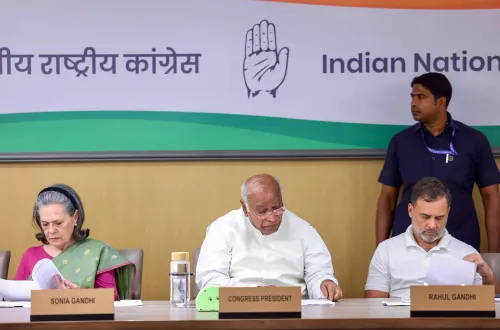
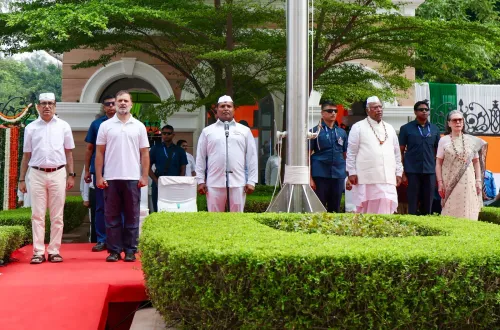
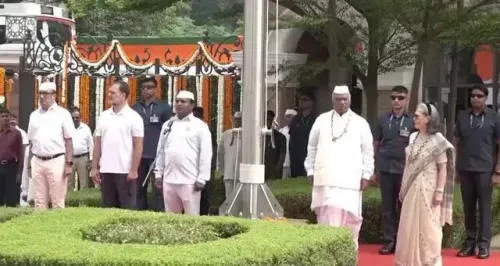
The dispute flared after senior Congress leaders drew criticism for their conduct during Vande Mataram's rendition at an Independence Day event. The Congress Working Committee (CWC) subsequently passed a resolution reaffirming its longstanding position of restricting the song's rendition at party programmes to only the first two stanzas — a practice it traces to a 1937 CWC resolution taken on the advice of Rabindranath Tagore, with the consent of Mahatma Gandhi, Jawaharlal Nehru, and Sardar Patel. The BJP responded by passing its own resolution strongly defending the honour, dignity, and historical legacy of the national song.
Congress leaders push back
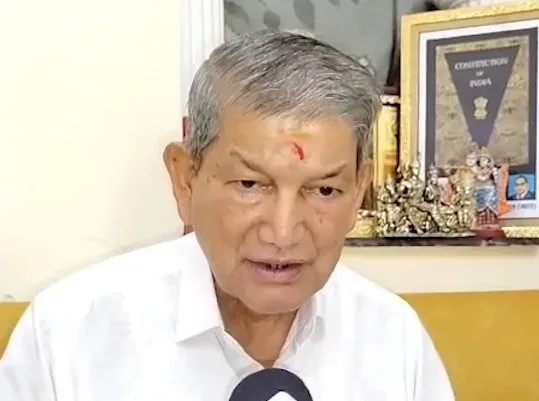
Congress leader Harish Rawat said the BJP was raising emotional issues to sidestep harder questions. 'The BJP is trying to make Vande Mataram an issue because the real issues are those raised by Gen Z. Gen Alpha is also raising issues of inflation and unemployment. To divert attention from these questions, some emotional issues are being raised,' he said, adding that the song is historically associated with the Congress.
Congress MP Shashi Tharoor clarified the party's position: 'The Congress position on the national song is very clear, that is to follow the existing practice of singing two stanzas of Vande Mataram when it comes to Congress party functions.' He added that at national or government functions, 'we will all stand up for the entire thing. It depends on what is being played.'
Congress MP Tariq Anwar invoked the 1937 precedent, arguing that the BJP was departing from a tradition set by the founding generation of the freedom movement itself.
Allies amplify the charge
Shiv Sena (UBT) leader Priyanka Chaturvedi argued that the BJP's new leadership should be focused on economic challenges rather than stoking controversy. 'A new team that has come into place should be concerned about the economic challenges that the country is facing and should be showing its vision for how to take India forward,' she said. 'They are only doing it for political points... The BJP's resolution should have been about India first,' she added.
Shiv Sena (UBT) MP Arvind Sawant went further, alleging political intent behind the controversy: 'Those who have not sung Vande Mataram and those who did not participate in the freedom struggle have no right to raise questions... Today, you are raising this issue everywhere. Why? To create a divide between Hindus and Muslims. Nothing else. It is about creating hatred.'
Left weighs in on multi-party democracy
CPI National General Secretary D. Raja noted that a detailed discussion on the national song had already taken place in Parliament and accused the BJP of being 'rigid and adamant and not accepting the views of other parties.' He said: 'After all, we are a multi-party democracy. Every party has its own view, and it should be considered, but BJP thinks whatever it says should be accepted by all political parties.' Raja also asserted that parties like the Congress and CPI carry a long history of anti-colonial struggle, warning that 'BJP should not think that it has the monopoly to teach nationalism and patriotism to other parties.'
What comes next
The exchange signals that the Vande Mataram row is unlikely to fade quickly, with both sides now holding formal resolutions on record. The INDIA bloc appears intent on reframing the debate around economic governance ahead of upcoming state elections, while the BJP looks to keep the national-identity framing in play. How voters respond to these competing narratives will be closely watched in the months ahead.
Point of View
The opposition is betting that voters, particularly younger ones, are more exercised by economic pain than by stanza counts. The Congress's invocation of the 1937 Tagore-Gandhi precedent is legally and historically sound, but it plays into a BJP framing that positions the opposition as reluctant patriots. The deeper risk for the INDIA bloc is that defending the two-stanza practice, however principled, can be made to look like equivocation in a 30-second clip — and that is precisely the terrain the BJP wants to fight on.
NationPress
6 Oct 2026
Frequently Asked Questions
What is the Vande Mataram controversy between BJP and the INDIA bloc?
The row began after senior Congress leaders were criticised for their conduct during Vande Mataram's rendition at an Independence Day event. The Congress Working Committee then reaffirmed its practice of singing only the first two stanzas at party functions, citing a 1937 resolution. The BJP responded with its own resolution defending the song's full honour and legacy, prompting the INDIA bloc to accuse the BJP of manufacturing a distraction from economic issues.
Why does Congress sing only two stanzas of Vande Mataram?
Congress traces the practice to a 1937 CWC resolution passed on the advice of Rabindranath Tagore, with the agreement of Mahatma Gandhi, Jawaharlal Nehru, and Sardar Patel. The two stanzas considered undisputed were designated for party events, while Congress MPs have said they stand for the full song at national or government functions.
What did Harish Rawat say about the BJP's Vande Mataram resolution?
Congress leader Harish Rawat said the BJP was raising 'emotional issues' to divert attention from inflation and unemployment concerns being voiced by younger generations. He maintained that Vande Mataram is historically associated with the Congress and its freedom-struggle legacy.
What was the CPI's position on the Vande Mataram dispute?
CPI National General Secretary D. Raja said a detailed parliamentary discussion on the national song had already taken place and accused the BJP of being 'rigid and adamant.' He stressed that India is a multi-party democracy where every party's view must be respected, and warned that the BJP does not hold a monopoly on nationalism or patriotism.
How does the Vande Mataram row fit into the broader political picture?
Both the BJP and the INDIA bloc have now passed formal resolutions on the issue, signalling it will remain a flashpoint. The INDIA bloc is attempting to reframe the debate around economic governance — inflation and unemployment — ahead of upcoming state elections, while the BJP is seeking to keep questions of national identity and patriotism at the centre of political discourse.