BJP vows to block Congress 'partition seeds' in Vande Mataram row
Synopsis
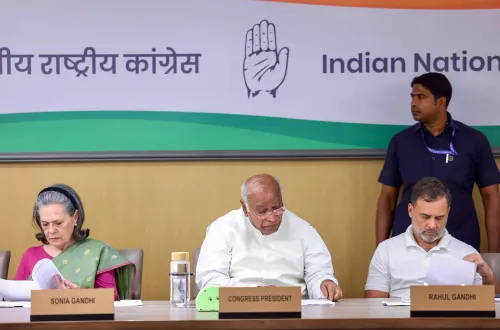
The BJP has turned a viral moment — Congress leaders visibly uneasy during a Vande Mataram rendition — into a full-blown political offensive, passing a formal resolution, invoking partition history from 1923 and 1937, and warning that a newly amended national honour law will punish anyone who obstructs the song. The confrontation is no longer just symbolic; it now has a legal edge.
Key Takeaways
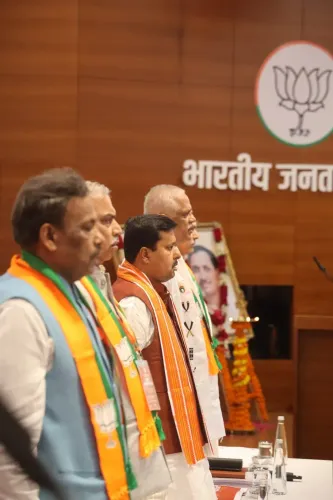
BJP passed a formal resolution on 22 August defending Vande Mataram's 'honour, dignity and historical legacy' at its first national office-bearers' meeting.
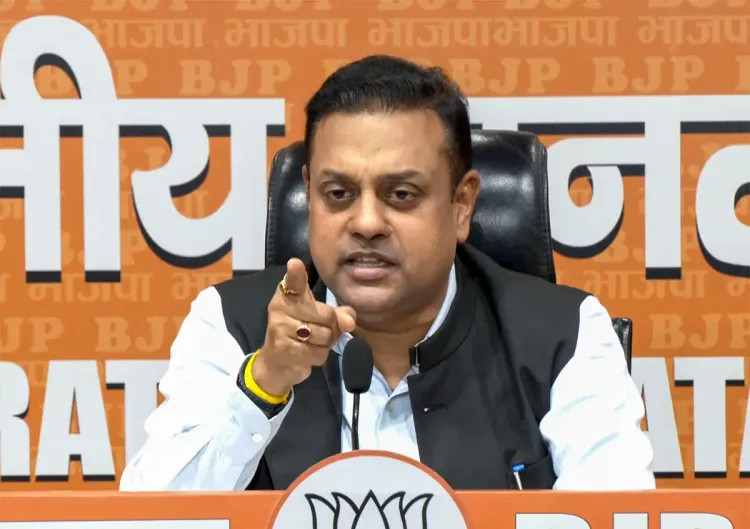
BJP MP Sambit Patra accused Congress of 'renewed efforts to sow seeds of partition' by restricting the song to its first two stanzas at party events.
The 80th Independence Day at the Red Fort was cited as the first occasion all six stanzas of Vande Mataram were rendered at the national celebration.
Patra alleged Congress has historically suppressed the full song, citing a 1923 Kakinada session incident and a 1937 Nehru-era decision he linked to partition.
The Prevention of Insults to National Honour (Amendment) Act, 2026 was invoked, with Patra warning that obstructing the song's rendition is now a punishable offence.
BJP president Nitin Nabin was quoted as saying the party 'won't allow' Congress's alleged partition-linked agenda on the national song.
The Bharatiya Janata Party (BJP) on 22 August declared it will not permit what it described as Congress's 'renewed efforts to sow seeds of partition' — a sharp escalation in the political row over the full rendition of the national song Vande Mataram. The statement came hours after the BJP passed a formal resolution at its first national office-bearers' meeting at party headquarters in New Delhi, condemning the Congress Working Committee's (CWC) standing practice of restricting the song's rendition at party events to only its first two stanzas.
Key Developments
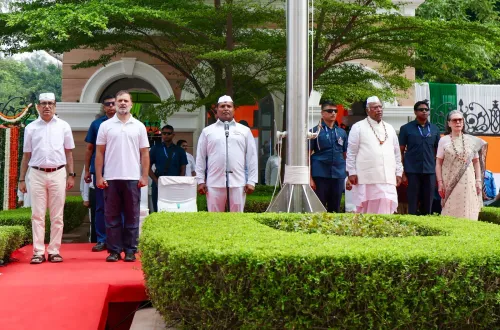
Addressing a press conference, BJP MP Sambit Patra said the 80th Independence Day celebrations at the Red Fort marked the first time all six stanzas of Vande Mataram were rendered at the national event. He described the conduct of senior Congress leaders during a recent rendition of the song at party headquarters as an 'evil act', saying their visible discomfort appeared as though 'some cuss words were being used.'
Patra also noted that Congress subsequently moved into what he called 'damage control mode', with leaders defending Sonia Gandhi by claiming she had not asked to stop the national song but was instead requesting a chair for party President Mallikarjun Kharge.
Historical Context BJP Invoked
Patra traced the controversy deep into history, citing that Vande Mataram was composed by Bankim Chandra Chattopadhyay 'to prevent the partition of Bengal.' He recalled that despite British attempts to suppress it, the song was sung at Barisal, after which Madam Bhikaiji Cama raised a flag bearing the words 'Vande Mataram.'
He drew a direct parallel between the British colonial stance and the Congress position: 'Similar to the then British government, the Congress is stopping the rendition of Vande Mataram today.' He also alleged that at the 1923 Congress session in Kakinada, Andhra Pradesh, then Congress President Maulana Muhammad Ali threatened a walkout to prevent the full rendition of the song when Pandit Vishnu Digambarji was about to perform it.
Patra further alleged that in 1937, Vande Mataram was 'broken on the orders of Pandit Jawaharlal Nehru' — accepting a demand attributed to Mohammed Ali Jinnah in a letter. 'This seed of appeasement sown by Pandit Nehru in 1937 was the seed of partition,' he alleged.
What BJP Chief Said
Patra quoted BJP national president Nitin Nabin as having stated at the office-bearers' meeting: 'The renewed attempt to sow the seeds of partition by Congress, won't be allowed by us.' He also invoked Mahatma Gandhi's reported words on the song — 'Unfortunately we have fallen on evil days...that (six stanzas) was all pure gold before, has become base metal today' — arguing that Congress was 'intentionally promoting appeasement politics.'
Legal Dimension and What Comes Next
Patra referenced the Prevention of Insults to National Honour (Amendment) Act, 2026, clarifying that while no one would be compelled to sing Vande Mataram, anyone who obstructs its rendition would face legal consequences under the amended law. He also accused Congress leaders of boycotting parliamentary debates on the Vande Mataram Bill, asking: 'Will the country run on the rules of Parliament or the CWC?'
With the BJP resolution formally on record and the amended law in place, the political confrontation over Vande Mataram is set to intensify ahead of the next round of state elections.
Point of View
The party is not debating the present; it is prosecuting a century of Congress's relationship with Muslim political sentiment. What mainstream coverage underplays is the significance of the 2026 amendment: for the first time, obstructing the national song carries a legal penalty, shifting this from culture-war rhetoric to enforceable law. Congress's 'damage control' framing around Sonia Gandhi's gesture has only deepened the optics problem — the party is on the defensive on a question of national symbolism, which is precisely where the BJP wants this fight.
NationPress
6 Oct 2026
Frequently Asked Questions
What is the Vande Mataram row between BJP and Congress about?
The dispute centres on Congress's long-standing practice of restricting Vande Mataram's rendition at its party events to only the first two stanzas, while the BJP insists all six stanzas must be sung. The BJP passed a resolution on 22 August condemning the CWC's stance and accused Congress of obstructing the national song's full rendition.
What did BJP MP Sambit Patra say at the press conference?
Patra described Congress leaders' conduct during a recent Vande Mataram rendition as an 'evil act', alleged that the party has historically suppressed the song since 1923, and invoked a Nehru-era 1937 decision he linked to partition. He also cited the Prevention of Insults to National Honour (Amendment) Act, 2026, warning that obstructing the song's rendition is now punishable.
What is the Prevention of Insults to National Honour (Amendment) Act, 2026?
It is a law referenced by BJP that, according to Patra, makes the obstruction of Vande Mataram's rendition a punishable offence. He clarified that while no one is compelled to sing the national song, actively obstructing it will attract legal consequences under the amended act.
When was all six stanzas of Vande Mataram first sung at the Red Fort?
According to BJP MP Sambit Patra, the 80th Independence Day celebrations at the Red Fort marked the first time all six stanzas of Vande Mataram were rendered at the national event.
What historical incidents did the BJP cite in the Vande Mataram controversy?
The BJP cited two key historical episodes: the 1923 Congress session in Kakinada, where then Congress President Maulana Muhammad Ali allegedly threatened a walkout to prevent the full rendition of the song; and a 1937 decision attributed to Pandit Jawaharlal Nehru to restrict the song, which Patra alleged was linked to Mohammed Ali Jinnah's demands and ultimately to partition.