India Nano 2026: Bengaluru to become global deep-tech capital, vows CM Shivakumar
Synopsis
Karnataka CM D.K. Shivakumar used the India Nano 2026 inauguration to issue a direct challenge to multinationals: file patents in Bengaluru, not just close tickets. The state is betting that the same ecosystem that built India's IT identity can now anchor a global deep-tech revolution spanning nanotechnology, AI, semiconductors, and quantum science.
Key Takeaways
Shivakumar inaugurated India Nano 2026 in Bengaluru on 4 August 2026 .
He pledged to position Bengaluru as a global hub for nanotechnology , AI , semiconductors , biotechnology , and quantum technologies .
Shivakumar challenged Global Capability Centres (GCCs) to file patents in India rather than limit operations to back-office work.
He cited the founding of IISc — enabled by Maharaja Krishna Raja Wadiyar IV's donation of 370 acres — as proof of Bengaluru's deep scientific heritage.
The state government committed to faster lab-to-market transitions through stronger academia-industry-startup collaboration.
Tribute was paid to Bharat Ratna Professor C.N.R.
Rao for his contributions to Indian scientific excellence.
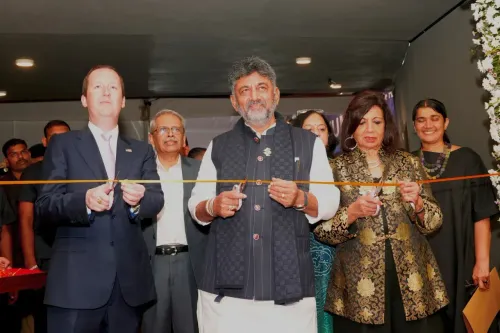
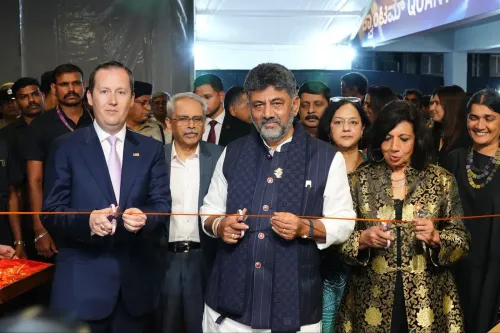
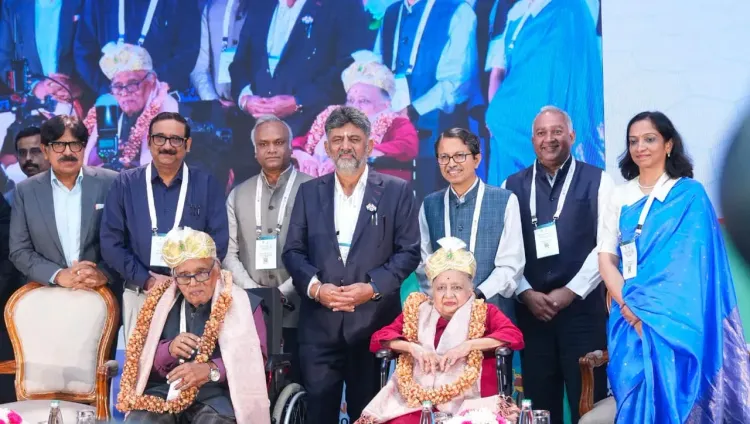
Karnataka Chief Minister D.K. Shivakumar on Tuesday, 4 August 2026, declared that the state is committed to positioning Bengaluru as a global hub for deep technologies — spanning nanotechnology, Artificial Intelligence (AI), semiconductors, biotechnology, and quantum technologies — as he inaugurated Bengaluru India Nano 2026, India's premier international nanotechnology conference and exhibition. The announcement signals Karnataka's most explicit push yet to move the city's identity beyond software into frontier science.
What Shivakumar Said at India Nano 2026
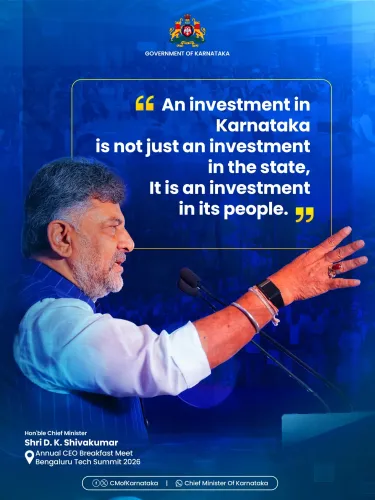
Addressing scientists, industry leaders, and students at the inauguration, CM Shivakumar argued that nanotechnology has outgrown the laboratory. 'Nanotechnology is no longer confined to research laboratories. It has become a foundational technology transforming healthcare, electronics, energy, agriculture, mobility, aerospace, defence and advanced manufacturing,' he said.
He stressed that the convergence of AI, nanotechnology, biotechnology, quantum technologies, semiconductors, and advanced materials would define the next global economic order — and that Karnataka intends to be at the forefront. 'Today, nations are competing not merely for investments but for scientific leadership. Whoever leads in advanced materials, nanoelectronics, semiconductor technologies and AI-driven manufacturing will shape the global economy of the coming decades. Karnataka intends to be among those leaders,' he said.
The Historical Roots of Bengaluru's Scientific Identity
Shivakumar drew on the city's scientific heritage to make his case, recalling the 1893 meeting between industrialist Jamsetji Tata and Swami Vivekananda aboard a ship travelling from Japan to the United States. Their conversations on scientific research and nation-building, he noted, eventually led to the founding of the Indian Institute of Science (IISc). The institute became a reality with the support of the erstwhile Kingdom of Mysore, where Maharaja Krishna Raja Wadiyar IV donated approximately 370 acres of land in Bengaluru and provided financial and infrastructural backing.
He also paid tribute to Bharat Ratna Professor C.N.R. Rao, citing his lifelong contribution to scientific excellence as a continuing source of inspiration for researchers across generations.
A Direct Challenge to Global Capability Centres
One of the sharper moments of the address was Shivakumar's pointed message to Global Capability Centres (GCCs) operating in Bengaluru. 'The GCCs of the future should file patents here, not merely close tickets here,' he said — a challenge to multinationals to deepen their innovation footprint rather than limit operations to back-office functions. He similarly urged academic institutions to prioritise patenting and to forge early-stage partnerships with industry to address real-world problems.
This comes amid a broader national push to raise India's share of global patents, where the country still lags significantly behind the United States, China, Japan, and South Korea.
The Ecosystem Karnataka Is Banking On
Shivakumar cited Karnataka's existing infrastructure — premier research institutions, a dense startup ecosystem, multinational R&D centres, and universities — as a structural advantage. He argued that nanotechnology holds specific promise for healthcare through targeted drug delivery and precision medicine, for agriculture via smart fertilisers and efficient water management, and for energy through cleaner and more sustainable manufacturing processes.
The government, he said, is committed to accelerating the journey from scientific ideas to commercial products through stronger collaboration between academia, industry, and startups. He formally congratulated Karnataka Science and Technology Promotion Society (KSTePS), Jawaharlal Nehru Centre for Advanced Scientific Research, the Department of Science and Technology, and all event organisers.
What Comes Next for Bengaluru's Deep-Tech Ambition
'Bengaluru has put India on the world IT map. It is now time to put India on the world deep-tech map,' Shivakumar said, framing the city's next chapter as one defined by nanotechnology, semiconductors, advanced manufacturing, quantum science, and AI. Whether the state backs these ambitions with specific policy instruments — funding mandates, patent incentive schemes, or dedicated deep-tech zones — will determine how quickly the vision translates into measurable outcomes.
Point of View
Not just close tickets' line is the most commercially pointed statement to come out of a Karnataka government event in some time — and it targets a real structural problem. Bengaluru hosts hundreds of GCCs, yet India's global patent share remains marginal. The speech was heavy on vision and light on policy specifics: there were no announced funding commitments, patent incentive schemes, or deep-tech zone notifications. Karnataka's advantage in research institutions is real, but so is the gap between conference rhetoric and commercialisation outcomes. The test will be whether India Nano 2026 produces a policy follow-through, or joins a long list of aspirational deep-tech declarations that did not move the needle on IP creation.
NationPress
18 Sept 2026
Frequently Asked Questions
What is India Nano 2026?
India Nano 2026 is India's premier international nanotechnology conference and exhibition, held in Bengaluru. It was inaugurated by Karnataka Chief Minister D.K. Shivakumar on 4 August 2026 and is organised by bodies including KSTePS, the Jawaharlal Nehru Centre for Advanced Scientific Research, and the Department of Science and Technology.
What did CM Shivakumar announce at India Nano 2026?
Shivakumar declared Karnataka's intent to position Bengaluru as a global hub for deep technologies including nanotechnology, AI, semiconductors, biotechnology, and quantum technologies. He also challenged Global Capability Centres to file patents in India rather than limit their Bengaluru operations to back-office functions.
Why does Bengaluru have an advantage in deep-tech?
According to CM Shivakumar, Bengaluru's advantage stems from its dense ecosystem of premier research institutions, startups, multinational R&D centres, and universities. The city is also home to the Indian Institute of Science (IISc), founded with land donated by Maharaja Krishna Raja Wadiyar IV over a century ago.
What role does nanotechnology play in Karnataka's plans?
Karnataka sees nanotechnology as a foundational technology with applications across healthcare, electronics, energy, agriculture, aerospace, defence, and advanced manufacturing. The state aims to accelerate the translation of nanotechnology research into commercial products through academia-industry-startup collaboration.
Who is Professor C.N.R. Rao and why was he mentioned?
Bharat Ratna Professor C.N.R. Rao is one of India's most celebrated scientists, known for his lifelong contributions to materials science and chemistry. CM Shivakumar paid tribute to him at India Nano 2026, saying his vision continues to inspire generations of researchers in India.