Shivraj Singh Chouhan Accuses Congress of Strangling Democracy
Synopsis
Union Agriculture Minister Shivraj Singh Chouhan accused Congress of dismissing elected governments, dividing the nation, and strangling democracy — invoking the 1975 Emergency and Article 356 abuses as historical proof in a sharp social-media broadside.
Key Takeaways
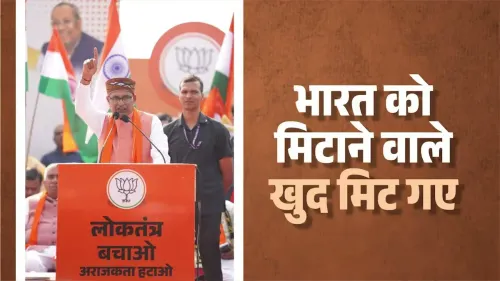
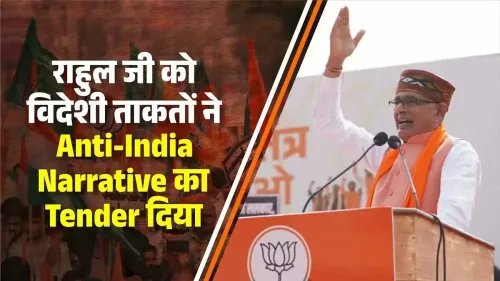
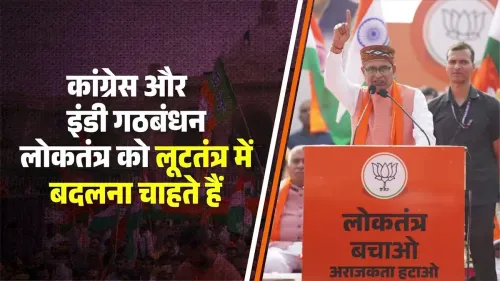
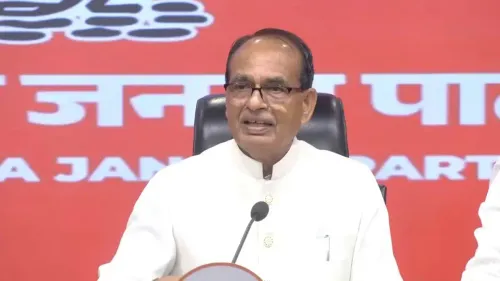
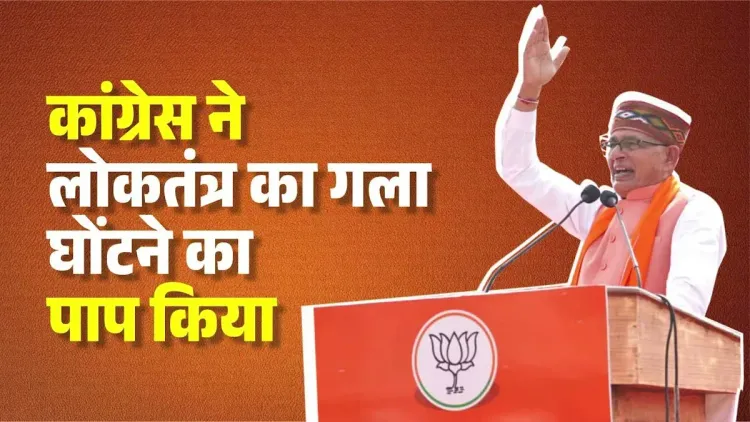
Shivraj Singh Chouhan posted a direct attack on Congress on November 3, 2026 , accusing the party of three democratic 'sins': dismissing elected governments, dividing the country, and strangling democracy.
The post used the hashtag #SaveDemocracyRemoveAnarchy , signalling a coordinated BJP messaging campaign.
The BJP's critique centres on two historical episodes: the 1975 Emergency under Indira Gandhi and the frequent misuse of Article 356 to topple state governments in the 1970s–80s.
The Supreme Court curtailed arbitrary Article 356 use through the landmark S.R.
Bommai ruling (1994) .
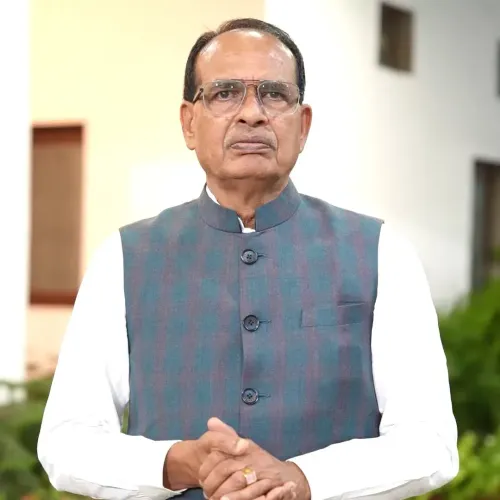
Chouhan, a four-term former Chief Minister of Madhya Pradesh , is one of the BJP's most experienced voices on Congress-era governance critiques.
Congress is expected to issue a rebuttal; the precise political trigger for the post on this date remains unverified.
India's historical fault lines over democracy and federalism crackled back into the political spotlight on Tuesday, November 3, 2026, when Union Agriculture Minister Shivraj Singh Chouhan launched a pointed broadside against the Indian National Congress, accusing the party of committing what he called cardinal sins against the republic itself.
Posting in Hindi on X, Chouhan declared: 'Kांग्रेस ne chuni hui sarkaaron ko barkhast karne ka, desh ko baantne ka aur loktantra ka gala ghontne ka paap kiya.' — 'Congress committed the sin of dismissing elected governments, dividing the country, and strangling democracy.' The post carried the hashtag #SaveDemocracyRemoveAnarchy, a slogan that sharpens the BJP's broader narrative framing the opposition not merely as a rival, but as a historical threat to constitutional order.
The Article 356 Weapon and the Shadow of Emergency
The charge is not new, but it lands with accumulated weight. The BJP has long pointed to two defining episodes of Congress governance as proof of democratic bad faith. The first is the 1975 Emergency declared by Prime Minister Indira Gandhi, which suspended civil liberties, muzzled the press, and imprisoned opposition leaders for nearly two years — the darkest chapter in post-independence Indian governance.
The second is the routine invocation of Article 356 of the Constitution — the President's Rule provision — to topple elected state governments throughout the 1970s and 1980s. At its peak, Article 356 was deployed as a blunt political instrument, dissolving governments whose only offence was being led by the wrong party. The Supreme Court eventually reined in this practice through its landmark ruling in the S.R. Bommai case of 1994, making arbitrary dismissals constitutionally untenable.
Why the BJP Returns to This Well
Chouhan is one of the BJP's most seasoned communicators — a four-term former Chief Minister of Madhya Pradesh who built his political career in a state that itself experienced the sharp end of Article 356 politics. His deployment of this argument is deliberate and well-rehearsed. By anchoring contemporary political competition in historical grievance, the BJP seeks to position any assertion of opposition power as structurally suspect.
The hashtag #SaveDemocracyRemoveAnarchy signals this is part of a coordinated messaging push, not a spontaneous outburst. Such language typically escalates in response to opposition campaigns, state election cycles, or parliamentary confrontations — though the precise political trigger for Tuesday's post remains unclear.
The Opposition's Counter-Narrative
Congress and its allies have consistently pushed back on this framing, arguing that the BJP's own record in office — including disputes over gubernatorial decisions and the use of central agencies against state governments — represents its own strain of democratic erosion. The rebuttal cycle is well-worn: each side holds up the other's history as Exhibit A of authoritarian instinct.
What makes Chouhan's post notable is the starkness of the language — 'sin' (paap), 'strangling' (gala ghontna), 'divided the country' (desh ko baantna). These are not bureaucratic critiques. They are moral indictments, and they will demand a response.
The question now is whether Congress answers with equal force — or lets the charge hang in the air unanswered.
Point of View
He reaches for the party's most morally resonant attacks, framing democratic legitimacy as a BJP monopoly. The #SaveDemocracyRemoveAnarchy hashtag suggests top-down coordination, raising the question of whether this signals a broader pre-election or parliamentary offensive. Congress, meanwhile, faces the recurring dilemma of defending decades-old decisions while trying to shift the conversation to present-day governance — a structural disadvantage the BJP has expertly exploited for years.
NationPress
3 Nov 2026
Frequently Asked Questions
What did Shivraj Singh Chouhan say about Congress and democracy?
Chouhan accused Congress of committing the 'sin' of dismissing elected state governments, dividing the country, and strangling democracy — citing the 1975 Emergency and the misuse of Article 356 as key examples.
What is Article 356 and how did Congress use it?
Article 356 of the Indian Constitution allows the President to impose Central rule in a state if constitutional governance breaks down. During the 1970s and 1980s, Congress-led central governments used it repeatedly to dissolve elected state governments led by opposition parties, a practice the Supreme Court curtailed in the 1994 S.R. Bommai judgment.
What was the 1975 Emergency in India?
The 1975 Emergency was declared by Prime Minister Indira Gandhi on June 25, 1975. It suspended fundamental rights, censored the press, and led to the imprisonment of thousands of opposition politicians. It lasted until March 1977 and remains the most controversial episode in post-independence Indian political history.
What does the hashtag #SaveDemocracyRemoveAnarchy mean?
The hashtag is a BJP political slogan used to frame the party as a defender of democratic values while casting its opponents — particularly Congress — as forces of instability and anti-democratic behaviour.
Who is Shivraj Singh Chouhan?
Shivraj Singh Chouhan is a senior BJP leader currently serving as Union Minister of Agriculture and Farmers Welfare and Rural Development. He served as Chief Minister of Madhya Pradesh for four terms, making him one of the longest-serving state leaders in BJP history.