Shivraj Singh Chouhan Announces Phone Advisory & Agri-Clinics for Farmers
Synopsis
Union Agriculture Minister Shivraj Singh Chouhan announced on 14 June 2026 that farmers will get instant phone access to crop experts and can visit new Agri-Clinics to diagnose diseases like yellowing leaves and pest attacks — strengthening India's last-mile agricultural extension network during the kharif season.
Key Takeaways
Union Agriculture Minister Shivraj Singh Chouhan announced on 14 June 2026 that farmers can call experts immediately when crops face problems such as yellowing leaves or pest attacks.
Dedicated Agri-Clinics will be established where farmers can bring crop or plant samples for expert disease identification and treatment advice.
The initiative builds on the Kisan Call Centre network (est.
2004 ) and the Agri-Clinics and Agri-Business Centres (ACABC) scheme (est.
2002 ), both long-standing central extension programmes.
Small and marginal farmers are the primary target beneficiaries, gaining access to specialist guidance without having to travel to distant advisory centres.
The move aligns with the National Mission on Agricultural Extension and Technology and the broader Digital Agriculture initiative linking mobile advisory with farmer databases.
State-level rollout timelines, staffing, and budget allocations for new Agri-Clinics remain to be announced.
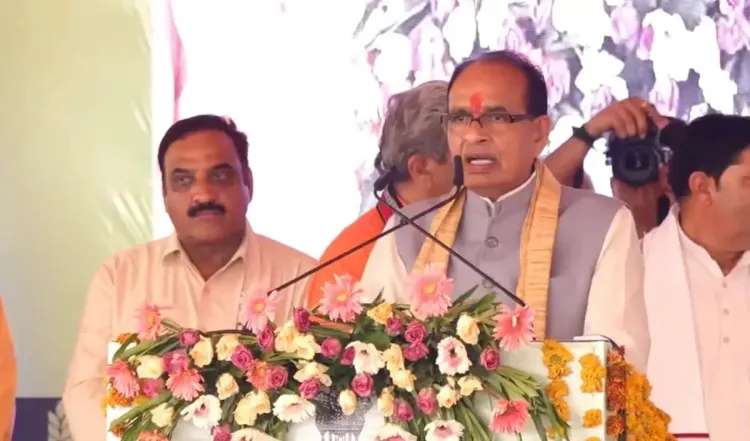
Union Agriculture Minister Shivraj Singh Chouhan on Sunday, 14 June 2026 announced that farmers facing crop problems — including yellowing leaves, pest attacks, or caterpillar infestations — will be able to consult experts instantly over the phone, and that dedicated Agri-Clinics will be established where farmers can bring crop or plant samples for on-the-spot diagnosis and treatment advice.
In his post on X, the Minister stated: 'यदि फसल में कोई समस्या आए। पत्तियाँ पीली पड़ जाएं, कीट या इल्ली लग जाए, तो किसान तुरंत फोन पर विशेषज्ञों से सलाह प्राप्त कर सकेंगे।' ('If any problem arises in the crop — if leaves turn yellow, or pests or caterpillars attack — farmers will be able to immediately get expert advice over the phone.')
Context
The announcement covers two distinct delivery channels. The first is a phone-based advisory service that allows farmers to reach crop specialists in real time without leaving their fields. The second is a network of physical Agri-Clinics where farmers can carry samples of diseased crops or plants and receive expert identification of the illness along with a fast-track treatment plan.
Chouhan's post, shared on the afternoon of 14 June 2026, comes as the kharif sowing season gathers pace across much of India, a period when pest pressure and nutrient deficiencies are at their peak and timely guidance can determine whether a harvest is saved or lost.
Policy Backdrop
The twin-track approach builds on a long lineage of central extension initiatives. Kisan Call Centres, established in 2004, already operate a toll-free national helpline under the Department of Agriculture and Farmers Welfare, connecting farmers to trained advisors in their own language. The Agri-Clinics and Agri-Business Centres (ACABC) scheme, launched in 2002, created a framework for agriculture graduates and diploma holders to set up local diagnostic clinics as self-employment ventures, providing last-mile extension services to rural communities.
Both schemes fall under the broader National Mission on Agricultural Extension and Technology, which has progressively integrated mobile platforms, geographic information systems, and expert advisory tools to cut crop losses from preventable causes. The Digital Agriculture initiative has further pushed integration of these services with farmer-identity databases, soil-health card records, and the PM-KISAN beneficiary registry.
Stakeholders and Impact
Small and marginal farmers — who collectively till the majority of India's cultivated area but have the least access to private agronomists — stand to benefit most directly. For these farmers, a single crop failure can wipe out an entire season's income, making early diagnosis of pest or disease outbreaks critical. Ready phone access to specialists and walk-in Agri-Clinics could reduce the lag between symptom onset and effective intervention.
Agricultural graduates and diploma holders are another key stakeholder group: the ACABC framework has historically used clinic establishment as a route to rural self-employment, meaning any fresh rollout of Agri-Clinics would also generate livelihoods in the agri-services sector. State agriculture departments will be central to the operational rollout, coordinating physical infrastructure, staffing, and linkages with existing extension networks.
What's Next
Attention will now turn to state-level rollout timelines and budget allocations for the new Agri-Clinics ahead of the upcoming agricultural season. Observers will also watch whether the phone advisory mechanism is integrated with existing Kisan Call Centre infrastructure or constitutes a parallel channel, and how the initiative connects with ongoing PM-KISAN and soil-health card databases to deliver personalised, location-specific advice. A phased, technology-linked extension model — if executed with adequate funding and trained personnel — could mark a meaningful upgrade to India's rural agricultural support architecture.
Point of View
Problem-solution language during the kharif sowing window, the Minister is signalling political intent as much as administrative action. The real test will be whether fresh allocations and state partnerships follow, or whether the announcement remains aspirational. If integrated with PM-KISAN and soil-health card data, the initiative could shift extension from reactive helplines to proactive, farm-specific advisory — a qualitative leap that has long eluded Indian agricultural policy.
NationPress
20 Sept 2026
Frequently Asked Questions
What did Agriculture Minister Shivraj Singh Chouhan announce for farmers?
He announced that farmers will be able to consult crop experts instantly over the phone when problems like yellowing leaves or pest attacks occur, and that Agri-Clinics will be set up where farmers can bring plant samples for diagnosis and treatment advice.
What is an Agri-Clinic and how will it help farmers?
An Agri-Clinic is a local diagnostic centre, typically run by agriculture graduates, where farmers can bring samples of diseased crops or plants. Experts at the clinic identify the disease and advise on quick treatment, reducing crop losses from pests and nutrient deficiencies.
Is the Kisan Call Centre different from the new phone advisory service?
Kisan Call Centres, established in 2004, already provide toll-free tele-advisory to farmers. Chouhan's announcement appears to reinforce or expand this channel; whether it is a new parallel system or an upgrade to existing infrastructure has not yet been specified.
Who benefits most from Agri-Clinics and phone crop advisory?
Small and marginal farmers benefit most, as they typically lack access to private agronomists. Instant expert guidance can help them act quickly before a pest outbreak or disease spreads and damages the entire crop.
When was the Agri-Clinics and Agri-Business Centres scheme first launched?
The Agri-Clinics and Agri-Business Centres (ACABC) scheme was launched in 2002 by the central government to promote self-employment among agriculture graduates and improve last-mile extension services for farmers.