Shivraj Singh Chouhan Announces Litchi Shelf-Life Breakthrough
Synopsis
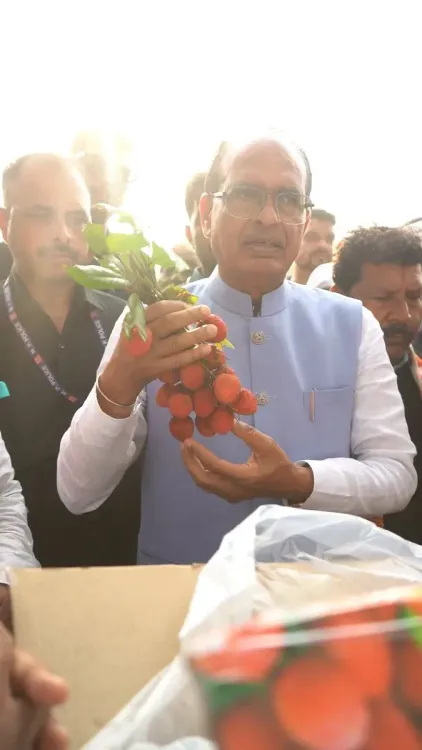
Union Agriculture Minister Shivraj Singh Chouhan announced on 17 June 2026 that scientists have developed a simple technique to extend the shelf life of litchi, following direct farmer feedback during the Viksit Krishi Sankalp Abhiyan. The breakthrough aims to reduce post-harvest losses and ensure fair returns for litchi growers.
Key Takeaways
Union Agriculture Minister Shivraj Singh Chouhan announced on 17 June 2026 that a new simple technique has been developed to extend the shelf life of litchi.
The research was triggered by litchi farmers raising the short shelf-life problem during the Viksit Krishi Sankalp Abhiyan outreach campaign.
Post-harvest losses for fruits and vegetables in India are estimated at 15 to 30 per cent , a long-standing policy concern addressed under MIDH since 2014 .
Bihar produces approximately 40 per cent of India's litchi and stands to benefit significantly from wider adoption of the technique.
The technique is described as 'simple', suggesting it is designed for use by small and marginal farmers without capital-intensive infrastructure.
Dissemination to producing districts ahead of the 2027 harvest season and potential inclusion in revised MIDH or RKVY guidelines are the key next steps to watch.
Union Agriculture Minister Shivraj Singh Chouhan on Wednesday, 17 June 2026 announced that Indian agricultural scientists have developed a simple technique to extend the shelf life of litchi, directly addressing a concern raised by farmers during last year's Viksit Krishi Sankalp Abhiyan. The minister shared the development on X, crediting the farmer-feedback loop built into the outreach campaign for driving the targeted research.
Posting in Hindi, Chouhan wrote: 'Pichle varsh Viksit Krishi Sankalp Abhiyan ke dauran kisan bhaion ne leechi ki kam shelf life ki samasya hamare samne rakhi thi.' ('Last year, during the Viksit Krishi Sankalp Abhiyan, farmer brothers had placed before us the problem of litchi's short shelf life.') He added that scientists took the matter seriously and have now succeeded in keeping litchi fresh for more days through a simple technique, ensuring fresh litchi reaches the common consumer and farmers receive the right price for their labour.
Context
The Viksit Krishi Sankalp Abhiyan was a structured farmer-outreach drive under the Ministry of Agriculture that collected on-ground grievances and crop-specific challenges directly from growers across states. Litchi farmers — concentrated in Bihar and Uttar Pradesh, which together account for the bulk of India's litchi production — had flagged that the fruit's extremely short post-harvest window, typically two to four days at ambient temperatures, leads to rapid price collapse and significant income loss at the farm gate.
The minister's announcement signals that the campaign's feedback mechanism has translated into a concrete research output, closing the loop between field consultation and laboratory response.
Policy Backdrop
Post-harvest loss reduction has been a stated priority of successive central governments. The Mission for Integrated Development of Horticulture (MIDH), operational since 2014, specifically targets reduction of losses estimated at 15 to 30 per cent for fruits and vegetables. The Rashtriya Krishi Vikas Yojana (RKVY) also funds cold-chain and value-chain infrastructure to support such interventions.
The Indian Council of Agricultural Research (ICAR) network, which includes institutes with dedicated mandates for tropical and subtropical horticulture, has been the primary body tasked with developing post-harvest protocols for perishable produce including litchi. The new technique, described by the minister as 'simple' and accessible, appears designed for adoption without capital-intensive infrastructure — a critical requirement for small and marginal litchi growers.
Stakeholders and Impact
Litchi growers stand to benefit most immediately. An extended shelf life means the harvest window for transport and sale is widened, reducing distress selling that typically occurs when large volumes hit local mandis simultaneously. Common consumers in cities farther from producing districts — who currently have limited access to fresh litchi — could also see improved availability and quality.
The development carries economic significance for Bihar, which produces roughly 40 per cent of India's litchi and where the fruit is a key source of seasonal income for thousands of farming households. Wider commercialisation of the technique could also support export potential, as litchi's short shelf life has historically constrained India's share in international markets.
What's Next
The immediate question is how quickly the preservation protocol will be disseminated to farmers in major producing districts ahead of the 2027 harvest season. Possible channels include ICAR's Krishi Vigyan Kendras (KVKs), state horticulture departments, and inclusion in revised MIDH or RKVY operational guidelines. The ministry has not yet announced a formal roll-out schedule or field-validation timeline, and the precise technical parameters of the method remain to be detailed publicly.
If the technique proves scalable at the farm level, it could serve as a template for similar targeted R&D responses to post-harvest challenges flagged for other perishable crops — reinforcing the Viksit Krishi Sankalp Abhiyan model as a policy feedback instrument.
Point of View
The demographic at the core of the government's agrarian outreach. Whether the technique achieves rapid field-level adoption will be the true test of whether this policy feedback loop delivers beyond the announcement stage.
NationPress
19 Sept 2026
Frequently Asked Questions
What is the new litchi shelf-life technique announced by Shivraj Singh Chouhan?
Union Agriculture Minister Shivraj Singh Chouhan announced on 17 June 2026 that Indian agricultural scientists have developed a simple technique to keep litchi fresh for more days than currently possible. The precise technical details have not yet been made public, but the minister described it as easy to use and accessible to common farmers.
What is the Viksit Krishi Sankalp Abhiyan?
The Viksit Krishi Sankalp Abhiyan is a farmer-outreach campaign run by the Union Ministry of Agriculture that collects on-ground grievances and crop-specific challenges directly from growers. It was during this campaign that litchi farmers flagged the problem of the fruit's short shelf life, which prompted the targeted research.
Why is litchi's short shelf life a problem for Indian farmers?
Litchi typically lasts only two to four days at ambient temperatures after harvest, forcing farmers to sell quickly at low prices when large volumes flood local markets simultaneously. This leads to distress selling and significant income loss, particularly for small and marginal growers in Bihar and Uttar Pradesh.
Which states produce the most litchi in India?
Bihar is the largest litchi-producing state in India, accounting for roughly 40 per cent of national production, followed by Uttar Pradesh. Farmers in these states stand to benefit most directly from any technique that extends the fruit's post-harvest life.
How does this development relate to India's horticulture policy?
Reducing post-harvest losses — estimated at 15 to 30 per cent for fruits and vegetables — has been a central goal of the Mission for Integrated Development of Horticulture (MIDH) since 2014. The new litchi technique aligns with that policy priority and may be incorporated into revised MIDH or Rashtriya Krishi Vikas Yojana guidelines for wider dissemination.