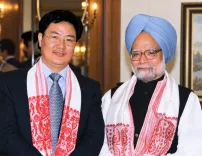
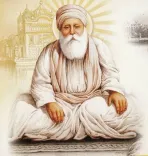
Shivraj Singh Chouhan marks Kshamavani Parva with forgiveness message
Synopsis
Union Agriculture Minister Shivraj Singh Chouhan marked Kshamavani Parva on 26 September 2026 with a public message invoking the Jain salutation Michchhami Dukkadam, calling for self-reflection, mutual forgiveness, and goodwill — and closing with the traditional invocation 'Uttam Kshama'.
Key Takeaways
Shivraj Singh Chouhan posted a Kshamavani Parva message on 26 September 2026 .
He opened with the Jain salutation Michchhami Dukkadam , seeking forgiveness for any wrong done in thought, word, or deed.
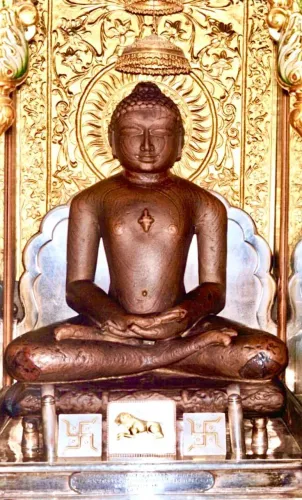
Kshamavani Parva is the concluding day of Paryushan , the holiest season in the Jain calendar.
The message called on people to forgive others with generosity and hold no enmity in their hearts.
He closed with Uttam Kshama — 'supreme forgiveness' — one of the ten cardinal virtues in Jain ethics.
On the solemn occasion of Kshamavani Parva, Union Agriculture Minister Shivraj Singh Chouhan offered a heartfelt public appeal for forgiveness and goodwill on Saturday, 26 September 2026 — opening with the ancient Jain salutation Michchhami Dukkadam ('I seek your forgiveness for any wrong I may have done').
In his message posted on X, Chouhan wrote: 'Kshamavani Parva gives us the message of self-reflection, forgiveness, and friendship. If, knowingly or unknowingly, my thoughts, words, or actions have hurt anyone, I seek forgiveness from the heart. Let us also forgive the mistakes of others with generosity, and hold no enmity toward anyone in our hearts.'
He added that forgiveness purifies the mind, brings sweetness to relationships, and deepens the sense of peace in life, closing with the traditional invocation: 'Sabse kshama, sabko kshama. Uttam kshama.' — 'Forgiveness from all, forgiveness to all. Supreme forgiveness.'
What Kshamavani Parva signifies
Kshamavani Parva is the culminating day of Paryushan, the most sacred season in the Jain calendar. On this day, adherents seek forgiveness from everyone they may have wronged — in thought, word, or deed — over the past year. The phrase Michchhami Dukkadam (Prakrit for 'may the wrong I have done become null') is exchanged as a formal gesture of mutual absolution.
The festival's core teaching — Uttam Kshama, or supreme forgiveness — is one of the ten cardinal virtues in Jain ethics. It asks not merely for tolerance, but for the complete dissolution of grievance and ill-will.
A familiar pattern of political participation in religious observances
Indian political leaders across parties have long participated publicly in the observances of major religious and cultural festivals, from Eid and Diwali to Paryushan and Guru Nanak Jayanti. Such messages serve both as cultural acknowledgement and as a signal of inclusive public outreach. Chouhan, a senior BJP leader and former four-term Chief Minister of Madhya Pradesh, has built a reputation for visible engagement with community occasions throughout his political career.
The message carries no policy dimension — its weight is entirely moral and cultural, directed at a broad public audience well beyond the Jain community alone.
In a political climate often marked by sharp edges, a senior minister pausing to ask forgiveness — publicly, unconditionally, and in both directions — is a reminder that some traditions still carry a disarming kind of grace.
Point of View
Participating in a Jain festival also reinforces the party's outreach to trading and business communities where Jain influence is historically significant. The message itself is generic in its goodwill but precise in its Jain theological framing — the use of Michchhami Dukkadam and Uttam Kshama suggests deliberate cultural literacy rather than boilerplate. In a fractious political environment, the act of a powerful minister asking for forgiveness — publicly and in both directions — carries a quiet symbolic weight that transcends the immediate festival occasion.
NationPress
26 Sept 2026
Frequently Asked Questions
What is Michchhami Dukkadam?
Michchhami Dukkadam is a Prakrit phrase used by Jains on Kshamavani Parva meaning 'may any wrong I have done become null' — it is a formal greeting of mutual forgiveness exchanged on the last day of Paryushan.
What is Kshamavani Parva?
Kshamavani Parva is the concluding day of Paryushan, the most sacred season in the Jain calendar, devoted to seeking and granting forgiveness for wrongs committed in thought, word, or deed over the past year.
What did Shivraj Singh Chouhan say on Kshamavani Parva 2026?
He sought forgiveness from anyone hurt by his thoughts, words, or actions — knowingly or unknowingly — and urged people to forgive others generously and hold no enmity, closing with the invocation 'Uttam Kshama'.
What does Uttam Kshama mean?
Uttam Kshama means 'supreme forgiveness' in Hindi and Sanskrit and is one of the ten cardinal virtues in Jain ethics, representing the complete dissolution of grievance and ill-will.
Why do Indian politicians post messages on Kshamavani Parva?
Indian political leaders across parties routinely post messages on major religious and cultural festivals including Kshamavani Parva as a form of public outreach and cultural acknowledgement to diverse communities.