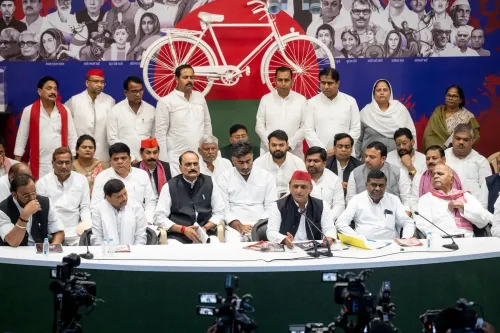
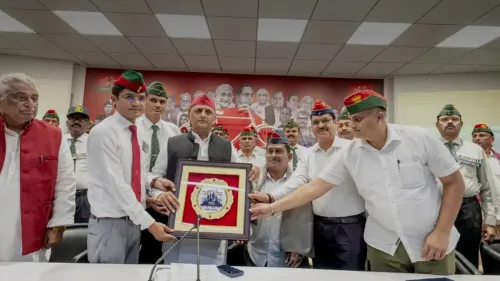
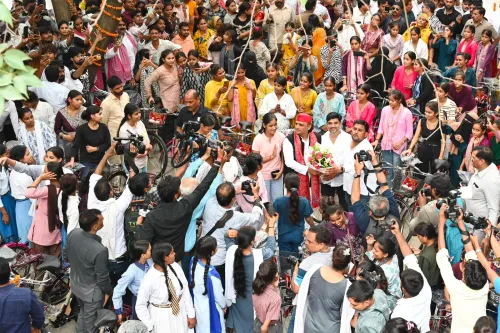
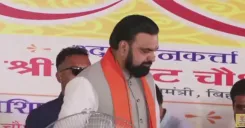
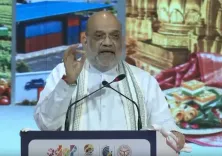
Akhilesh Yadav greets nation on Anant Chaturdashi
Synopsis
On Anant Chaturdashi 2026, Samajwadi Party president Akhilesh Yadav posted a message rooted in the Jain Kshama Vani Parv, calling for forgiveness, tolerance, and a 'live and let live' approach to resolve differences and strengthen human relationships.
Key Takeaways
Akhilesh Yadav posted greetings on Anant Chaturdashi , 25 September 2026, the culmination of the Jain Paryushan observance.
He invoked the Kshama Vani Parv (Festival of Forgiveness) to urge forgiveness for mistakes of 'mind, word, and deed.' The post cited the classical Sanskrit phrase 'Kshama Veerasya Bhushanam' — 'Forgiveness is the ornament of the brave.' Yadav called for 'differences of opinion' to be treated as diversity, not as personal conflict.
The message championed 'jio aur jeene do' (live and let live) as a guiding principle for social harmony.
On the sacred occasion of Anant Chaturdashi, Samajwadi Party president Akhilesh Yadav extended greetings to the world and offered a message of forgiveness, tolerance, and human reconciliation, drawing on the Jain community's cherished Kshama Vani Parv — the Festival of Forgiveness — observed on Friday, 25 September 2026.
The spirit of Kshama Vani Parv
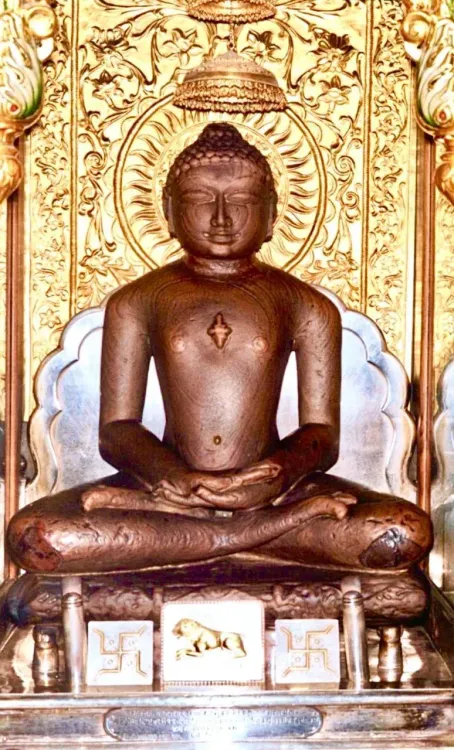
Anant Chaturdashi marks the fourteenth day of the bright fortnight of Bhadrapada and serves as the culmination of Paryushan, the most significant period in the Jain calendar. The Kshama Vani Parv — literally the 'Festival of the Word of Forgiveness' — is observed by the Jain community as a time to seek and grant forgiveness for wrongs committed in thought, word, and deed. The ancient Sanskrit invocation 'Kshama Veerasya Bhushanam' (Forgiveness is the ornament of the brave) anchors the entire practice.
Yadav's post translated the festival's core philosophy into a pointed social message: 'In life, hurting someone's feelings through mistakes and errors is part of social behaviour, which creates distance in relationships — distances that can be bridged through mutual understanding.' He urged people to practise forgiveness for 'known and unknown mistakes of mind, word, and deed', and to strengthen human bonds through a 'positive spirit of forgiveness.'
A 'live and let live' argument for plural India
The post went beyond a conventional festival greeting. Yadav explicitly invoked the philosophy of 'jio aur jeene do' — 'live and let live' — and called for listening to all views with tolerance rather than confrontation. His central argument: 'Differences of opinion should always be seen as diversity, and prevented from becoming differences of the heart.' Harmony and peace, he concluded, are 'the greatest and truest achievement of life.'
The framing is consistent with the Samajwadi Party's long-running emphasis on pluralism and social cohesion in Uttar Pradesh, a state where communal harmony carries acute political weight. Indian political leaders across the spectrum routinely mark Jain festivals to signal respect for the community's traditions, but Yadav's post was notably expansive — less a ceremonial greeting than a brief moral argument for accommodation and forgiveness in public life.
As Jain households across India exchange the greeting 'Michhami Dukkadam' — a Prakrit phrase asking forgiveness for any offence — Yadav's message lands with a simple, durable logic: bridge the distance before it becomes a divide.
Point of View
Values-forward communication that maps the Jain ethic of forgiveness onto the language of social pluralism that the Samajwadi Party has long cultivated in Uttar Pradesh. By framing 'differences of opinion' as diversity rather than division, he subtly addresses a political climate where identity-based friction remains an electoral variable. The invocation of 'jio aur jeene do' is a classic SP rhetorical register, signalling outreach to minority communities without overt partisanship. Whether such messaging translates into substantive political traction depends on whether the party backs the sentiment with ground-level action.
NationPress
25 Sept 2026
Frequently Asked Questions
What is Kshama Vani Parv and when is it observed?
Kshama Vani Parv is the Jain Festival of Forgiveness, observed at the conclusion of Paryushan on Anant Chaturdashi — the fourteenth day of the bright fortnight of Bhadrapada. On this day, members of the Jain community seek and grant forgiveness for any offence committed in thought, word, or deed, often exchanging the Prakrit greeting 'Michhami Dukkadam.'
What did Akhilesh Yadav say on Anant Chaturdashi 2026?
Akhilesh Yadav extended greetings on Anant Chaturdashi 2026 and used the occasion of Kshama Vani Parv to urge people to seek forgiveness, listen with tolerance, treat differences of opinion as diversity, and follow the principle of 'live and let live' to strengthen human relationships.
What does 'Kshama Veerasya Bhushanam' mean?
'Kshama Veerasya Bhushanam' is a classical Sanskrit phrase meaning 'Forgiveness is the ornament of the brave.' It is a foundational saying in Jain philosophy that Akhilesh Yadav cited at the close of his Anant Chaturdashi post.
Why do Indian politicians post greetings on Jain festivals?
Indian political leaders from across the spectrum mark Jain festivals to signal respect for the community and its traditions of non-violence and forgiveness. For parties like the Samajwadi Party, such outreach also reinforces their broader pluralist and inclusive political positioning, particularly in Uttar Pradesh.
What is Anant Chaturdashi?
Anant Chaturdashi is the fourteenth day of the bright half of the Hindu lunar month of Bhadrapada. It is observed by Jains as the final and most significant day of Paryushan, and by Hindus in connection with the worship of Anant Vishnu. In 2026 it fell on 25 September.