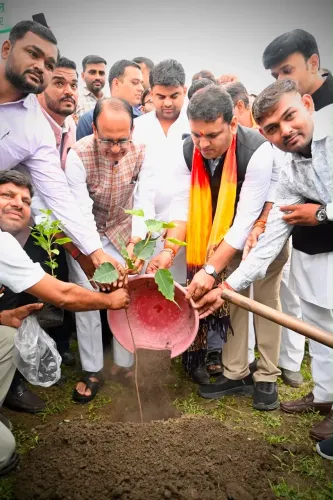
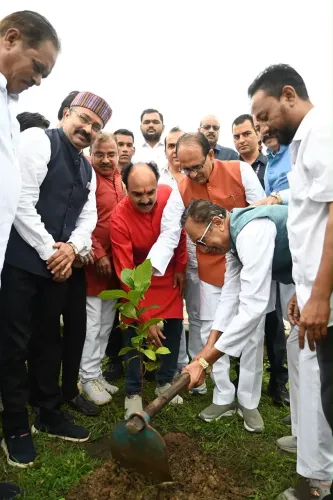
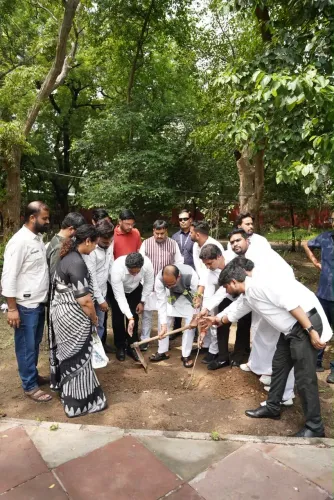
Shivraj plants sapling in Bhopal, invites public to Hariyali Amavasya drive
Synopsis
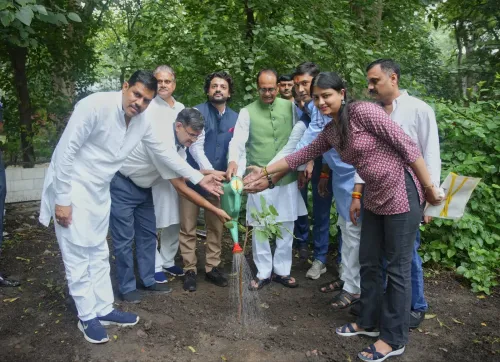
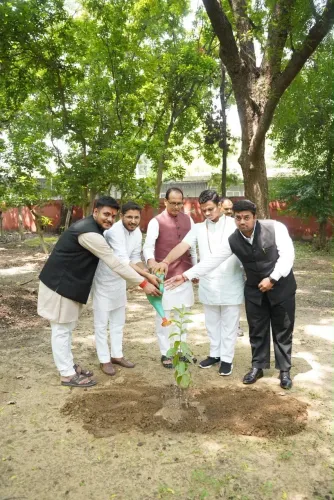
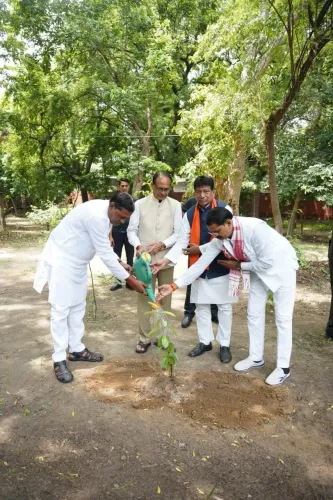
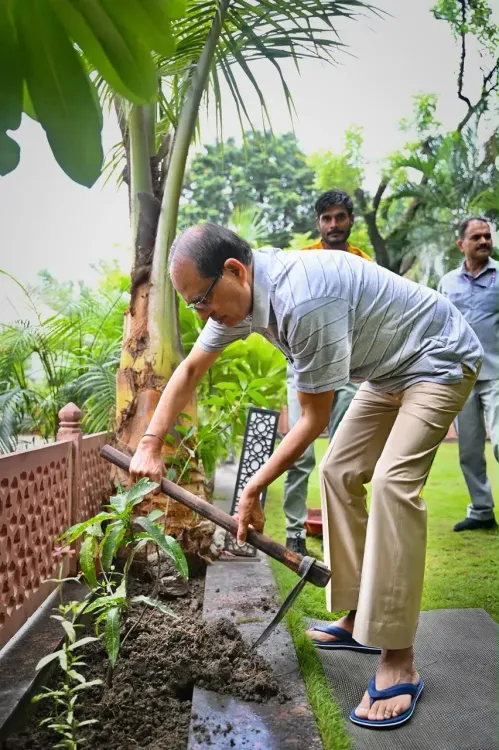
Union Agriculture Minister Shivraj Singh Chouhan planted a sapling in Bhopal on 8 August 2026 as part of his daily #OnePlantADay pledge, and called on citizens to join a mass Hariyali Amavasya tree plantation drive on 12 August by giving a missed call to 8929629475.
Key Takeaways
Union Agriculture Minister Shivraj Singh Chouhan planted a sapling in Bhopal on 8 August 2026 under his daily #OnePlantADay initiative.
He invited citizens to join a large-scale plantation drive on Hariyali Amavasya, 12 August 2026 .
Registration requires only a missed call to 8929629475 , lowering the barrier for mass participation.
Hariyali Amavasya is a traditional festival in Madhya Pradesh observed during the peak monsoon month of Shravan, considered ideal for sapling survival.
India's organised afforestation tradition dates to Van Mahotsav , launched in 1950 , which established the monsoon season as the national tree-planting period.
Chouhan served four terms as Chief Minister of Madhya Pradesh before taking charge at the Union Cabinet, giving him deep roots in the state's environmental outreach programmes.
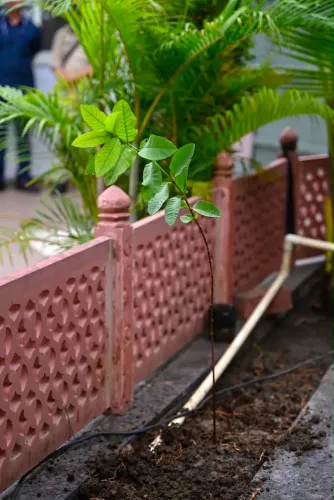
Every day, a sapling. Union Agriculture Minister Shivraj Singh Chouhan turned that personal pledge into a public call on Saturday, 8 August 2026, planting a tree in Bhopal as part of his daily afforestation routine and urging citizens across Madhya Pradesh to join a mass plantation drive on Hariyali Amavasya, 12 August.
Posting under the hashtag #OnePlantADay, Chouhan wrote: 'प्रतिदिन पौधरोपण माँ समान प्रकृति की सेवा का महा संकल्प है' — 'Daily tree planting is a great vow of service to nature, revered as a mother.' He asked citizens to register for the 12 August event by giving a missed call to 8929629475, a low-barrier outreach method widely used for mass-participation campaigns in India.
Hariyali Amavasya: Madhya Pradesh's monsoon green ritual
Hariyali Amavasya is a traditional festival observed in Madhya Pradesh — and across parts of central India — on the new moon day of the Shravan month, when the monsoon is at its peak and conditions are ideal for saplings to take root. State governments have long piggybacked on this cultural moment to mobilise community plantation drives, turning a religious occasion into an environmental one. The festival's timing, coming weeks after the monsoon's onset, is deliberate: survival rates for newly planted saplings are highest when soil moisture is abundant.
India's tradition of organised afforestation campaigns dates to Van Mahotsav, launched in 1950, which established the monsoon months as the national season for tree planting. Madhya Pradesh — a state with significant forest cover — has sustained such drives across successive administrations, and Chouhan, who served four terms as the state's Chief Minister before moving to the Union Cabinet, has long associated himself with environmental outreach in the region.
A missed call, a movement
The registration mechanism — a single missed call to a toll-free number — signals the campaign's intent to reach beyond urban, digitally connected audiences. It is a proven model for Indian public-mobilisation drives, requiring no smartphone app, no data connection, and no literacy in navigating online forms. The scale of participation on 12 August, and whether the planted saplings survive beyond the monsoon season, will be the real measure of the campaign's impact.
As India's green-cover targets grow more ambitious, the distance between a minister's daily sapling and a verifiable national outcome is precisely what campaigns like this must close.
Point of View
Amplified through a public missed-call campaign, is a textbook example of using cultural and religious calendars to drive state-level environmental compliance — a strategy that has characterised BJP governance in Madhya Pradesh for over two decades. By anchoring the 12 August drive to Hariyali Amavasya, the campaign sidesteps the perception of a top-down government mandate and frames participation as civic-spiritual duty. As a Union Minister with a Madhya Pradesh base, Chouhan is also keeping his political identity closely tied to the state even from Delhi. The real policy test, however, is whether these high-visibility drives translate into verifiable, long-term increases in green cover — a metric on which past campaigns have faced scrutiny.
NationPress
23 Sept 2026
Frequently Asked Questions
What is the Hariyali Amavasya plantation drive by Shivraj Singh Chouhan?
Union Agriculture Minister Shivraj Singh Chouhan has announced a large-scale community tree plantation drive on Hariyali Amavasya, 12 August 2026 , in Madhya Pradesh. Citizens can register by giving a missed call to 8929629475 .
What is Hariyali Amavasya?
Hariyali Amavasya is a traditional festival observed on the new moon day of the monsoon month of Shravan, primarily in Madhya Pradesh and central India. It is associated with community tree planting and is considered an auspicious time for afforestation due to peak monsoon soil moisture.
What is the #OnePlantADay campaign?
#OnePlantADay is a personal and public pledge promoted by Shivraj Singh Chouhan to plant at least one sapling every day, framing daily afforestation as a service to nature.
How do I register for the Hariyali Amavasya plantation drive?
To register for the 12 August 2026 Hariyali Amavasya plantation drive, give a missed call to 8929629475 . No smartphone app or internet connection is required.
What is Van Mahotsav and how does it relate to Hariyali Amavasya?
Van Mahotsav is India's annual tree-planting festival, launched in 1950 , which established the monsoon months as the national season for afforestation. Hariyali Amavasya drives in states like Madhya Pradesh build on this tradition by aligning community plantation with a cultural and religious occasion.