Shivraj Singh Chouhan Marks World Environment Day at Bhopal Park

Synopsis
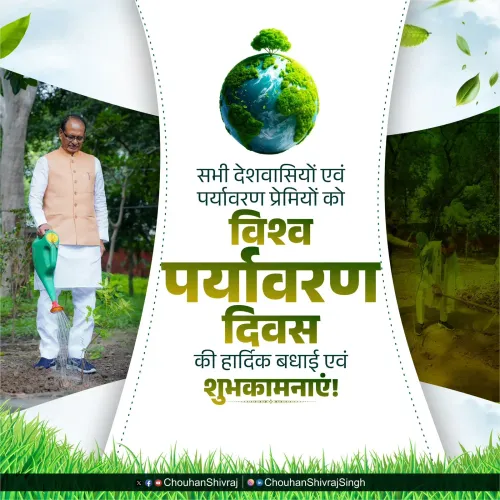
Union Agriculture Minister Shivraj Singh Chouhan visited a banyan tree he planted at Bhopal's Smart City Park on World Environment Day 2026, citing a 2021 pledge made at Amarkantak and urging every Indian to plant a tree on birthdays, anniversaries, and other personal occasions.
Key Takeaways
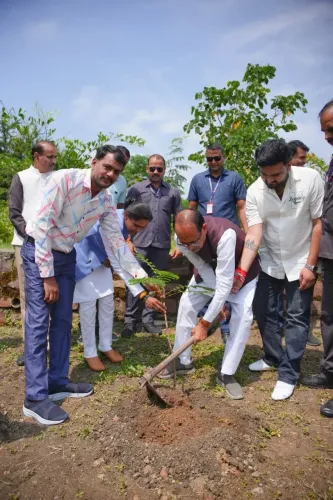
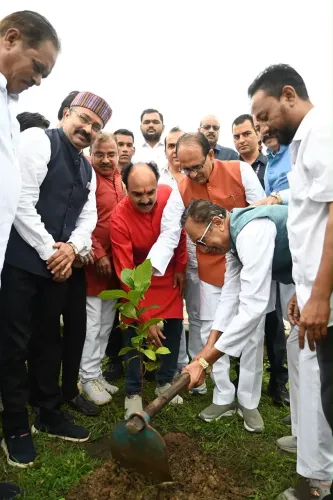
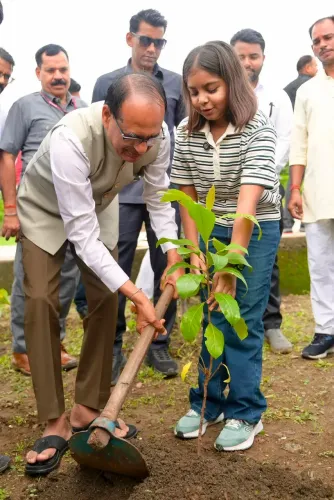
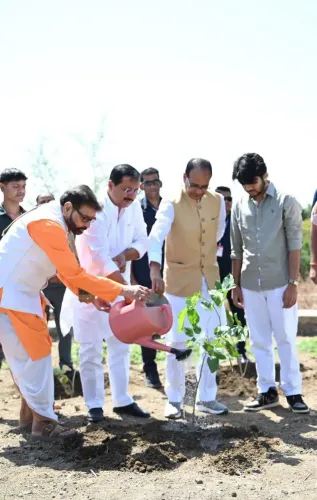
Union Agriculture Minister Shivraj Singh Chouhan visited Bhopal's Smart City Park on 5 June 2026 — World Environment Day — to see a banyan tree he had planted there.
Chouhan had resolved in 2021 at Amarkantak , the source of the Narmada river , to plant trees every day.
He invoked the Sanskrit saying 'das putron ke barabar ek ped' — 'one tree equals ten sons' — to underline the cultural value of trees in Indian tradition.
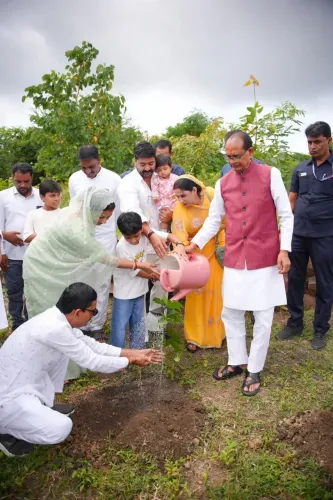
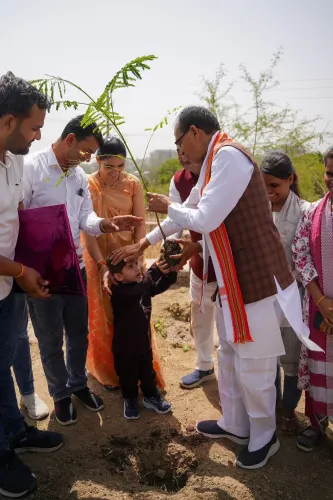
He called on all Indians to plant at least one tree on birthdays , wedding anniversaries , children's birthdays , and in memory of parents.
The appeal aligns with India's afforestation commitments under the Paris Agreement and domestic targets under the National Mission for a Green India .
The Smart City Mission , launched in 2015 , supports green-space development in urban areas including the park referenced by Chouhan.
Union Agriculture Minister Shivraj Singh Chouhan marked World Environment Day on 5 June 2026 by visiting a banyan tree he had planted at Bhopal's Smart City Park, reflecting on a personal pledge to plant trees daily that he made in 2021 at the pilgrimage town of Amarkantak, and calling on all Indians to plant at least one tree on life milestones.
Context
Posting on X, Chouhan described his emotion on seeing the banyan tree he had planted years ago: 'is paudhon se milkar laga ki mujhe khushi mili itni ki dil mein na samaye' ('meeting these trees felt like a joy too great for the heart to hold'). He recalled resolving in 2021 at Amarkantak — the sacred source of the Narmada river in Madhya Pradesh — to plant trees every single day, and said the sight of the now-mature banyan filled him with happiness.
Chouhan invoked a classical Indian saying — 'das putron ke barabar ek ped' ('one tree equals ten sons') — to convey the cultural and ecological weight he attaches to tree planting. He noted that the banyan now shelters birds, insects, and other fauna, describing trees as life-giving, rain-attracting, and soil-conserving forces that protect the planet for future generations.
Policy Backdrop
India's tradition of institutionalised afforestation stretches back to 1950, when Van Mahotsav — the annual tree-plantation festival — was established to encourage mass participation in greening the country. The National Mission for a Green India, approved in 2014 under the National Action Plan on Climate Change, further embedded afforestation within India's climate commitments, including obligations under the Paris Agreement.
During his four terms as Chief Minister of Madhya Pradesh between 2005 and 2020, Chouhan organised repeated large-scale plantation campaigns that frequently exceeded annual targets. The Smart City Mission, launched by the central government in 2015, includes green-space development as a core component of urban infrastructure, making city parks like the one in Bhopal a natural venue for such symbolic plantings.
Stakeholders and Impact
Chouhan's appeal is directed at ordinary citizens, asking them to plant one tree on personal occasions — birthdays, wedding anniversaries, children's birthdays, and in memory of deceased parents. The call links individual ritual to national environmental goals, a model that successive Indian administrations have promoted as a low-cost, high-participation route to expanding forest and green cover.
The emphasis on native species such as the banyan (Ficus benghalensis) aligns with ecological guidance that prioritises trees supporting local biodiversity, soil stability, and groundwater recharge over ornamental or fast-growing exotic species. Urban residents, state forest departments, and local bodies responsible for maintaining city parks are the immediate stakeholders in translating such pledges into measurable canopy gains.
What's Next
State governments and the Ministry of Environment, Forest and Climate Change are expected to release plantation targets for 2026-27 in the weeks following World Environment Day, a period that traditionally sees coordinated drives across schools, panchayats, and urban local bodies. Any new guidelines integrating ceremonial tree planting into civic programmes could give institutional backing to the personal-occasion model Chouhan is advocating. The minister's visible personal commitment — revisiting a tree he planted five years ago — offers a template that other public figures may be encouraged to emulate as India works toward its forest-cover pledges.
Point of View
Drawing on deep cultural resonance — the 'one tree equals ten sons' maxim — to make afforestation feel like a familial duty rather than a policy obligation. By returning to a tree he planted five years ago, he demonstrates continuity and personal accountability, qualities that distinguish the gesture from routine ceremonial pledges. The appeal to plant trees on life-event occasions is consistent with a broader central-government strategy of embedding environmental behaviour into everyday social ritual, reducing dependence on state-led drives. Positioned ahead of the annual plantation season, the post also serves as an advance signal to state administrations and local bodies to mobilise their own green campaigns.
NationPress
20 Oct 2026
Frequently Asked Questions
Why did Shivraj Singh Chouhan visit Bhopal's Smart City Park on 5 June 2026?
Chouhan visited to see a banyan tree he had planted at the park, marking the occasion of World Environment Day 2026 and reflecting on a pledge he made in 2021 at Amarkantak to plant trees daily.
What is the significance of Amarkantak in Shivraj Singh Chouhan's tree-planting pledge?
Amarkantak is a pilgrimage town in Madhya Pradesh at the source of the Narmada river. Chouhan has said he resolved there in 2021 to plant at least one tree every day, making it the symbolic origin of his personal afforestation commitment.
What does 'das putron ke barabar ek ped' mean?
The phrase is a classical Indian saying meaning 'one tree equals ten sons,' used to convey that planting and nurturing a tree carries the same moral and social weight as raising ten children. Chouhan cited it to emphasise the cultural importance of trees.
What is World Environment Day and when is it observed?
World Environment Day is a global observance held every year on 5 June to promote awareness and action on environmental issues. In India it is widely marked by tree-plantation drives organised by government bodies, schools, and civil society.
How can ordinary Indians participate in tree planting as Chouhan suggested?
Chouhan urged people to plant at least one tree on personal occasions such as birthdays, wedding anniversaries, children's birthdays, and in memory of deceased parents, linking individual life events to broader environmental goals.