Racial abuse case: Influencer Amir Shokeen to be taken to Ahmedabad by Tripura Police
Synopsis
Influencer Amir Shokeen, already in Tripura Police custody since 10 November, is set to be taken to Ahmedabad — where the alleged racial abuse of a Tripura tribal youth was filmed — after a court granted transit permission. With charges filed under the SC/ST Atrocities Act and cross-party condemnation from CM Manik Saha to Union Minister Kiren Rijiju, the case has become a flashpoint over anti-North-East racism in India.
Key Takeaways
Amir Shokeen will be taken to Ahmedabad by a Tripura Police team on Wednesday, 19 November 2026 , after court permission was granted.
Shokeen has been in Tripura Police custody since 10 November and was produced before the Additional District and Sessions Judge on three occasions.
He was first arrested by Delhi Police from Karol Bagh on 22 October in a separate case.
The FIR was registered on 22 October under the BNS 2023 , the IT Act 2000 , and the SC/ST (Prevention of Atrocities) Act, 1989 .
The alleged incident was reportedly recorded in Ahmedabad about one-and-a-half months before the video circulated online.
CM Manik Saha , Union Minister Kiren Rijiju , CPI-M , Congress , and Tipra Motha Party all condemned the alleged racial abuse.
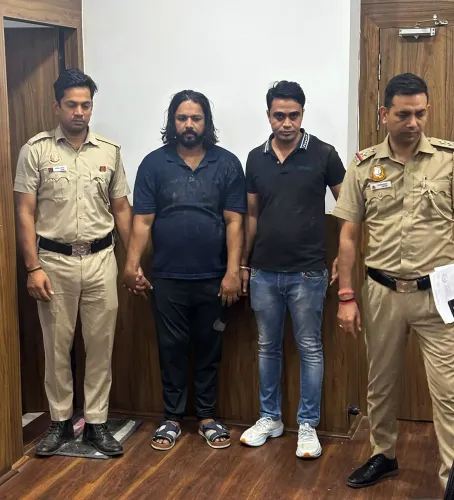
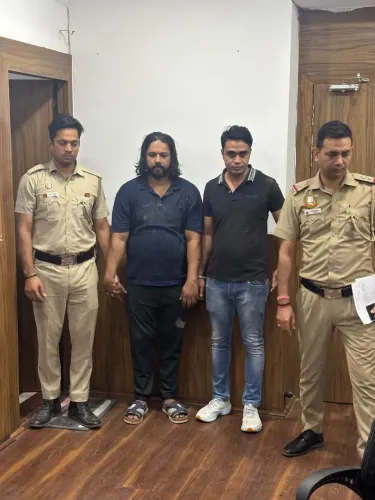
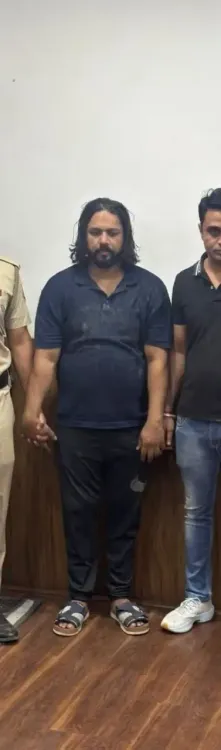
Content creator Amir Shokeen, currently in Tripura Police custody since 10 November, will be transported to Ahmedabad, Gujarat on Wednesday, 19 November 2026, as part of the ongoing investigation into the alleged racial abuse and harassment of a tribal youth from Tripura, officials confirmed on Tuesday. The court-authorised move follows Tripura Police securing transit permission from the Additional District and Sessions Judge of West Tripura district in Agartala.
Court Clears Transfer to Ahmedabad
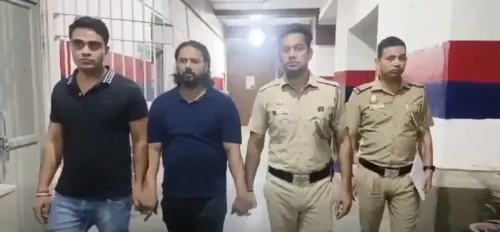
According to officials, the Tripura Police approached the Additional District and Sessions Judge seeking permission to take Shokeen to Gujarat, as the alleged place of occurrence (PoO) of the incident was Ahmedabad. The court granted the request, and a Tripura Police team is set to accompany Shokeen to the city on Wednesday to complete the necessary legal formalities.
'A Tripura Police team will take Shokeen to Ahmedabad on Wednesday as the place of occurrence was in Gujarat. After visiting Ahmedabad and completing the necessary legal formalities, he will be brought back to Agartala,' a police official said.
Timeline of Arrest and Custody
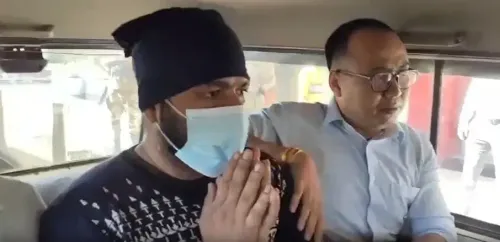
Shokeen was first arrested by the Delhi Police from the Karol Bagh area of New Delhi on 22 October in connection with a separate case. He was produced before the Tis Hazari Court, which remanded him to police custody. A Tripura Police team, led by a Deputy Superintendent of Police (DSP), subsequently brought Shokeen from Delhi to Agartala on 10 November on transit remand in connection with the racial abuse case.
Since arriving in Agartala, Shokeen was produced before the Additional District and Sessions Judge on 10, 13, and 16 November, and was remanded to police custody on each occasion for questioning.
The Case: What the Video Showed
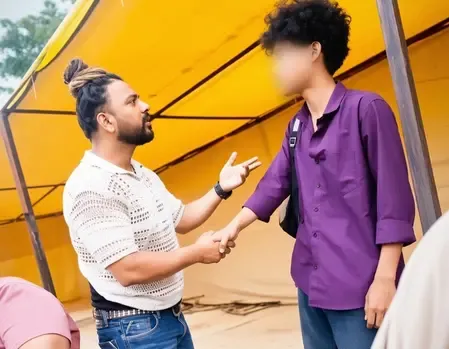
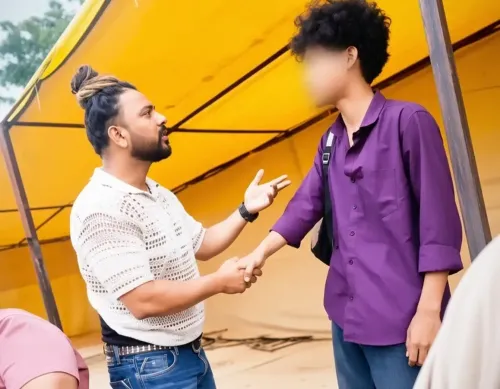
The Tripura Police registered a case on 22 October under relevant sections of the Bharatiya Nyaya Sanhita (BNS), 2023, the Information Technology Act, 2000, and the Scheduled Castes and Scheduled Tribes (Prevention of Atrocities) Act, 1989. The FIR was registered after a video allegedly showing a Tripura tribal youth being subjected to racial slurs and harassment began circulating online.
Tripura Director General of Police (DGP) G.S. Rao had earlier stated that the video came to his notice on 21 October, following which he contacted the Special Commissioner of Police In-charge of the Special Police Unit for the North Eastern Region of Delhi Police. Preliminary information, according to officials, indicated that the video was recorded in Ahmedabad approximately one-and-a-half months before it surfaced online. The identity of the person who uploaded the video was also reportedly established.
Political and Public Condemnation
The video triggered widespread outrage across Tripura and at the national level. Tripura Chief Minister Manik Saha directed the DGP to coordinate with the Delhi Police over the alleged derogatory remarks. Union Minister Kiren Rijiju, who holds the Parliamentary Affairs and Minority Affairs portfolios, also condemned the incident and demanded action against those responsible.
Several political parties — including the Communist Party of India-Marxist (CPI-M), the Indian National Congress, and the Tipra Motha Party (TMP) — joined in condemning the alleged racial abuse. Two CPI-M-affiliated youth organisations and two TMP-affiliated student and youth organisations separately lodged police complaints in Agartala against Shokeen over the video. This is a case that has drawn cross-party consensus — a rare alignment that underscores how deeply the incident resonated in the North-East.
What Happens Next
Following the Ahmedabad visit, Shokeen is expected to be brought back to Agartala for further judicial proceedings. The DGP had earlier stated that the police would 'take action legally, whatever is required, against the people involved in this incident.' Given that charges have been filed under the SC/ST (Prevention of Atrocities) Act — which carries stringent provisions — the case could have significant legal consequences for those found guilty.
Point of View
Who have long reported discrimination that rarely reaches a courtroom. The speed of Tripura Police's response — transit remand, multiple court appearances, and now a cross-state investigation trip — is notable, but it was driven in part by political pressure from the Chief Minister and a Union Minister, raising questions about whether similarly swift action would follow in a lower-profile case. The cross-party condemnation is a signal of how racially charged the incident was perceived to be, yet the deeper systemic issue — the casual dehumanisation of North-Eastern Indians on social media — remains largely unaddressed by platform-level enforcement. The case's outcome, particularly under the SC/ST Act, will set a precedent that law enforcement and content creators alike will watch closely.
NationPress
17 Nov 2026
Frequently Asked Questions
Who is Amir Shokeen and why was he arrested?
Amir Shokeen is a social media content creator and influencer who was arrested in connection with a video allegedly showing him racially abusing and harassing a tribal youth from Tripura. He was first detained by Delhi Police on 22 October in a separate case, and was subsequently taken into Tripura Police custody on 10 November on transit remand related to the racial abuse case.
Why is Tripura Police taking Shokeen to Ahmedabad?
Ahmedabad, Gujarat, is the alleged place of occurrence where the racial abuse was reportedly filmed, approximately one-and-a-half months before the video went viral online. Tripura Police secured permission from the Additional District and Sessions Judge in Agartala to visit Ahmedabad and complete the necessary legal formalities as part of their investigation.
What charges have been filed against Amir Shokeen?
Tripura Police registered a case on 22 October under relevant sections of the Bharatiya Nyaya Sanhita (BNS) 2023, the Information Technology Act 2000, and the Scheduled Castes and Scheduled Tribes (Prevention of Atrocities) Act 1989. The SC/ST Atrocities Act in particular carries stringent provisions, including non-bailable offences.
Who has condemned the alleged racial abuse?
The incident drew cross-party condemnation. Tripura Chief Minister Manik Saha directed the DGP to coordinate with Delhi Police. Union Minister Kiren Rijiju also condemned the incident. The CPI-M, Congress, and Tipra Motha Party issued statements, and multiple youth and student organisations affiliated with CPI-M and TMP filed police complaints in Agartala.
What happens after Shokeen is taken to Ahmedabad?
After visiting Ahmedabad and completing legal formalities, Shokeen is expected to be brought back to Agartala for further judicial proceedings. DGP G.S. Rao has stated that police will take all necessary legal action against everyone involved in the incident.