Gold Medalist Shreya Mundhra Thanks PM Modi for Mann Ki Baat Shoutout
Synopsis
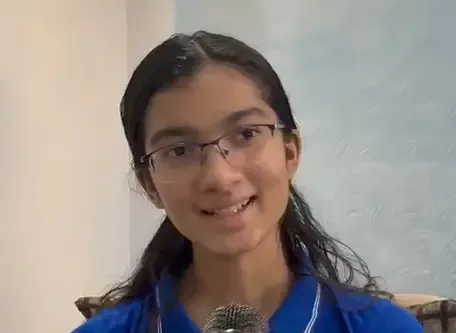
Shreya Mundhra, India's European Girls' Mathematical Olympiad gold medalist, thanked PM Modi after he spotlighted her win on Mann Ki Baat — but also raised a stark warning: residential camp safety concerns are silently keeping India's brightest girls away from the global Olympiad stage.
Key Takeaways
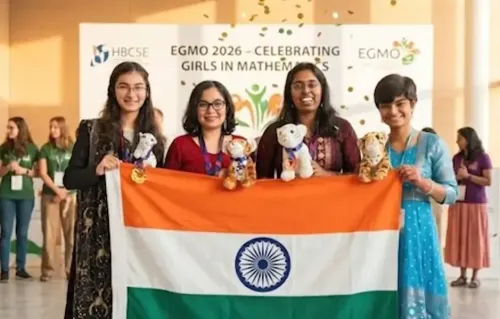
Shreya Mundhra won a gold medal at the European Girls' Mathematical Olympiad (EGMO) , one of the most prestigious international Mathematics competitions for women.
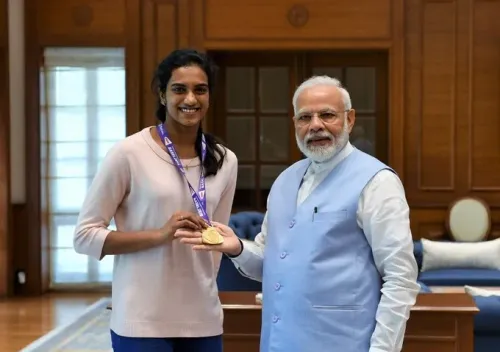
PM Narendra Modi acknowledged her achievement on his monthly Mann Ki Baat radio address in April 2025 , reaching tens of millions of listeners across India.
Mundhra credited Homi Bhabha Centre for Science Education (HBCSE) government-funded training camps as a critical factor in her success.
She raised concerns that safety issues at residential camps remain a key barrier preventing more girls from participating in Olympiad programmes.
Her father Shantanu Mundhra distinguished Olympiad preparation focused on conceptual understanding from rote-based competitive exam study lasting up to 18 hours daily .
The selection process spans multiple rounds including IOQM and RMO , with only a handful of students from each state advancing to the national level.
New Delhi, April 26: Shreya Mundhra, the young Indian student who clinched a gold medal at the European Girls' Mathematical Olympiad (EGMO), expressed heartfelt gratitude on Sunday after Prime Minister Narendra Modi highlighted her remarkable achievement during his monthly radio programme Mann Ki Baat. The recognition from the nation's highest office has sparked fresh conversations about female participation in STEM competitions across India.
PM Modi's Acknowledgement and Its Ripple Effect
Speaking to IANS, Mundhra said that PM Modi had elaborated on the entire process of the competition during his address, something she believes will draw more young students toward Mathematics. She noted that when other students learn about this achievement, they too may develop an interest in the subject.
The gold medallist admitted that neither she nor her family had ever anticipated such a milestone. She said that winning a gold medal was something neither she nor her family had ever imagined possible, reflecting the humble beginnings of her extraordinary journey.
Mann Ki Baat, which reaches tens of millions of listeners across India every month, serves as a powerful platform to spotlight grassroots achievers. PM Modi's mention of Shreya's win is expected to inspire thousands of school-going girls to pursue competitive Mathematics.
The Rigorous Path to an Olympiad Gold Medal
Mundhra broke down the multi-stage selection process that eventually led her to the European Girls' Mathematical Olympiad. The first stage, the Indian Olympiad Qualifier in Mathematics (IOQM), requires candidates to solve 30 questions in three hours, with approximately 250 candidates selected from each state.
The second stage, the Regional Mathematics Olympiad (RMO), narrows the field further — only about 35 students per state advance, tackling six problems in three hours. Each successive round demands deeper conceptual mastery, not rote memorisation.
She credited the structured training ecosystem — including regional-level camps and dedicated mentors — as a crucial pillar of her success. There are a number of training camps and teachers who provide support at every stage, she noted.
HBCSE Training: A National Asset for Young Mathematicians
Mundhra specifically acknowledged the role of the Homi Bhabha Centre for Science Education (HBCSE), a premier institution under the Department of Atomic Energy, Government of India, in shaping her preparation. Her parents were comfortable sending her to the national camp hosted there, given its credibility and established reputation.
She noted that her parents were happy to send her to HBCSE since it is a national camp. HBCSE has long been the backbone of India's Olympiad training infrastructure, nurturing talent across Physics, Chemistry, Biology, Astronomy, and Mathematics.
This comes amid growing calls for expanding government-funded STEM training programmes to Tier-2 and Tier-3 cities, where access to quality coaching remains a significant barrier for talented students.
The Gender Gap in Olympiads: Safety as a Barrier
Despite her triumph, Mundhra did not shy away from highlighting a persistent structural challenge — the low rate of female participation in Mathematics Olympiads in India. She pointed to safety concerns around residential camps as a key deterrent for parents.
She asserted that after the first two rounds, residential camps are conducted, and while she feels fortunate to have participated, making those camps safer would encourage more parents to send their daughters. This candid observation underscores a broader systemic issue: even when girls demonstrate exceptional aptitude, parental safety concerns can cut short their competitive journeys.
Notably, India's gender participation gap in STEM competitions mirrors a global pattern. According to UNESCO data, girls represent fewer than 35% of STEM students in higher education worldwide, a disparity that begins forming at the school competition level.
Father Shantanu Mundhra: Olympiads vs Competitive Exams
Shreya's father, Shantanu Mundhra, described PM Modi's acknowledgement as a proud moment for the entire family. He drew a sharp distinction between Olympiad preparation and conventional competitive exam coaching — a nuance often lost in India's exam-obsessed educational culture.
He explained that preparation for Olympiads focuses on conceptual understanding of the subject, whereas students preparing for competitive exams often study for up to 18 hours a day. He urged parents across the country to give their children the freedom and confidence to pursue subjects aligned with their genuine interests.
Shantanu Mundhra also noted that when the Prime Minister publicly appreciates the daughters of India on such a prominent platform, it sends a powerful signal to parents who might otherwise hesitate to invest in their daughters' academic ambitions. As India prepares its contingent for upcoming international Olympiads, Shreya Mundhra's story is expected to serve as a blueprint — combining institutional support, parental encouragement, and personal determination.
Point of View
Symbolic politics — but Shreya herself has done something far braver by publicly flagging that safety gaps at residential camps are structurally excluding girls from Olympiad pathways. The real test now is whether the government translates this prime-time applause into policy action — upgrading HBCSE camp infrastructure, enforcing safety norms, and funding outreach in states where female Olympiad participation remains near zero. Celebrating daughters on radio while leaving systemic barriers intact would be a missed opportunity of historic proportions.
NationPress
20 Sept 2026
Frequently Asked Questions
Who is Shreya Mundhra and what did she win?
Shreya Mundhra is an Indian student who won a gold medal at the European Girls' Mathematical Olympiad (EGMO). She is among the rare Indian girls to achieve this distinction at a prestigious international Mathematics competition.
What did PM Modi say about Shreya Mundhra in Mann Ki Baat?
PM Narendra Modi acknowledged Shreya Mundhra's gold medal win at the European Girls' Mathematical Olympiad during his monthly Mann Ki Baat address in April 2025. He reportedly explained the competition's process in detail, which Shreya believes will motivate more students to pursue Mathematics.
What is the HBCSE and how did it help Shreya Mundhra?
The Homi Bhabha Centre for Science Education (HBCSE), under the Department of Atomic Energy, provides government-funded Olympiad training to selected students across India. Shreya Mundhra credited HBCSE's national training camps and mentors as vital to her gold medal success.
Why is female participation low in Mathematics Olympiads in India?
Shreya Mundhra highlighted that safety concerns around residential training camps deter many parents from sending their daughters to compete. She argued that improving camp safety could significantly increase the number of girls participating in national and international Olympiads.
What is the selection process for the European Girls' Mathematical Olympiad from India?
Students first clear the IOQM with 30 questions in 3 hours and around 250 selected per state, then the Regional Mathematics Olympiad with 6 questions in 3 hours and around 35 per state, followed by national-level selection and HBCSE training camps before representing India internationally.