PM Modi Praises Historic Gold Medal Win at European Girls' Math Olympiad
Synopsis
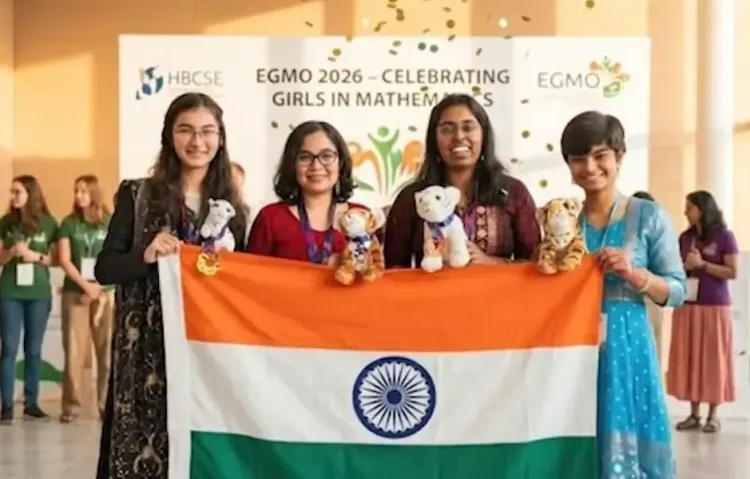
India achieved its best-ever finish at the European Girls' Mathematical Olympiad 2025 in Bordeaux, France — ranking 6th globally. PM Modi celebrated the feat on Mann Ki Baat, lauding Shreya Mundhra's historic Gold Medal and the team's Silver and Bronze wins, calling it a defining moment for India's daughters in competitive mathematics.
Key Takeaways
India ranked 6th globally at the European Girls' Mathematical Olympiad (EGMO) 2025 in Bordeaux, France — the country's best-ever finish.
Shreya Mundhra from Mumbai won the Gold Medal , making history as a pioneering Indian girl medallist at EGMO.
Sanjana Chacko (Thiruvananthapuram) won Silver and Shivani Bharat Kumar (Chennai) won Bronze at the competition.
PM Narendra Modi celebrated the achievement on the 133rd episode of Mann Ki Baat on April 26, 2025 .
India's EGMO team is selected via a national programme in which over 6 lakh students participate annually, with final training held at HBCSE, TIFR .
The result signals India's growing strength in competitive mathematics and STEM education for girls at the international level.
New Delhi, April 26: Prime Minister Narendra Modi on Sunday celebrated a landmark achievement by four Indian schoolgirls at the European Girls' Mathematical Olympiad (EGMO) 2025, held in Bordeaux, France, calling it India's best-ever performance at the prestigious competition. Speaking during the 133rd episode of Mann Ki Baat, his monthly radio address, Modi praised the team's composure under intense pressure and declared himself "very proud" of the young mathematicians.
India's Historic Performance at EGMO 2025
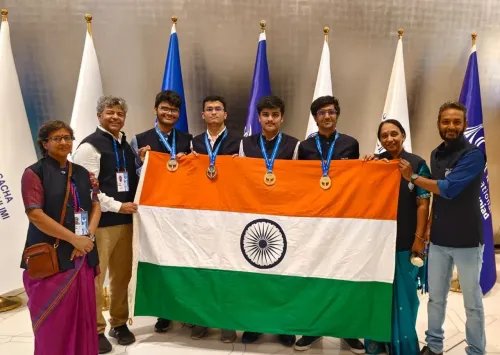
India ranked 6th in the world at this year's European Girls' Mathematical Olympiad — the country's highest-ever placement at the tournament. The four-member team delivered an exceptional collective performance against participants from dozens of nations across Europe and beyond.
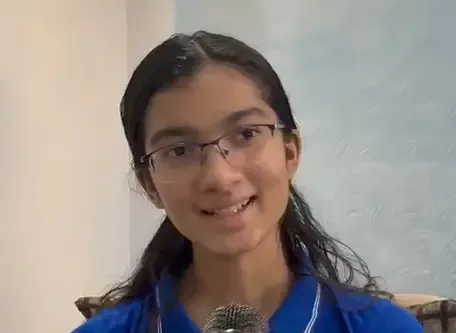
Shreya Mundhra from Mumbai etched her name in history by winning the Gold Medal, becoming a trailblazer for Indian girls in competitive mathematics. Sanjana Chacko from Thiruvananthapuram claimed the Silver Medal, while Shivani Bharat Kumar from Chennai secured the Bronze Medal. Shrimoyee Bera from Kolkata was the fourth member of the celebrated team.
This multi-medal haul marks a significant leap for Indian girls in international STEM competitions and signals the growing depth of mathematical talent being nurtured across the country.
What PM Modi Said on Mann Ki Baat
Addressing the nation, Prime Minister Modi painted a vivid picture of the challenge these students faced. "Just imagine: you are among the most talented people in the world, facing extremely difficult mathematical problems. You have only four and a half hours to solve them," he said, underscoring the immense pressure of the competition.
He described the EGMO as "one of the most prestigious competitions in the world" and specifically called out the team's outstanding result. "Our daughters performed their best ever in this Olympiad. I am very proud of this talented team," he stated.
Modi also extended his appreciation to the parents of the participants. "I appreciate their parents as well for supporting these gifted daughters," he added, acknowledging the crucial role of family encouragement in nurturing competitive academic talent.
The Rigorous Selection Process Behind the Team
The road to representing India at the EGMO is far from simple. PM Modi outlined the multi-stage selection process that filters the very best young mathematical minds from across the country.
Students must clear challenges at the regional, state, and national levels before earning a spot at a one-month Mathematics Training Camp. This intensive residential camp is organised at the Homi Bhabha Centre for Science Education (HBCSE) of the Tata Institute of Fundamental Research (TIFR) — one of India's most respected science institutions.
A final Team Selection Test conducted at the end of the camp determines who makes the cut for the national squad. The process ensures that only the most prepared and resilient students carry India's flag internationally.
Growing Olympiad Culture Among Indian Students
Modi highlighted a broader and encouraging trend — the rapidly growing participation in the Mathematical Olympiad Programme across India. "Every year, around 6 lakh students from across the country participate in this programme. This number is continuously increasing with time," he noted.
This surge in participation reflects a deepening culture of academic competition and STEM engagement among Indian youth, particularly girls. The programme serves as a critical pipeline that channels raw talent into world-class competitive arenas.
Notably, India's growing performance at global Olympiads comes amid increased government and institutional focus on science education and talent identification at the grassroots level. Initiatives like the HBCSE training camps have been instrumental in converting potential into podium finishes on the world stage.
Significance Beyond the Medals
India's 6th-place finish at EGMO 2025 is not just a sporting achievement — it is a statement about the country's intellectual capital. For decades, India has been a powerhouse in engineering and technology at the professional level, but grassroots competitive mathematics has historically been dominated by East Asian and Eastern European nations.
This result, celebrated from the highest office in the country, is likely to inspire thousands of young girls across India to pursue mathematics with greater ambition. With 6 lakh students already participating annually and numbers rising, India's Olympiad ecosystem appears to be on a strong upward trajectory heading into future international competitions.
Point of View
Long underfunded and underreported, is beginning to deliver world-class results. PM Modi's public celebration on Mann Ki Baat is strategically significant: it signals state-level endorsement of girls in competitive science, which carries enormous cultural weight in a country where families still debate whether daughters should pursue such ambitions. However, the deeper question mainstream coverage misses is this — with 6 lakh students competing but only a handful receiving elite training at HBCSE, is India's talent identification system wide enough to catch every Shreya Mundhra who may be studying in a small-town school without access to coaching? The medal is a milestone, but the infrastructure gap between aspiration and access remains the real story.
NationPress
25 Sept 2026
Frequently Asked Questions
What is the European Girls' Mathematical Olympiad (EGMO)?
The European Girls' Mathematical Olympiad (EGMO) is one of the world's most prestigious international mathematics competitions exclusively for schoolgirls. It was established in 2012 and features teams from dozens of countries competing in solving highly complex mathematical problems under timed conditions.
How did India perform at EGMO 2025?
India ranked 6th in the world at EGMO 2025, held in Bordeaux, France — the country's best-ever finish at the competition. Shreya Mundhra won the Gold Medal, Sanjana Chacko won Silver, and Shivani Bharat Kumar won Bronze.
Who are the Indian students who won medals at EGMO 2025?
Shreya Mundhra from Mumbai won the Gold Medal, Sanjana Chacko from Thiruvananthapuram won the Silver Medal, and Shivani Bharat Kumar from Chennai won the Bronze Medal. Shrimoyee Bera from Kolkata was the fourth team member.
How are students selected for India's EGMO team?
India's EGMO team is selected through a rigorous multi-stage process involving regional, state, and national-level competitions. Top performers then attend a one-month Mathematics Training Camp at the Homi Bhabha Centre for Science Education (HBCSE), TIFR, after which a Team Selection Test determines the final squad.
What did PM Modi say about the EGMO 2025 result on Mann Ki Baat?
PM Modi praised the Indian team on the 133rd episode of Mann Ki Baat, calling their performance 'brilliant' and expressing pride in their achievement. He also highlighted the growing Olympiad culture in India, noting that around 6 lakh students participate in the Mathematical Olympiad Programme annually.