MP CM Mohan Yadav funds 3,000+ gaushalas under White Revolution 2.0
Synopsis
Chief Minister Dr. Mohan Yadav transferred grants to over 3,000 Madhya Pradesh gaushalas at a state-level Goverdhan Pooja event, pledging to make the state India's Milk Capital within two years through White Revolution 2.0 and strengthened dairy cooperatives.
Key Takeaways
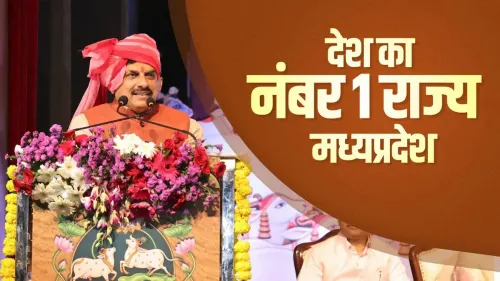
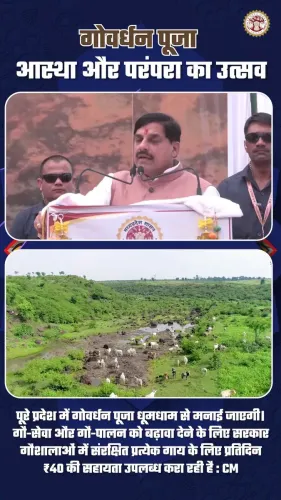
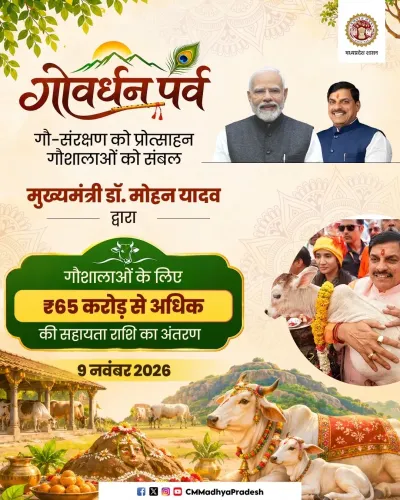
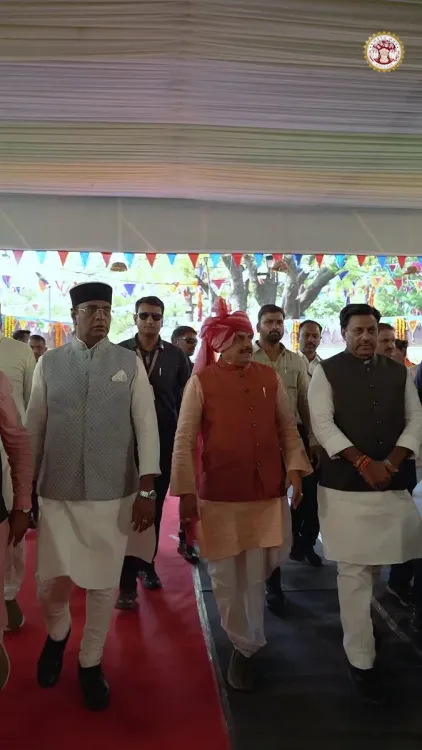
Mohan Yadav transferred grant funds to more than 3,000 gaushalas across Madhya Pradesh at a state-level programme on 9 November 2026 .
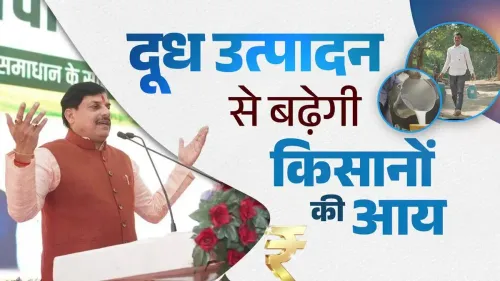
The government's White Revolution 2.0 scheme aims to strengthen dairy cooperatives and boost milk production capacity statewide.
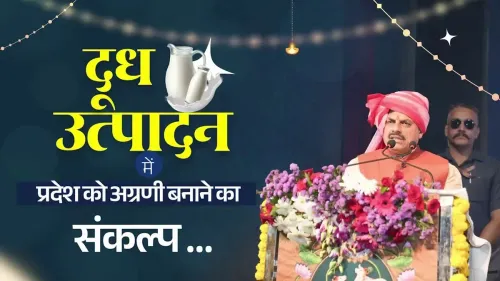
The Chief Minister set a target of making Madhya Pradesh India's Milk Capital within two years .
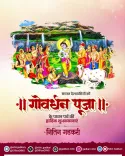
The announcement was made on Goverdhan Pooja , a festival traditionally linked to reverence for cattle, amplifying its reach among farming communities.
India's dairy cooperative model traces its origins to Operation Flood (1970) , which made the country the world's largest milk producer — the benchmark MP now seeks to lead.
Progress will hinge on state budget allocations, new milk processing plants, and cooperative registrations over the next two years.
On Goverdhan Pooja, Madhya Pradesh Chief Minister Dr. Mohan Yadav did not just offer prayers — he transferred grant funds to more than 3,000 gaushalas across the state and declared a two-year deadline to make Madhya Pradesh India's Milk Capital. The announcement, made at a state-level programme on Monday, 9 November 2026, anchors the government's White Revolution 2.0 initiative squarely in both economic ambition and cultural symbolism.
What White Revolution 2.0 is actually asking of MP
The Chief Minister was unambiguous in his framing: 'Pradesh mein Shwet Kranti 2.0 ke madhyam se dairy sahkarita ko majboot kiya ja raha hai' — 'Dairy cooperatives in the state are being strengthened through White Revolution 2.0.' The goal, he said, is to position Madhya Pradesh as the country's milk capital within the next two years. That is a sharp, measurable target in a country that is already the world's largest milk producer — a position secured by the original Operation Flood, launched by the National Dairy Development Board in 1970, which built India's cooperative dairy backbone from scratch.
The original White Revolution transformed rural India over decades. Version 2.0, as framed by Dr. Yadav's government, compresses that ambition into a two-year sprint — with gaushala grants as one of its foundational instruments. Strengthening cow shelters ties animal welfare directly to milk productivity: healthier, better-managed cattle mean higher per-animal output, which is precisely the lever states need to compete in an already saturated national dairy market.
Gaushalas as economic infrastructure, not just cultural sites
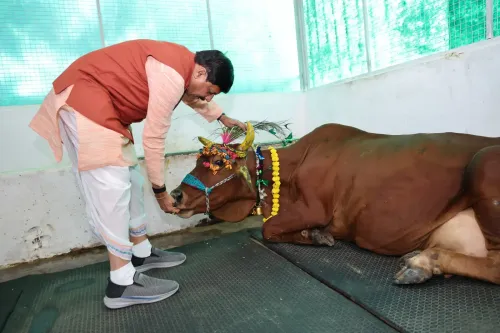
The transfer of grants to over 3,000 gaushalas in a single state-level event is a significant operational move. Gaushalas — traditionally viewed through a religious lens — are being repositioned here as nodes in a productive dairy network. Madhya Pradesh carries one of India's largest livestock populations, and integrating these shelters into the cooperative supply chain could meaningfully expand the state's raw milk base.
The timing on Goverdhan Pooja — a festival intrinsically linked to the reverence of cattle — is not incidental. Several Indian states have learned that sectoral announcements gain traction when they align with cultural moments that speak directly to farming communities. The optics reinforce the policy message for the state's dairy farmers and gaushala operators, who form the bedrock of any cooperative expansion.
The road MP must run to claim 'Milk Capital' status
Competing for a national dairy leadership title means going up against Uttar Pradesh, Rajasthan, and Gujarat — states with decades-long head starts in cooperative infrastructure, chilling networks, and processing capacity. Dr. Yadav's two-year clock means state budget allocations, new milk processing plant announcements, and cooperative registration numbers will all face intense scrutiny. The grant disbursement today is the opening move; the game is played in procurement centres, cold-chain corridors, and cooperative boardrooms.
India's dairy economy touches the livelihoods of millions of smallholder farmers. If Madhya Pradesh can build the infrastructure to match its ambition, the gains — in rural income, women's economic participation through cooperative membership, and reduced agrarian distress — could be substantial. The two-year deadline is bold. What comes next will determine whether it is visionary or merely rhetorical.
Point of View
Cooperative expansion, and rural income goals into a single political narrative. The two-year 'Milk Capital' deadline borrows the urgency of corporate roadmaps and applies it to agricultural policy, a framing that raises accountability but also risk. Nationally, it fits into a broader pattern of BJP-governed states using dairy cooperatives as a rural-economy centrepiece, echoing Gujarat's Amul model but competing directly with UP and Rajasthan for dominance. The Goverdhan Pooja backdrop is shrewd politics: it fuses developmental messaging with cultural capital among the very farming communities whose participation determines whether the scheme succeeds or stalls.
NationPress
10 Nov 2026
Frequently Asked Questions
What is White Revolution 2.0 in Madhya Pradesh?
White Revolution 2.0 is a Madhya Pradesh government initiative to strengthen dairy cooperatives, increase milk production, and position the state as India's leading milk producer within two years, building on the original Operation Flood model from 1970.
What did CM Mohan Yadav announce on Goverdhan Pooja 2026?
CM Dr. Mohan Yadav transferred grant funds to more than 3,000 gaushalas across Madhya Pradesh at a state-level programme on 9 November 2026, and declared a two-year target to make Madhya Pradesh the Milk Capital of India.
What is a gaushala and why is the MP government funding them?
Gaushalas are cow shelters, traditionally religious in purpose; the Madhya Pradesh government is funding them to improve cattle health and productivity, integrating them into the state's dairy cooperative supply chain under White Revolution 2.0.
Can Madhya Pradesh become India's Milk Capital?
MP faces strong competition from Uttar Pradesh, Rajasthan, and Gujarat, which have established cooperative infrastructure and processing capacity; the state's ability to meet its two-year target will depend on new investments in cold-chain networks, processing plants, and cooperative expansion.
How does Operation Flood connect to White Revolution 2.0?
Operation Flood, launched in 1970 by the National Dairy Development Board, created India's cooperative dairy model and made the country the world's largest milk producer; White Revolution 2.0 builds on that framework, with Madhya Pradesh seeking to lead the next phase of dairy growth.