CM Siddaramaiah marks 3 years, highlights weaver welfare
Synopsis
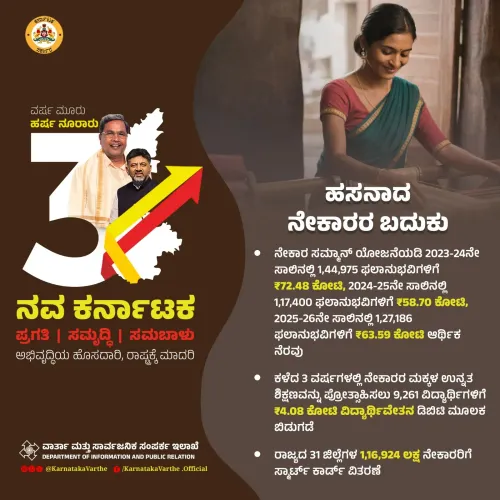
Karnataka Chief Minister Siddaramaiah marked three years in office on 23 May 2026, highlighting ₹194.77 crore disbursed to over 3.89 lakh weavers under Nekara Samman Yojane and smart cards issued to 1,16,924 weavers across 31 districts.
Key Takeaways
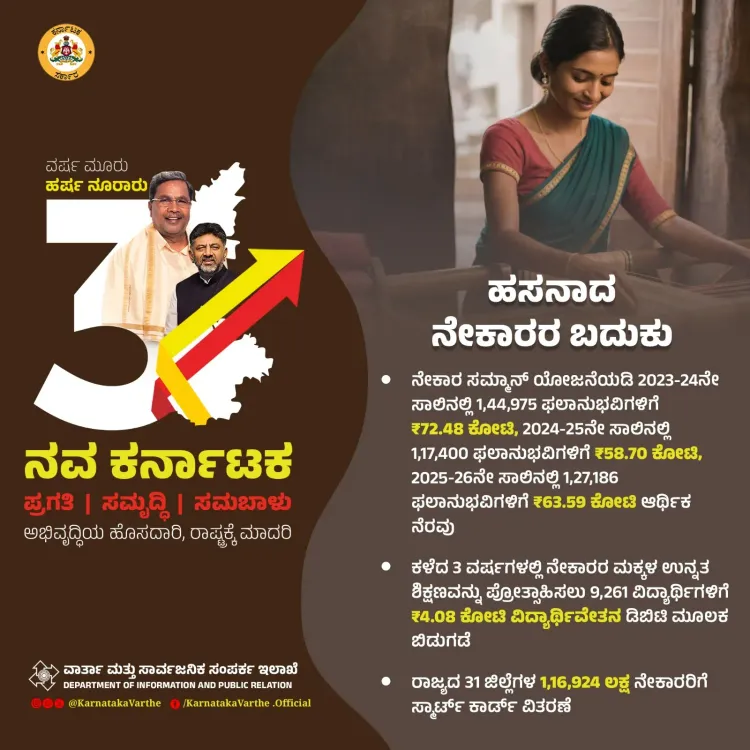
₹72.48 crore was disbursed to 1,44,975 beneficiaries under Nekara Samman Yojane in 2023-24 . ₹58.70 crore reached 1,17,400 beneficiaries in 2024-25 , and ₹63.59 crore to 1,27,186 beneficiaries in 2025-26 .
9,261 students from weavers' families received ₹4.08 crore in higher-education scholarships via Direct Benefit Transfer over three years.
1,16,924 weavers across 31 districts of Karnataka have been issued smart cards for easier access to government benefits.
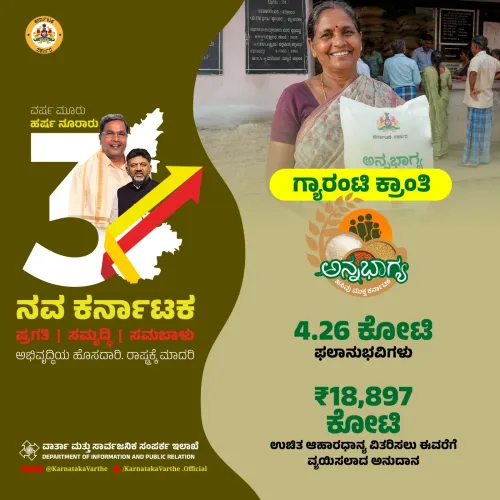
CM Siddaramaiah dedicated all government achievements to 'every Kannadiga' and pledged faster progress under the Nava Karnataka vision.
Karnataka Chief Minister Siddaramaiah on Saturday, 23 May 2026 marked three years of his Congress government in office, crediting every Kannadiga for the administration's achievements and detailing financial aid disbursed to handloom weavers under the Nekara Samman Yojane.
Context
Posting in Kannada, Siddaramaiah said, 'ರಾಜ್ಯದ ಜನರ ಆಶೀರ್ವಾದದೊಂದಿಗೆ ನಾವು ಅಧಿಕಾರಕ್ಕೆ ಬಂದು ಮೂರು ವರ್ಷಗಳು ಪೂರೈಸಿರುವ ಈ ಸಾರ್ಥಕ ಸಂದರ್ಭದಲ್ಲಿ' — 'On this meaningful occasion of completing three years in power with the blessings of the people of the state.' He dedicated all of the government's achievements to the people of Karnataka.
The Chief Minister also affirmed that his government had honoured every pre-election promise, stating it had 'walked the talk' and pledged to accelerate the work of building a 'strong, prosperous, and self-respecting Karnataka' — framed under the Nava Karnataka vision.
Policy Backdrop
The Nekara Samman Yojane is a state welfare scheme providing direct financial assistance and educational scholarships to handloom weavers and their families. In 2023-24, 1,44,975 beneficiaries received ₹72.48 crore; in 2024-25, 1,17,400 beneficiaries received ₹58.70 crore; and in 2025-26, 1,27,186 beneficiaries received ₹63.59 crore.
Over the same three-year period, 9,261 students from weavers' families received ₹4.08 crore in scholarships for higher education, disbursed through Direct Benefit Transfer (DBT). Additionally, 1,16,924 weavers across 31 districts of Karnataka were issued smart cards to ease access to government benefits.
Support for handloom weavers was a prominent commitment in the Indian National Congress party's 2023 Karnataka assembly election manifesto. Siddaramaiah, who also served as Chief Minister from 2013 to 2018, has a record of directing scheme-based assistance toward backward-class artisans and traditional occupation groups.
Stakeholders and Impact
The primary beneficiaries are Karnataka's handloom weaving community — a group facing sustained pressure from mechanised textile production and shifting consumer markets. The combination of direct cash transfers, educational scholarships, and smart-card enrolment is designed to address both immediate income stress and longer-term upward mobility for weavers' children.
Across 31 districts, the smart-card rollout aims to reduce leakage and improve last-mile delivery of entitlements. The DBT mechanism for scholarships ensures funds reach student beneficiaries directly, bypassing intermediaries.
What's Next
With the three-year milestone now marked publicly, attention will turn to the 2026-27 budget cycle and whether disbursement targets under Nekara Samman Yojane are expanded. The Siddaramaiah government's broader Nava Karnataka agenda also raises the question of whether similar direct-benefit models will be extended to other artisan groups facing comparable economic pressures. How the government sustains and scales these commitments will be a key measure of its delivery record heading into the next electoral cycle.
Point of View
The government signals administrative discipline to a constituency that has historically been underserved. This sits within a wider Congress playbook in Karnataka of using sector-specific welfare delivery as political capital, a strategy Siddaramaiah refined during his 2013-18 tenure. With the next assembly election still years away, the timing of this stocktaking suggests the government is also laying groundwork for expanding the model to other artisan groups before the next budget cycle.
NationPress
7 Oct 2026
Frequently Asked Questions
What is Nekara Samman Yojane in Karnataka?
Nekara Samman Yojane is a Karnataka government welfare scheme that provides direct financial assistance to handloom weavers and scholarships for higher education to their children, with funds disbursed through Direct Benefit Transfer.
How much money has Karnataka given to weavers in 3 years?
The Karnataka government disbursed a combined total of approximately ₹194.77 crore to weavers over three financial years — ₹72.48 crore in 2023-24, ₹58.70 crore in 2024-25, and ₹63.59 crore in 2025-26 — under Nekara Samman Yojane.
How many weavers got smart cards in Karnataka?
1,16,924 weavers across 31 districts of Karnataka have been issued smart cards by the Siddaramaiah government to improve access to state welfare benefits.
What is Nava Karnataka?
Nava Karnataka is the overarching development vision of the Karnataka Congress government under Chief Minister Siddaramaiah, focused on fulfilling pre-election promises through targeted welfare delivery to marginalised and traditional occupation groups.
When did Siddaramaiah become Chief Minister of Karnataka?
Siddaramaiah became Chief Minister of Karnataka in May 2023 after the Indian National Congress won the state assembly elections. He had previously served as Chief Minister from 2013 to 2018 .