CM Siddaramaiah Pays Floral Tribute to Devaraj Urs at Vidhana Soudha
Synopsis
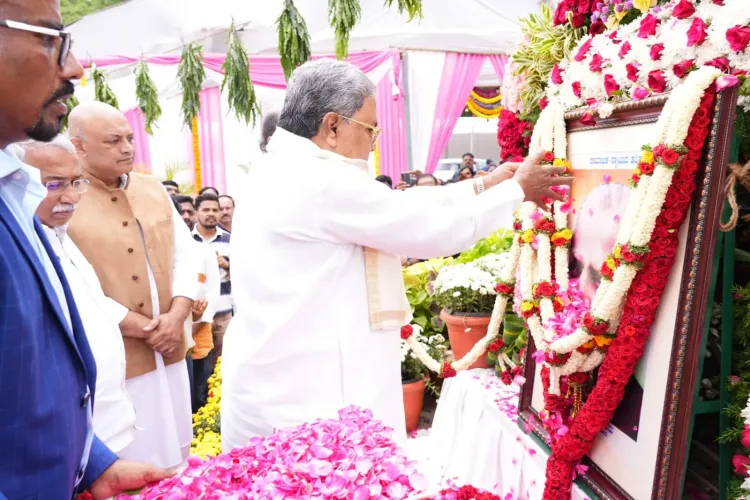
Karnataka Chief Minister Siddaramaiah paid floral tributes to former CM D. Devaraj Urs at Vidhana Soudha on his death anniversary, honouring the architect of the 1974 land reforms and affirmative action policies that reshaped Karnataka's social and political landscape.
Key Takeaways
CM Siddaramaiah paid floral tributes to D.
Devaraj Urs at Vidhana Soudha on 6 June 2026 , the former CM's death anniversary.
Devaraj Urs served as Karnataka Chief Minister from 1972 to 1977 and 1978 to 1980 , championing rights of backward classes and Dalits.
The Karnataka Land Reforms Act of 1974 under Urs conferred occupancy rights on tenant farmers and redistributed land to landless families.
Siddaramaiah called Urs 'immortal in the hearts of Kannadigas' and saluted him as the 'harbinger of transformation.' The tribute continues the Karnataka Congress tradition of linking current welfare governance to the social-justice legacy of the Urs era.
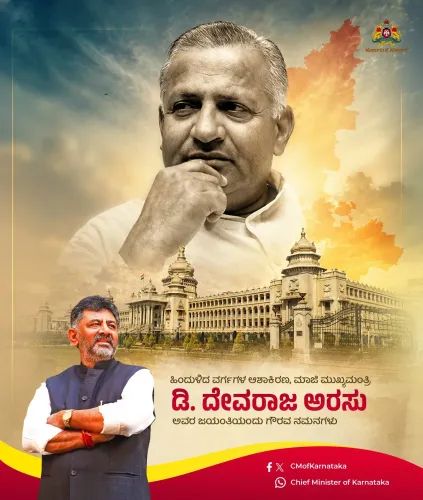
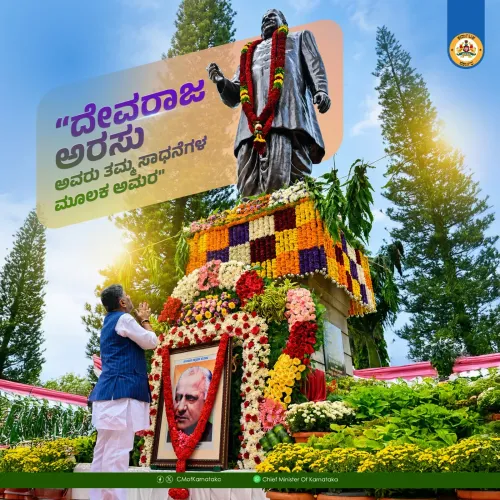
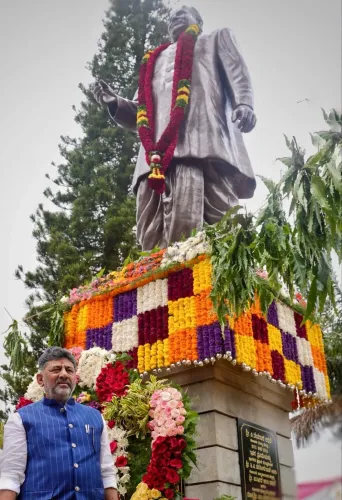
Karnataka Chief Minister Siddaramaiah paid floral tributes to former Chief Minister D. Devaraj Urs at the statue installed in the premises of Vidhana Soudha, Bengaluru, on Saturday, 6 June 2026, marking the death anniversary of the iconic social-justice leader.
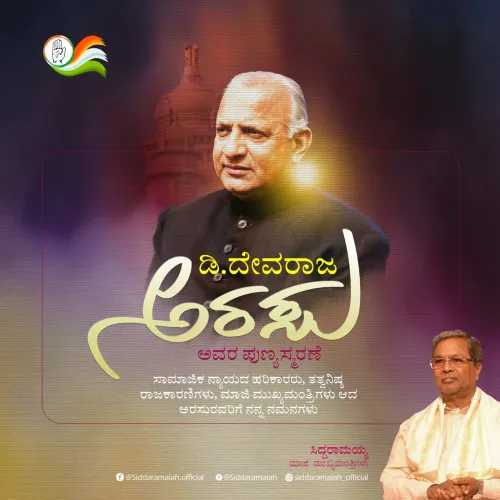
Posting on X in Kannada, the Chief Minister wrote: 'ಪರಿವರ್ತನೆಯ ಹರಿಕಾರನಿಗೆ ನನ್ನ ಅನಂತ ನಮನಗಳು' ['My infinite salutations to the harbinger of transformation']. He recalled that Urs's service and contributions towards the empowerment of exploited and weaker sections of society throughout his tenure have made him 'immortal in the hearts of Kannadigas.'
Context
D. Devaraj Urs served as Chief Minister of Karnataka from 1972 to 1977 and again from 1978 to 1980. He is widely regarded as one of the most transformative chief ministers in the state's history, credited with dismantling entrenched caste hierarchies and extending political representation to backward classes and Dalits who had long remained on the margins of public life.
His death anniversary is observed annually across Karnataka, with political leaders and civil society organisations holding commemorative events to honour his legacy.
Policy Backdrop
The centrepiece of the Urs era was the Karnataka Land Reforms Act of 1974, which conferred occupancy rights on tenant farmers and imposed ceilings on landholdings, redistributing agricultural land to lakhs of landless and economically weaker families. The legislation remains one of the most cited examples of state-level agrarian reform in independent India.
Beyond land reforms, Urs institutionalised reservation benefits for Other Backward Classes (OBCs) and introduced welfare measures that reshaped the social composition of Karnataka's bureaucracy and electoral politics for decades to come.
Stakeholders and Impact
The Urs legacy is particularly resonant for backward classes, Dalit communities, and landless farming families across Karnataka, who trace the origin of their social and economic mobility to policies enacted during his tenure. Civil society groups working on agrarian rights and social equity regularly invoke his name in advocacy campaigns.
For the current Congress administration under Siddaramaiah, the tribute carries political weight: the Chief Minister has consistently framed his government's welfare programmes — including the Gruha Lakshmi, Shakti, and Anna Bhagya schemes — as a continuation of the social-justice template Urs established in the 1970s.
What's Next
State-level commemorations of Urs-era reforms are expected to continue through the week, with district administrations and Congress units likely to hold seminars and community events. Political observers will watch whether the Siddaramaiah government uses the occasion to announce or amplify welfare measures targeting backward classes ahead of the next assembly session.
The tribute reinforces the Congress government's effort to anchor its identity in Karnataka's distinctive social-justice tradition — a narrative the party hopes will sustain its electoral coalition among OBC, Dalit, and minority voters.
Point of View
Lending them historical legitimacy. With assembly sessions approaching, such commemorations also serve to consolidate the OBC and Dalit vote blocs that remain the bedrock of the Karnataka Congress coalition.
NationPress
21 Oct 2026
Frequently Asked Questions
Who was D. Devaraj Urs and why is he remembered?
D. Devaraj Urs was Chief Minister of Karnataka from 1972 to 1977 and 1978 to 1980. He is remembered for the 1974 Karnataka Land Reforms Act and for extending political and economic rights to backward classes and Dalits, fundamentally reshaping the state's social landscape.
Why did CM Siddaramaiah pay tribute to Devaraj Urs today?
CM Siddaramaiah paid tribute on 6 June 2026 to mark the death anniversary of D. Devaraj Urs, offering floral homage at the former CM's statue in the Vidhana Soudha premises in Bengaluru.
What is the Karnataka Land Reforms Act of 1974?
The Karnataka Land Reforms Act of 1974, enacted under Chief Minister Devaraj Urs, conferred occupancy rights on tenant farmers and imposed ceilings on landholdings, redistributing agricultural land to landless and economically weaker sections of society.
Where is the statue of Devaraj Urs located?
The statue of D. Devaraj Urs is located in the premises of Vidhana Soudha, the seat of the Karnataka Legislature in Bengaluru.
How does Siddaramaiah connect his governance to Devaraj Urs's legacy?
Siddaramaiah has consistently framed his government's welfare schemes as a continuation of the social-justice policies Devaraj Urs pioneered in the 1970s, positioning the Congress administration as the inheritor of Karnataka's backward-class empowerment tradition.