Siddaramaiah resigns as Karnataka CM; CLP, high command to pick successor
Synopsis
Siddaramaiah walked out of Karnataka's top job on his own terms — rejecting a Rajya Sabha exit and insisting on staying in state politics. With the CLP yet to meet and Shivakumar conspicuously silent on his own ambitions, the succession battle is wide open and the Congress high command holds all the cards.
Key Takeaways
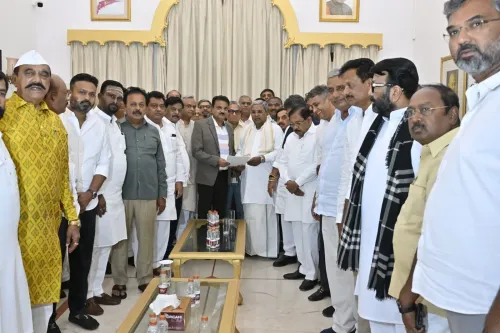
Siddaramaiah submitted his resignation as Karnataka Chief Minister to the Governor's Secretary on 28 May .
He declared the resignation voluntary and said the Congress Legislature Party (CLP) meeting and party high command will choose the next CM.
Siddaramaiah declined a Rajya Sabha offer from the Congress high command, stating he wishes to remain in Karnataka politics .
Shivakumar refused to comment on whether he would be the next Chief Minister.
The outgoing CM defended his government's record: ₹1.40 lakh crore spent on five guarantees, GSDP growth at 8.1% , and fiscal deficit at 2.95% — within permissible limits.
He attributed a ₹19,000 crore revenue deficit to the previous BJP government and alleged non-release of central funds.
Karnataka Chief Minister Siddaramaiah submitted his resignation to the Governor's Secretary on Thursday, 28 May, declaring it entirely voluntary and stating that the Congress Legislature Party (CLP) meeting and the party high command would determine who leads the state next. The development marks a significant political transition in Karnataka, with the successor yet to be named.
Resignation Voluntary, Not Forced
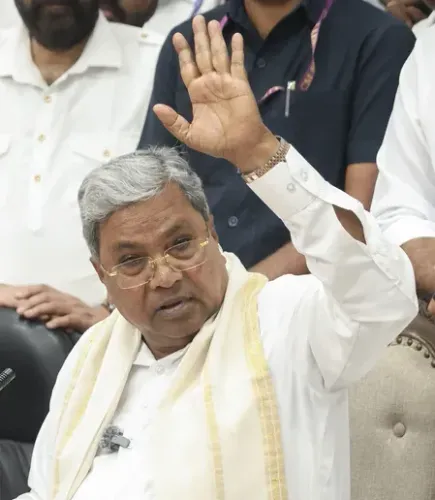
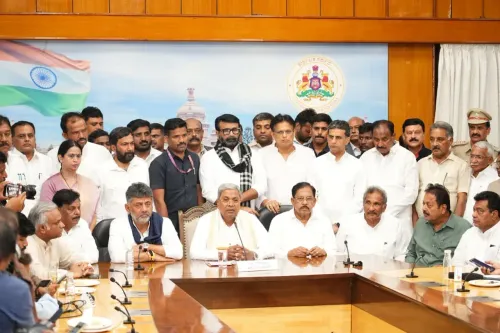
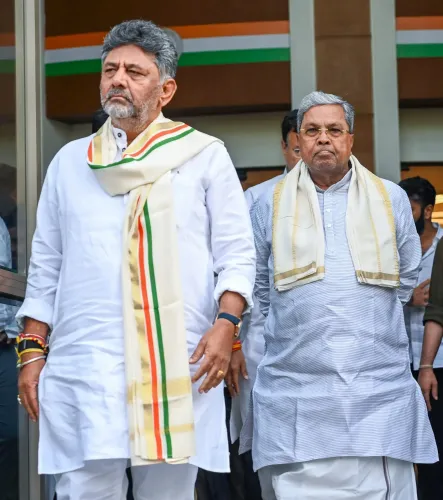
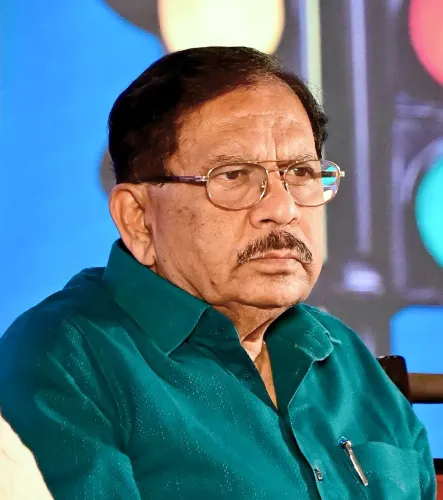
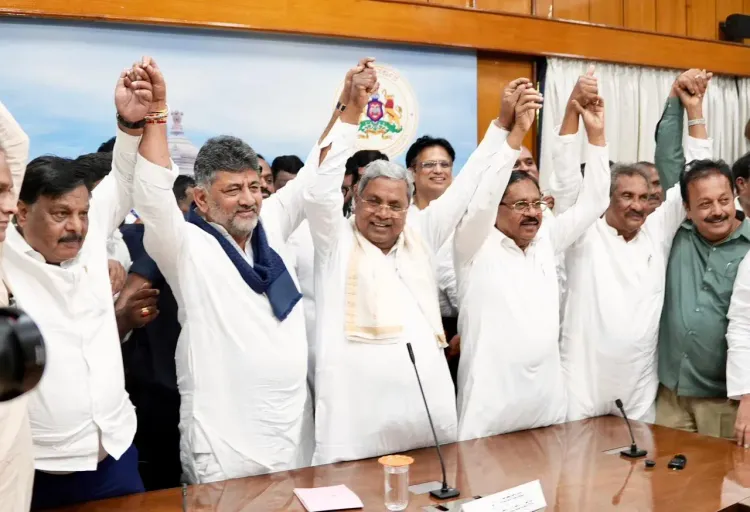
Addressing a press conference in Bengaluru alongside Deputy Chief Minister D.K. Shivakumar — who is also the Karnataka Congress President — and Home Minister G. Parameshwara, Siddaramaiah was unambiguous about the nature of his exit.
'The high command did not force me to resign. I voluntarily submitted my resignation. Whoever is elected in the Congress Legislature Party meeting and approved by the high command will become the next Chief Minister,' he said.
Notably, Siddaramaiah made his remarks while smiling and looking towards Shivakumar, who appeared equally at ease — a visual that political observers are likely to read carefully given the long-standing succession debate between the two leaders.
Rajya Sabha Offer Declined
Siddaramaiah revealed that during his discussions with the Congress high command in Delhi, he was offered a role in national politics, which he declined.
'The high command asked me to go to the Rajya Sabha. I humbly declined the offer. I told them that I have no interest in national politics and that I want to continue in Karnataka politics. The people have elected me for five years and two years of my term are still remaining. Until then, I will continue to serve the people of the state,' he stated.
The refusal signals that Siddaramaiah intends to remain a significant force in Karnataka's political landscape even after vacating the top post.
What Shivakumar Said — and Did Not Say
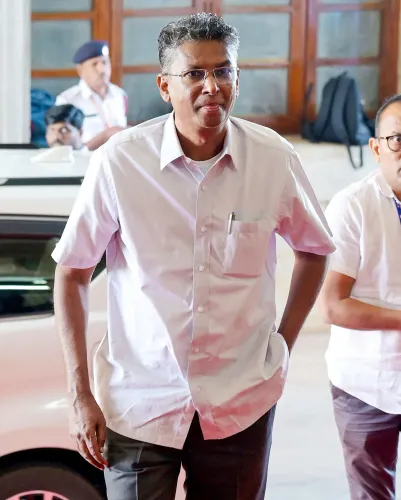
When journalists pressed Deputy CM Shivakumar on whether he would be the next Chief Minister, he declined to comment, instead joining both hands and saluting the media. The gesture was widely interpreted as a studied non-answer, keeping speculation alive ahead of the CLP meeting.
Siddaramaiah's Record: Guarantees, Growth, and Grievances
The outgoing Chief Minister used the press conference to mount a defence of his government's economic stewardship. He cited Karnataka's GSDP growth of 8.1 per cent for 2026-27, above the national GDP projection of 7.4 per cent, and claimed the state ranks first in per capita income and second in GST collections nationally.
On the state's five guarantee schemes, Siddaramaiah said the government had spent nearly ₹1.40 lakh crore fulfilling all five commitments. 'There was propaganda against me by the Opposition, including by none other than the Prime Minister of this country. They claimed the guarantees could not be implemented and that the treasury would go bankrupt,' he alleged.
He defended the state's fiscal position, noting Karnataka's fiscal deficit at 2.95 per cent — within the 3 per cent limit prescribed under the Fiscal Responsibility Act — and state debt at 24.94 per cent of GSDP, below the permissible 25 per cent ceiling.
However, Siddaramaiah acknowledged a revenue deficit of approximately ₹19,000 crore for the current year, attributing it to what he described as economic damage caused by the previous Bharatiya Janata Party (BJP) government and the non-release of central funds. He claimed the 15th Finance Commission withheld ₹5,495 crore due to Karnataka, and that promised central allocations for the Upper Bhadra project (₹5,300 crore), Jal Jeevan Mission (over ₹10,000 crore), and MGNREGA had not materialised.
A Political Life 'An Open Book'
Reflecting on nearly 50 years in politics, Siddaramaiah said he had never pursued wealth or property. 'I come from a rural background. I never thought I would become a legislator, minister, Chief Minister or Leader of the Opposition. I entered politics accidentally because nobody in my family was involved in politics,' he said.
He cited the ideologies of Buddha, Basavanna, Dr. B.R. Ambedkar, and Mahatma Gandhi as his guiding principles, and stressed a commitment to social equality and equitable distribution of resources.
With the CLP meeting yet to be convened, Karnataka now enters a period of political uncertainty — and the Congress high command's next move will set the tone for the state's governance in the two years remaining of the current term.
Point of View
Rajya Sabha refusal, cheerful press conference with a smiling Shivakumar — is as much a political statement as an administrative act. By insisting he was not pushed out and by staying in Karnataka, he retains leverage over the succession process and keeps the high command from fully controlling the narrative. The real question is whether the Congress can manage the Siddaramaiah-Shivakumar rivalry without fracturing a coalition that still has two years to govern. The party's track record on Karnataka successions — 2018 being the most instructive — suggests the high command will delay as long as possible before being forced to decide.
NationPress
20 Oct 2026
Frequently Asked Questions
Why did Siddaramaiah resign as Karnataka Chief Minister?
Siddaramaiah submitted his resignation on 28 May as part of a Congress leadership transition, stating it was entirely voluntary and not forced by the party high command. He said the CLP meeting and the Congress high command would decide the next Chief Minister.
Who will be the next Chief Minister of Karnataka?
The next Karnataka Chief Minister will be determined by the Congress Legislature Party (CLP) meeting and ratified by the party high command. Deputy CM D.K. Shivakumar is widely seen as a frontrunner but declined to comment on the question directly.
Did Siddaramaiah accept the Rajya Sabha offer from the Congress high command?
No. Siddaramaiah said the high command offered him a Rajya Sabha seat but he declined, stating he has no interest in national politics and wishes to continue serving in Karnataka for the two years remaining in the current term.
What is Siddaramaiah's defence of his government's economic record?
Siddaramaiah cited Karnataka's GSDP growth of 8.1% (above the national 7.4%), the state's first-place ranking in per capita income, second place in GST collections, and a fiscal deficit of 2.95% — within the 3% statutory limit. He said ₹1.40 lakh crore was spent fulfilling all five guarantee schemes.
What is the revenue deficit Siddaramaiah mentioned, and who does he blame?
Siddaramaiah acknowledged a revenue deficit of approximately ₹19,000 crore for the current year. He attributed it to economic damage caused by the previous BJP government and alleged non-release of central funds, including ₹5,495 crore from the 15th Finance Commission and over ₹10,000 crore under the Jal Jeevan Mission.