Siddaramaiah resigns as Karnataka CM, ends record tenure as longest-serving chief minister
Synopsis
Siddaramaiah's resignation ends more than a record-setting tenure — it closes a five-decade political arc that took a cattle-herding child from Mysuru to Karnataka's most powerful office, twice. The Congress high command's decision to pull the trigger on a leadership change, and Siddaramaiah's public compliance, signals a carefully managed transition — but who controls Karnataka next remains the real question.
Key Takeaways
Siddaramaiah submitted his resignation as Karnataka Chief Minister on 28 May 2025 at Lok Bhavan, Bengaluru .
The resignation was directed by the Congress high command , which asked him to step down two days prior .
He served as Karnataka's longest-serving Chief Minister , presenting a record 17 state budgets and winning 9 of 12 Assembly elections across his career.
Deputy Chief Minister D.K.
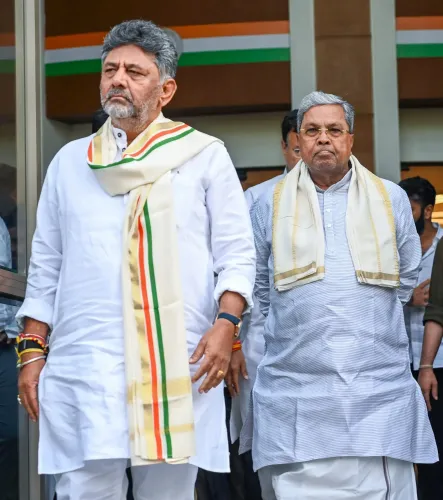
Shivakumar was present at the resignation and is widely regarded as the frontrunner to succeed him.
Siddaramaiah, 78 , first became CM on 13 May 2013 and is known for welfare initiatives including the AHINDA movement and internal reservation policies.
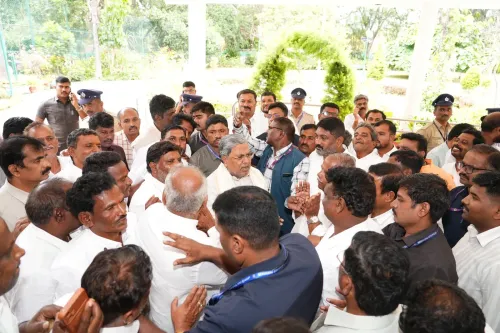
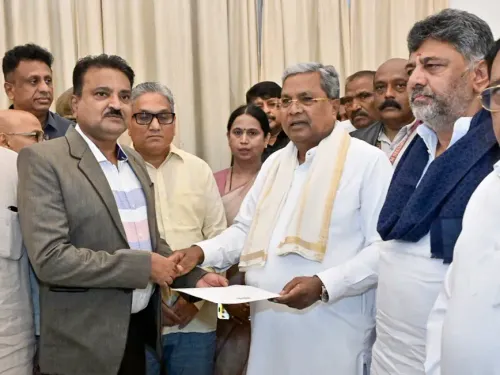
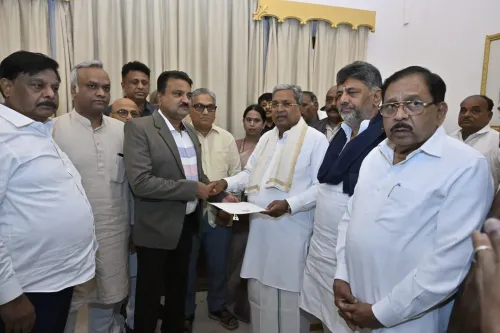
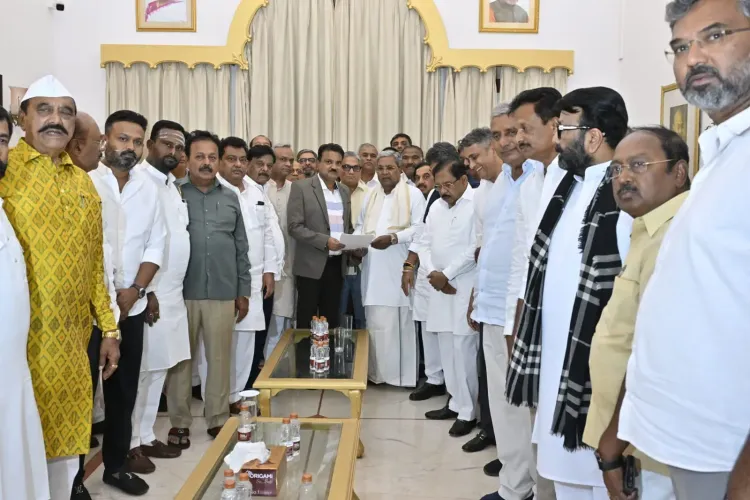
Karnataka Chief Minister Siddaramaiah on Thursday, 28 May submitted his resignation to the Governor's Secretary at Lok Bhavan in Bengaluru, drawing the curtain on his historic run as the state's longest-serving Chief Minister. The resignation, handed over in the presence of Deputy Chief Minister D.K. Shivakumar, all cabinet ministers, and senior party leaders, ends weeks of intense speculation over a leadership transition in Karnataka.
How the Resignation Unfolded
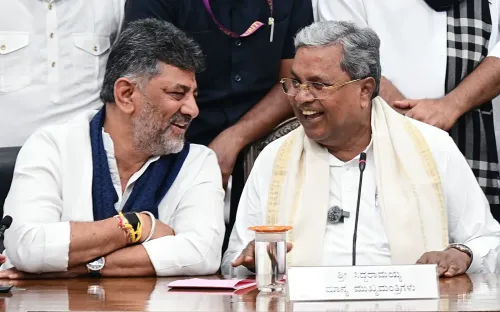
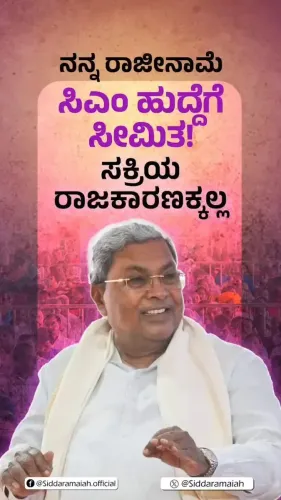
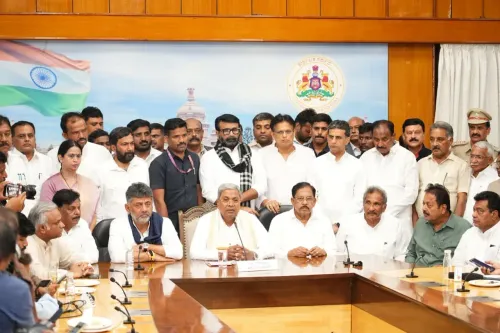
Speaking at a joint press conference alongside Shivakumar and Home Minister G. Parameshwara, Siddaramaiah confirmed the development in his own words: 'I have submitted my resignation from the Chief Minister's post to the Governor's Secretary.'
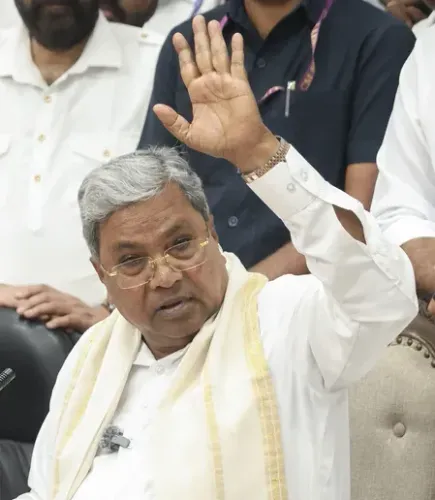
He explained the procedural context: 'The Governor was not in town, and officials informed me that he would return by tonight. Against this background, I have submitted my resignation letter to the Governor's Secretary. I have always said, both inside and outside the Assembly, that whenever the high command directs me, I will tender my resignation. Two days ago, the high command asked me to step down and, keeping my word, I am submitting my resignation.'
The move confirms that the Congress high command initiated the leadership change, with Siddaramaiah complying on schedule.
A Record-Setting Political Career
Siddaramaiah, 78, now joins an elite group of Karnataka politicians who have served as Chief Minister more than once, alongside S. Nijalingappa, Veerendra Patil, D. Devaraj Urs, Ramakrishna Hegde, H.D. Kumaraswamy, and B.S. Yediyurappa.
Born in August 1947 in Siddaramanahundi village of Mysuru district, he rose from humble origins — tending cattle as a child and beginning formal schooling from Class 4 — to complete a law degree and enter politics. Over a career spanning nearly five decades, he contested 12 Assembly elections, winning nine, and holds the record for presenting 17 state budgets.
From JD-S to Congress: The Journey
Former Prime Minister and Janata Dal (Secular) supremo H.D. Deve Gowda is widely credited as Siddaramaiah's political mentor. The two parted ways after ideological differences, and in 2006 Siddaramaiah joined the Indian National Congress (Congress) in the presence of then-party president Sonia Gandhi, winning a by-election by a narrow margin of 257 votes.
He first became Chief Minister on 13 May 2013. In the 2018 Assembly elections, he won from Badami while losing from his traditional Chamundeshwari seat. He later served as Leader of the Opposition before returning to the Chief Minister's post for a second term.
Key milestones in his career include becoming Transport Minister in the S.R. Bommai cabinet in 1988, Finance Minister in the Deve Gowda cabinet in 1994, and Deputy Chief Minister in the J.H. Patel government in 1996. In 2005, he launched the AHINDA movement — a coalition representing backward communities, minorities, and Dalits — before his expulsion from the JD-S.
Legacy and Criticism
Supporters credit Siddaramaiah with path-breaking welfare and social justice measures, including decisions on internal reservation, reservation for oppressed communities in government tenders, and large-scale cabinet representation for backward and marginalised classes. He also emerged as one of the Congress's most prominent critics of the Bharatiya Janata Party (BJP), RSS, Hindutva politics, Prime Minister Narendra Modi, and Union Home Minister Amit Shah.
Critics, however, accused him of pursuing appeasement politics — a charge he consistently rejected. The tension between these two readings of his tenure is likely to define how Karnataka's political history records his time in office.
What Comes Next for Karnataka
With Siddaramaiah's exit, the Congress must now formalise a successor. Deputy Chief Minister D.K. Shivakumar, who was present at the resignation, is widely seen as the frontrunner, though the high command has not made a formal announcement. Karnataka politics enters a new phase, even as Siddaramaiah's supporters describe his tenure as one of the most transformative periods in the state's modern political history.
Point of View
Not a collapse — and that distinction matters. The Congress high command's ability to orchestrate a clean handover in Karnataka, its only major southern state, is a test of organisational discipline ahead of a crowded election calendar. But the succession question is unresolved: D.K. Shivakumar has waited long and has his own political capital, while Siddaramaiah's AHINDA constituency remains a voting bloc no successor can afford to alienate. The real risk for Congress is not the transition itself, but whether the two camps can hold together once the choreography ends.
NationPress
11 Oct 2026
Frequently Asked Questions
Why did Siddaramaiah resign as Karnataka Chief Minister?
Siddaramaiah resigned on 28 May 2025 after the Congress high command directed him to step down two days earlier. He confirmed at a press conference that he had always pledged to resign whenever the high command asked, and he kept that word.
Who is likely to become the next Karnataka Chief Minister?
Deputy Chief Minister D.K. Shivakumar, who was present when Siddaramaiah submitted his resignation, is widely seen as the frontrunner. The Congress high command had not made a formal announcement at the time of the resignation.
What is Siddaramaiah's political legacy in Karnataka?
Siddaramaiah is Karnataka's longest-serving Chief Minister and holds the record for presenting 17 state budgets. He is credited with welfare and social justice initiatives including internal reservation policies and the AHINDA movement for backward communities, minorities, and Dalits.
When did Siddaramaiah first become Karnataka Chief Minister?
Siddaramaiah first took oath as Karnataka Chief Minister on 13 May 2013. He subsequently served a second term, making him the state's longest-serving CM across both tenures.
What is the AHINDA movement associated with Siddaramaiah?
The AHINDA movement, launched by Siddaramaiah in 2005, is a political and social coalition representing backward communities, minorities, and Dalits in Karnataka. It became a defining plank of his political identity after he parted ways with the Janata Dal (Secular) and joined the Congress.