Karnataka Governor accepts Siddaramaiah's resignation, dissolves Cabinet
Synopsis
Karnataka's longest-serving Chief Minister Siddaramaiah is out — and the Congress high command called the shot. Governor Thaawarchand Gehlot formally dissolved the Cabinet on 29 May under Article 164(1), with Siddaramaiah staying on as caretaker. The real question now is who the Congress names next, and whether the transition holds the party's 138-MLA majority together.
Key Takeaways
Karnataka Governor Thaawarchand Gehlot accepted Siddaramaiah's resignation and dissolved the Cabinet on 29 May under Article 164(1) of the Constitution.
Siddaramaiah submitted his resignation letter on 28 May , citing directions from the Congress high command.
He will continue as caretaker Chief Minister until a successor is sworn in; no executive decisions are to be taken in the interim.
The Congress party reportedly holds the support of 138 MLAs , maintaining its legislative majority.
The Governor had been absent from Bengaluru since Wednesday night , having travelled to Mumbai and then Indore citing a family medical emergency.
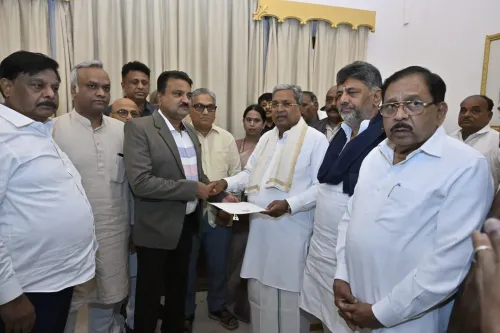
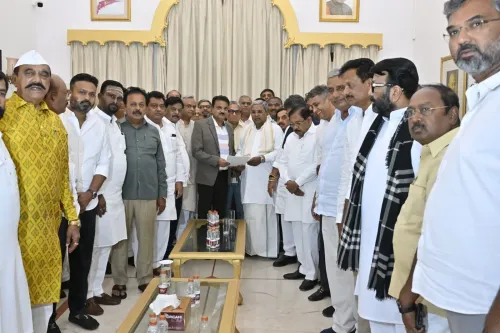
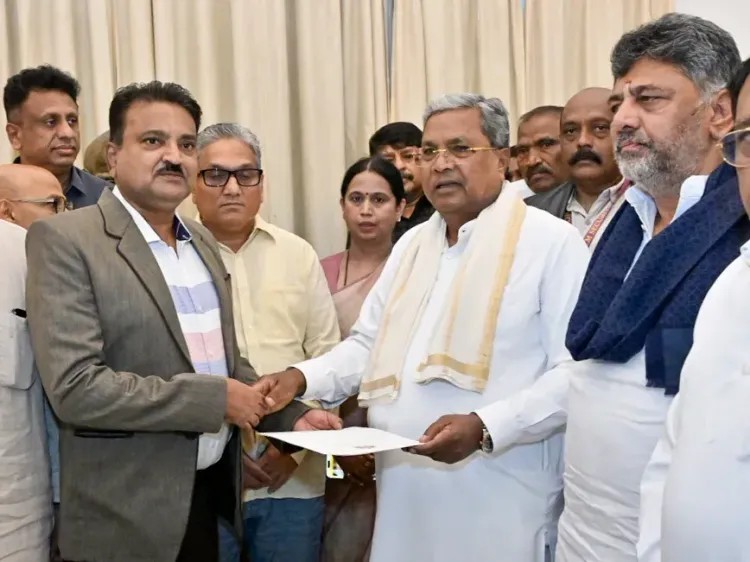
Karnataka Governor Thaawarchand Gehlot on Friday, 29 May formally accepted the resignation of Chief Minister Siddaramaiah and dissolved the Council of Ministers headed by him, invoking Article 164(1) of the Constitution of India. Siddaramaiah had submitted his resignation letter to the Governor's office on 28 May, bringing the curtain down on his tenure as the state's longest-serving Chief Minister.
The Governor's Order
In the official proceedings issued on 29 May, Governor Gehlot stated: 'In exercise of the powers vested in me under Article 164(1) of the Constitution of India, I, Thaawarchand Gehlot, Governor of Karnataka, hereby accept the resignation of Shri Siddaramaiah as Chief Minister of Karnataka. Consequently, the Council of Ministers headed by him stands dissolved.'
In a separate communication addressed directly to Siddaramaiah, the Governor said: 'I have accepted the resignation tendered by you with immediate effect. Until alternative arrangements are made, kindly continue as caretaker Chief Minister. It is needless to state that no executive decisions shall be taken during this period.'
Siddaramaiah's Resignation and What He Said
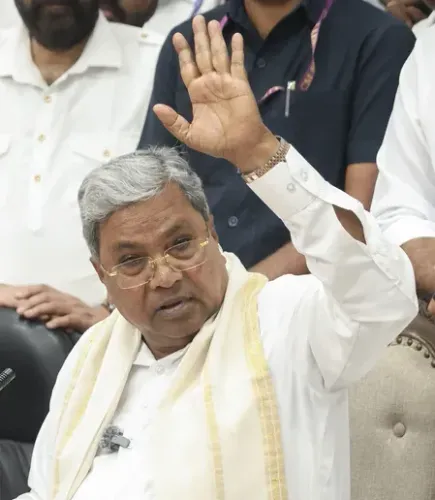
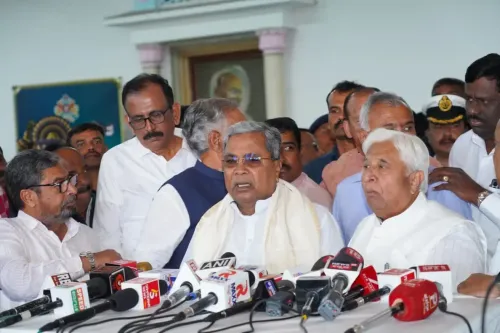
Siddaramaiah's brief resignation letter read: 'I hereby tender my resignation as the Chief Minister of Karnataka. Kindly accept it.' Speaking at a press conference before the formal acceptance, he said the Congress high command had directed him to step down two days prior and that he had always committed — both inside and outside the Assembly — to resigning whenever the high command so directed.
Visibly emotional, Siddaramaiah maintained that the party retained the support of 138 MLAs and that the government continued to command a full majority in the state legislature. 'The Governor must now provide an opportunity to the next Chief Minister to form the government,' he said.
The Governor's Absence and Political Speculation
The resignation proceedings unfolded against a backdrop of political intrigue. Governor Gehlot had left Bengaluru late on Wednesday night, travelling first to Mumbai and then to Indore in Madhya Pradesh on Thursday. The Governor's office cited a family medical emergency as the reason for his sudden departure, though the timing — coinciding with escalating political drama over the Chief Minister's position — triggered intense speculation across Karnataka.
Since the Governor was not in Bengaluru when Siddaramaiah arrived at Lok Bhavan on Thursday, the resignation letter was submitted to the Governor's Secretary. R. Prabhu Shankar, Special Secretary to the Governor, subsequently forwarded a copy of the Governor's notification dated 29 May to Chief Secretary Shalini Rajneesh, confirming the acceptance of the resignation and dissolution of the Cabinet.
What Happens Next
Siddaramaiah will continue in a caretaker capacity until the Congress high command finalises and the Governor swears in a successor. The party's legislative majority appears intact, according to Siddaramaiah, meaning a floor test is not expected to be required. The focus now shifts to who the Indian National Congress will name as the next Chief Minister of Karnataka, a decision that rests with the party's central leadership.
Point of View
Explained as a family emergency, will inevitably invite scrutiny regardless of its legitimacy. More consequentially, the party must now name a successor who can hold 138 MLAs together without fracturing the OBC-Dalit coalition that delivered Karnataka in 2023. That calculus, not constitutional procedure, is the real story here.
NationPress
14 Oct 2026
Frequently Asked Questions
Why did Siddaramaiah resign as Karnataka Chief Minister?
Siddaramaiah resigned on 28 May after the Congress high command directed him to step down. He stated publicly that he had always committed to resigning whenever the high command asked, and that he was honouring that commitment.
What happens now that the Karnataka Cabinet is dissolved?
Siddaramaiah continues as caretaker Chief Minister until the Congress party names a successor and the Governor swears in a new Chief Minister. During the caretaker period, no executive decisions are to be taken, as directed by the Governor.
Who will be the next Chief Minister of Karnataka?
The Congress high command has not yet announced a successor. The decision rests with the party's central leadership. Siddaramaiah has indicated the party retains the support of 138 MLAs, suggesting no floor test is anticipated.
Why was the Karnataka Governor absent during the resignation?
Governor Thaawarchand Gehlot left Bengaluru late Wednesday night and travelled to Mumbai and then Indore in Madhya Pradesh. His office cited a family medical emergency. Because he was absent, Siddaramaiah submitted his resignation to the Governor's Secretary on Thursday; the Governor formally accepted it on Friday, 29 May.
Under which constitutional provision was the Karnataka Cabinet dissolved?
The Governor invoked Article 164(1) of the Constitution of India to accept Siddaramaiah's resignation and dissolve the Council of Ministers with immediate effect.