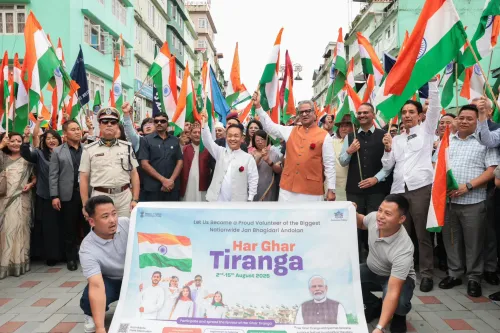
Sikkim CM Tamang hoists flag on 80th Independence Day
Synopsis
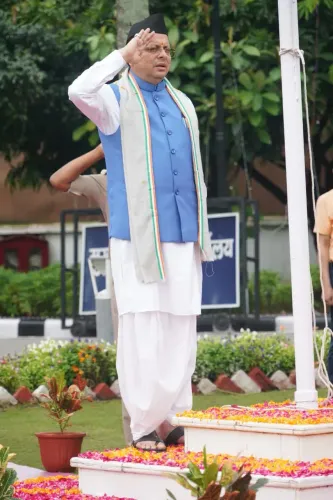
Sikkim Chief Minister Prem Singh Tamang hoisted the National Flag at his official residence on India's 80th Independence Day, urging citizens to uphold the Constitution and work collectively for national unity and progress.
Key Takeaways
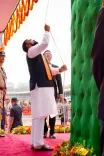
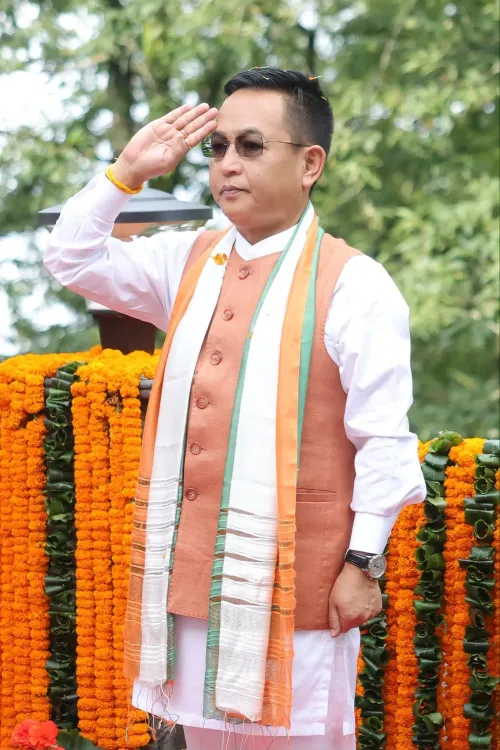
Prem Singh Tamang hoisted the National Flag at his official residence on 15 August 2026 , India's 80th Independence Day .
He called on citizens to renew their pledge to uphold the Constitution of India and dedicate themselves to national welfare and unity.
Tamang is the Chief Minister of Sikkim and founder-president of the Sikkim Krantikari Morcha .
Sikkim merged with India in 1975 , giving the state a distinct relationship with national independence commemorations.
The message aligned with the broader national theme of constitutional fidelity and collective progress on a landmark anniversary.
Eighty years after the tricolour first rose over a free India, Sikkim Chief Minister Prem Singh Tamang marked the milestone at his official residence on 15 August 2026 — flag in hand, pledge renewed.
Tamang hoisted the National Flag and called on citizens to recommit to the values enshrined in the Constitution of India. 'Let us renew our pledge to uphold the values and sanctity of our Constitution and dedicate ourselves to the welfare, unity, and progress of our beloved nation,' he wrote, closing with a firm Jai Hind!
Sikkim's place in India's 80-year story
Sikkim joined the Indian Union in 1975 — nearly three decades after independence — making its relationship with 15 August layered in a way few other states share. The northeastern Himalayan state, celebrated for its organic agriculture and biodiversity, has since woven its identity tightly into the national fabric. For Tamang, founder-president of the Sikkim Krantikari Morcha, the occasion is both a national and a deeply local affirmation.
A ritual with weight behind it
Flag-hoisting by state chief ministers on Independence Day is a practice as old as the republic itself, but the 80th anniversary carries an outsized symbolic charge — a generational marker that invites reflection on how far the constitutional promise has travelled. Tamang's message tracked that national mood precisely: constitutional fidelity, collective effort, unity. No new policy, no political edge — just the annual covenant between a government and its people, restated with intention.
The call to 'strengthen the spirit of a united and prosperous India' lands differently at eighty than it did at fifty or sixty. The republic is no longer young; the question is whether its institutions are durable. That, in essence, is what every tricolour raised today is quietly answering.
Point of View
Unity framing, no policy divergence. For a chief minister whose party controls a small but strategically located Himalayan state bordering China and Nepal, projecting unflinching national solidarity on a landmark anniversary carries quiet diplomatic weight beyond the ceremonial. The 80th milestone also creates an opportunity for regional leaders to position themselves within a long-arc story of nation-building, and Tamang's emphasis on collective effort over individual achievement fits that mould. Watch whether Sikkim's upcoming state-level events begin to foreground its post-1975 integration story more assertively as the anniversary cycle continues.
NationPress
15 Aug 2026
Frequently Asked Questions
Why did Sikkim CM Prem Singh Tamang hoist the flag on 15 August 2026?
15 August 2026 marks India's 80th Independence Day . As Chief Minister of Sikkim, Tamang hoisted the National Flag at his official residence as part of the standard practice followed by state chief ministers across India on this national occasion.
What did Prem Singh Tamang say on Independence Day 2026?
Tamang called on citizens to 'renew our pledge to uphold the values and sanctity of our Constitution' and to dedicate themselves to the welfare, unity, and progress of India, closing his message with Jai Hind!
When did Sikkim become part of India?
Sikkim merged with India in 1975 , nearly three decades after Indian independence in 1947, making it one of the last territories to join the Indian Union.
Who is Prem Singh Tamang and what party does he lead?
Prem Singh Tamang is the Chief Minister of Sikkim and the founder-president of the Sikkim Krantikari Morcha (SKM) , the ruling party in the northeastern Himalayan state.
What is the significance of India's 80th Independence Day?
India's 80th Independence Day on 15 August 2026 marks eight decades since the country gained independence from British rule in 1947 . It is a generational milestone that prompts reflection on constitutional governance, national unity, and the republic's progress.