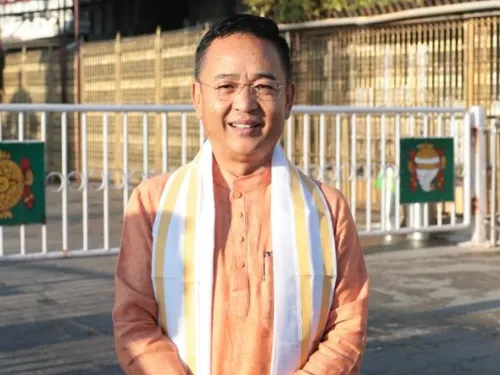
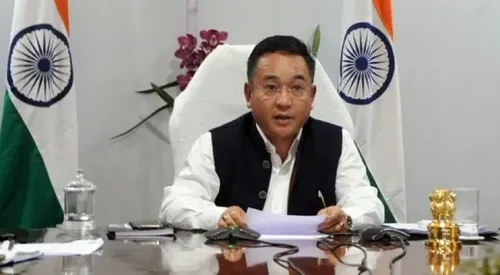
Sikkim CM Tamang marks International Youth Day with call to empower young India
Synopsis
Sikkim Chief Minister Prem Singh Tamang marked International Youth Day on 12 August 2026 with a call to empower young people through education, skills, and opportunity, reaffirming Sikkim's alignment with India's national youth-development agenda.
Key Takeaways
Sikkim CM Prem Singh Tamang posted an International Youth Day message on 12 August 2026 urging bold empowerment of young people.
He called for 'quality education, meaningful opportunities, skills, and the right support' for youth in Sikkim and India .
Sikkim's governance priorities align with India's National Youth Policy (2014) and the Skill India Mission (2015) .
The message signals continued state participation in nationally driven youth and skill-development frameworks.
No new scheme or policy was announced; the post reaffirms existing commitments to inclusive and progressive growth.
On International Youth Day, 12 August, Sikkim Chief Minister Prem Singh Tamang called on governments and communities to back the country's young people with education, skills, and meaningful opportunity — framing youth not as a future promise but as a present force already driving change.
What Tamang said — and why it lands in Sikkim
Sikkim, a small northeastern state of roughly 650,000 people, has made inclusive and sustainable development a governing signature under Tamang's Sikkim Krantikari Morcha. In his message, the Chief Minister urged that young people be equipped to 'dream boldly, lead with confidence, and create positive change in society' — language that maps closely onto the state's alignment with national youth-development frameworks.
National scaffolding behind the message
India's National Youth Policy (2014) set the federal blueprint: education, employment, and civic engagement as the three pillars of harnessing the country's demographic dividend. The Skill India Mission, launched in 2015, added vocational muscle — targeting millions of young people with market-linked training. Sikkim has tracked these national objectives while layering in its own emphasis on sustainable growth and environmental stewardship.
A day, a pattern, and what to watch next
International Youth Day posts from state leaders rarely announce new policy — and this one is no exception. What they do is signal governing priorities. Tamang's emphasis on 'quality education, meaningful opportunities, skills, and the right support' echoes the vocabulary of both Skill India and the National Education Policy, suggesting Sikkim's continued participation in centrally driven youth programmes. The real test will come in the rollout of any updated state skill-development or education schemes, and in Sikkim's representation at national youth forums before the year closes.
Young people in Sikkim — and across India — are watching not just for the words, but for what follows them.
Point of View
Such public positioning reinforces Sikkim's cooperative federalism credentials. The emphasis on 'inclusive and progressive Sikkim' also echoes the ruling party's core electoral identity, keeping that narrative warm without requiring a new policy announcement. The real political signal will come if and when a concrete skill or education scheme follows this rhetoric.
NationPress
26 Sept 2026
Frequently Asked Questions
When is International Youth Day celebrated?
International Youth Day is observed every year on 12 August , as designated by the United Nations to highlight the contributions and challenges of young people worldwide.
What did Sikkim CM Prem Singh Tamang say on International Youth Day 2026?
CM Tamang called for empowering youth with quality education, skills, and meaningful opportunities, urging young people to 'dream boldly, lead with confidence, and create positive change in society.'
What is the Skill India Mission?
The Skill India Mission , launched in 2015 , is a central government programme aimed at providing vocational training and enhancing employability among India's youth across sectors.
Who is Prem Singh Tamang and what party does he lead?
Prem Singh Tamang , also known as Golay, is the Chief Minister of Sikkim since 2019 and the founder-president of the Sikkim Krantikari Morcha (SKM) , the ruling party in the state.
What is India's National Youth Policy?
India adopted the National Youth Policy in 2014 , establishing a federal framework focused on education, employment, and civic engagement to harness the country's demographic dividend.